
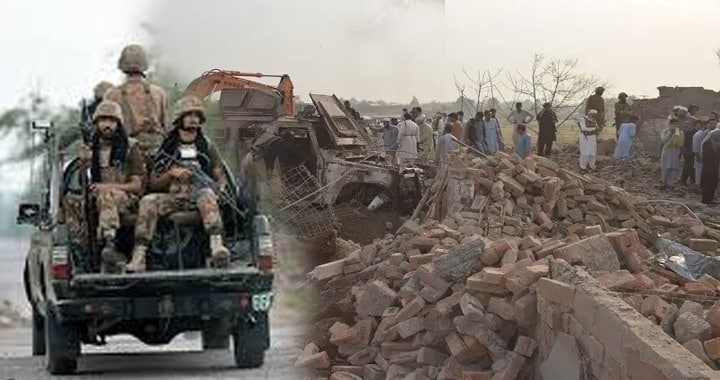
Pakistan’s security forces are currently confronting one of the most complex and geographically dispersed waves of terrorism witnessed in recent years, as terror attacks simultaneously escalates across Khyber Pakhtunkhwa, Balochistan, and strategically sensitive northern regions. Yet unlike previous eras where terrorist organizations operated through isolated insurgent pockets, the current threat environment reveals a far more interconnected militant ecosystem involving cross-border sanctuaries, organized criminal financing, narcotics infrastructure, propaganda warfare, and technologically enhanced terrorist tactics.
The recent Bannu attack exposed the scale of this evolving challenge. The assault, reportedly involving a massive suicide vehicle-borne explosive device, coordinated follow-up attacks, and drone-assisted battlefield surveillance, demonstrated that terrorist organizations operating against Pakistan are no longer relying solely on conventional guerrilla warfare. Instead, they are increasingly adopting hybrid operational models combining urban terrorism, psychological warfare, and tactical coordination aimed at maximizing both casualties and propaganda impact.
What further reinforced Pakistan’s long-standing security concerns was the growing body of assertions linking these operations to militant sanctuaries inside Afghanistan. Former CIA targeting analyst Sarah Adams publicly alleged that militants linked to TTP and the Hafiz Gul Bahadur network orchestrated the Bannu assault from Afghan territory. Similar concerns were echoed by former Afghan military chief General Yasin Zia, who openly rejected Taliban claims denying the presence of extremist organizations inside Afghanistan.
These developments have significantly strengthened Islamabad’s diplomatic position that terrorist infrastructure across the border remains a central driver of instability inside Pakistan.
The issue extends beyond isolated attacks. Security officials increasingly believe that terrorist organizations are operating through layered operational umbrellas designed to conceal command structures and avoid direct attribution. The alleged use of proxy labels such as “Ittehad-ul-Mujahideen Pakistan” reflects a broader militant strategy aimed at masking organizational identities while preserving operational continuity.
At the same time, Pakistan’s counterterrorism landscape is witnessing another dangerous trend, the merger between militancy and organized crime. The Domel bank van robbery in Bannu, allegedly conducted by armed Khawarij linked to TTP, highlighted how terrorist networks are increasingly turning toward financial crimes, extortion, kidnappings, and robberies to sustain operational capabilities.
The ongoing operation in Thore Valley, Chilas, further exposed this nexus between terrorism, narcotics cultivation, and organized criminal structures. The destruction of poppy fields alongside militant hideouts demonstrated that Pakistan’s security forces are now confronting hybrid networks where terrorism is financially sustained through illicit economies.
In Balochistan, the elimination of BNA commander Sajjad Baloch reflected another dimension of the national security challenge, externally backed insurgent violence targeting strategic stability in the province. The recovery of foreign-made weapons and military equipment during the Kech operation reinforced concerns regarding foreign facilitation and sophisticated supply channels supporting anti-state elements.
Despite the widening threat landscape, Pakistan’s response has evolved considerably over recent years. Intelligence-based operations coordinated inter-agency actions, drone-assisted targeting capabilities, and enhanced surveillance mechanisms have significantly improved operational efficiency against militant groups.
This strategic shift reflects a transition from reactive security management toward proactive counterterrorism disruption aimed at neutralizing threats before they materialize into large-scale attacks.
Simultaneously, Pakistan has intensified diplomatic pressure regarding cross-border terrorism. Statements issued by Defence Minister Khawaja Asif and senior government officials indicate that Islamabad is no longer willing to tolerate what it describes as the continued presence of anti-Pakistan militant sanctuaries across the border.
At the broader strategic level, Pakistan today faces not merely sporadic terrorism, but a coordinated destabilization campaign operating across multiple theatres simultaneously. However, the continued operational tempo of security forces across KP, Balochistan, Gilgit-Baltistan, and former tribal districts demonstrates that the state remains firmly committed to dismantling terrorist infrastructure, protecting civilians, and preventing terrorist networks from regaining territorial or psychological space inside the country.



