
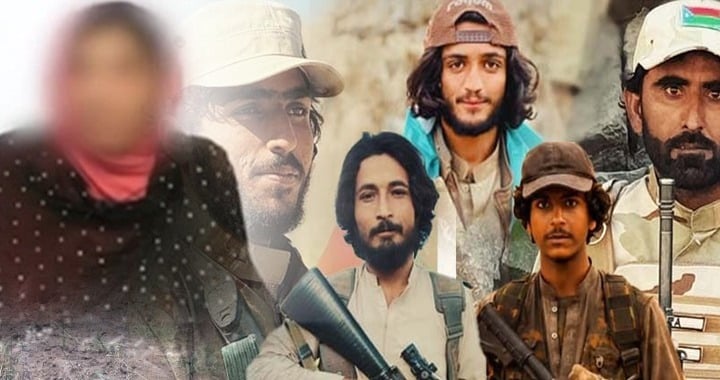
The security situation in Balochistan is no longer confined to remote mountains, ambushes on highways, or isolated insurgent hideouts. Over recent months, a troubling pattern has emerged, suggesting that the battlefield is increasingly shifting toward educational spaces, urban facilitation networks, digital propaganda ecosystems, and the psychological targeting of youth, particularly students and young girls.
The arrest of multiple young female recruits linked to the banned Baloch Liberation Army (BLA) has once again exposed the evolving tactics of terrorist organizations operating in Balochistan. Officials assert the girls were being prepared for suicide missions through coercion, ideological manipulation, emotional blackmail, and carefully constructed narratives glorifying previous female suicide bombers.
One of the detained girls, an F.Sc student from Turbat, described how threats against her father and repeated psychological pressure pushed her toward the network. Her account painted a disturbing picture of how vulnerable youth are allegedly drawn into extremist circles under the guise of “sacrifice,” “honor,” and “national struggle.”
The case has revived concerns about militant infiltration into educational and social environments across Balochistan. Security observers note that extremist organizations increasingly prefer educated recruits who can operate in urban centers without attracting suspicion. The objective is no longer limited to armed confrontation in rugged terrain but extends to creating ideological ecosystems capable of sustaining long-term insurgent narratives.
Earlier cases had already highlighted this trend. Security officials previously identified Sufyan Kurd, a university student and former student council figure, as a senior BLA-linked operative eliminated during a counterterror operation in Balochistan. Investigators had also linked educated facilitators and academic figures to extremist planning cells, including allegations involving university-linked recruitment and logistical support networks.
Analysts warn that militant organizations understand the strategic value of campuses, hostels, and student circles. Radical narratives are often introduced gradually through political grievances, identity-based rhetoric, and emotional messaging designed to cultivate alienation from the state. Over time, vulnerable individuals may be pushed toward operational roles ranging from facilitation to armed violence.
The recent detention of individuals allegedly linked to facilitation structures in educational institutions has intensified debate regarding the protection of universities from extremist infiltration. Security experts argue that counterterrorism today is not only a battlefield challenge, but also an ideological contest requiring intellectual resilience, institutional vigilance, and community awareness.
Alongside physical attacks, information warfare has also become a major front in the conflict. Fake claims, manipulated narratives, and coordinated propaganda campaigns frequently emerge after security operations or militant setbacks. Officials maintain that hostile networks attempt to weaponize misinformation in order to distort public perception, undermine confidence in state institutions, and provide propaganda cover for extremist actors.
Security analysts believe Balochistan’s evolving threat environment now reflects a hybrid model of insurgency, one that combines terrorism, digital propaganda, ideological recruitment, urban facilitation, and psychological warfare.
Observers stress that dismantling terrorist violence in Balochistan will require more than kinetic operations alone. They argue that educational institutions, digital spaces, community structures, and youth engagement mechanisms must also be protected from extremist exploitation.
Authorities maintain that intelligence-based operations against militant networks and facilitators will continue across the province, while efforts are also being made to counter radical narratives targeting young people.



