
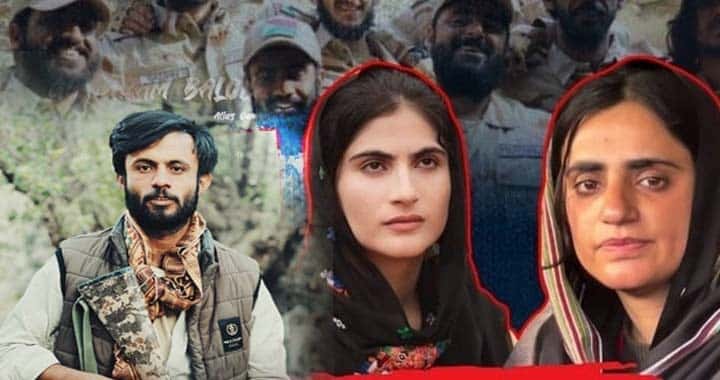
In conflict zones, narratives rarely remain neutral. They evolve, compete, and often become weapons in their own right. Nowhere is this more evident than in Balochistan, where the struggle over meaning has become as consequential as the struggle on the ground itself.
At the center of this information battleground is the Baloch Yakjehti Committee (BYC), a group that has presented itself internationally as a civil rights movement advocating for missing persons and raising concerns over state conduct. Yet within Pakistan’s security and political discourse, a sharply different characterization has emerged: that the organization functions as a civilian-facing extension of militant networks operating under the guise of activism. The truth, as is often the case in insurgency-affected regions, is layered, contested, and deeply entangled in competing claims. But what is increasingly clear is that Balochistan is not only a theatre of physical conflict it is also a space where narratives themselves have become instruments of war.
At the heart of the controversy is a fundamental question: when does advocacy end and when does operational support for militancy begin?
Supporters of BYC argue that it gives voice to long-standing grievances in Balochistan disappearances, underdevelopment, and political exclusion. However, state institutions and security officials contend that the group’s public messaging often follows a predictable operational pattern: allegations of enforced disappearances are rapidly amplified on social media, emotionally charged narratives circulate widely, and accusations against state institutions emerge even before formal verification processes begin.
This sequence, according to officials, frequently unravels when facts are eventually established. In some cases cited by government representatives, individuals initially reported as forcibly disappeared were later found to be involved in militant activity or had voluntarily joined armed groups.
One frequently referenced example is that of Zareena Mari, whose alleged disappearance gained significant attention before being publicly contradicted by provincial authorities, who described the claim as fabricated. Another case involves Tayyab Baloch, where authorities claim his name was circulated in missing persons campaigns while later evidence suggested his involvement in a suicide attack. For critics of BYC, such cases are not isolated errors but part of a broader pattern of narrative construction designed to generate political pressure while obscuring militant recruitment pathways. For supporters, however, these interpretations are viewed as attempts to discredit legitimate activism.
The divide is not merely factual it is fundamentally interpretative.
One of the most contested aspects of the debate is what is emphasized and what is omitted. State-aligned narratives argue that BYC’s activism is highly selective in its moral outrage. Incidents involving attacks on civilians, such as the hijacking of trains or killings of state personnel, are often absent from its public campaigns. Conversely, cases involving suspected militants are highlighted within missing persons frameworks, creating, according to critics, a distorted moral geography of victimhood. The counter-argument from rights activists is that state violence and enforced disappearances are systematically underreported or inadequately investigated, and that civil society organizations fill a vacuum left by institutional opacity.
This clash over visibility has created a deeply polarized information environment, where even the act of mourning becomes politically interpreted.
Perhaps the most sensitive dimension of the debate concerns alleged linkages between activist networks and banned militant organizations. Security institutions in Pakistan assert that individuals associated with BYC have documented or operational links to proscribed groups such as the Baloch Liberation Army (BLA) and Baloch Liberation Front (BLF). These claims are reinforced, according to state sources, through intelligence-based assessments and legal designations under counterterrorism frameworks, including the Fourth Schedule of Pakistan’s Anti-Terrorism Act.
Authorities further argue that familial and social linkages between certain activists and known militant figures strengthen their concerns regarding overlapping networks. These assertions remain strongly contested by human rights advocates and international observers, many of whom caution against conflating political activism with militancy without transparent judicial processes and independent verification.
Nevertheless, within Pakistan’s internal security narrative, the concern is not simply ideological dissent but the alleged use of civilian platforms as logistical or recruitment ecosystems for armed groups.
Adding complexity to the debate are accounts from former militants who have renounced armed struggle. Some reconciled individuals claim that militant organizations in Balochistan operate through layered structures in which overt armed wings are supported by civilian-facing entities that provide ideological recruitment space, logistical facilitation, or social legitimacy. These testimonies suggest that protest platforms and sit-ins may sometimes function, intentionally or otherwise, as recruitment environments where vulnerable individuals are exposed to militant influence networks.
While such claims are difficult to independently verify in full, they have been cited by security officials as part of a broader evidentiary mosaic supporting their concerns.
One of the most alarming trends cited in official discourse is the reported rise of female participation in suicide attacks in Pakistan over the past few years. Security analysts argue that this shift represents a strategic evolution in militant tactics rather than spontaneous radicalization. Cases involving educated women have been widely cited in both media and policy discussions as evidence of ideological grooming and psychological manipulation by extremist networks.
Authorities argue that militant organizations have increasingly sought to reframe violence through narratives of empowerment, martyrdom, and resistance, thereby targeting educated youth and women as symbolic actors. Critics, however, caution against broad generalizations, warning that socio-economic deprivation, political alienation, and structural marginalization also play significant roles in radicalization pathways.
Balochistan’s instability cannot be understood in isolation from regional geopolitics. Pakistan has long maintained that militant activity in the province is influenced by external actors seeking to destabilize the region. These claims frequently intersect with broader strategic rivalries in South Asia, where competing interests have historically played out through proxy dynamics. Within this framework, information warfare becomes an extension of geopolitical contestation, where competing narratives are amplified across digital platforms, international advocacy networks, and diaspora communities.
For Pakistan’s security establishment, this makes narrative control not merely a domestic political issue but a matter of national security.
A central challenge is the widening gap between domestic security narratives and international human rights discourse. On global platforms, groups like BYC are often perceived primarily through the lens of civil liberties, state accountability, and enforced disappearances. Within Pakistan’s official narrative, however, the same groups are frequently framed as components of a broader militant ecosystem.
This divergence creates a persistent credibility gap, where the same events are interpreted in radically different ways depending on political geography. As a result, Balochistan has become not only a contested physical space but also a contested epistemic space where even defining “truth” is politically charged.
Lost amid these competing interpretations is the lived reality of ordinary people in Balochistan. For residents of the province, the core concerns remain painfully practical: security, education, employment, and access to basic services. Teachers, healthcare workers, and laborers continue to face threats from multiple directions, while communities remain caught between insurgency, counterinsurgency, and political uncertainty. In this environment, every narrative whether state-driven or activist-led risks overshadowing the everyday struggles of civilians who are neither militants nor political actors.
The debate over BYC and its role in Balochistan reflects a larger global dilemma: how to distinguish between legitimate political activism and structures that may be embedded within or exploited by violent networks. Pakistan’s position emphasizes security, counterterrorism law, and institutional response. Human rights advocates emphasize accountability, transparency, and political expression. Between these two frameworks lies a complex and unresolved reality.
What is clear, however, is that Balochistan’s conflict is no longer confined to geography or armed struggle alone. It has expanded into the realm of narrative legitimacy, where competing versions of truth shape policy, perception, and international engagement. Until a credible mechanism emerges to bridge this divide one that can address both security concerns and human rights claims transparently the province is likely to remain trapped in a cycle where every story is contested, and every truth is provisional.
In such an environment, the greatest casualty may not be a narrative or an institution, but the possibility of shared understanding itself.



