
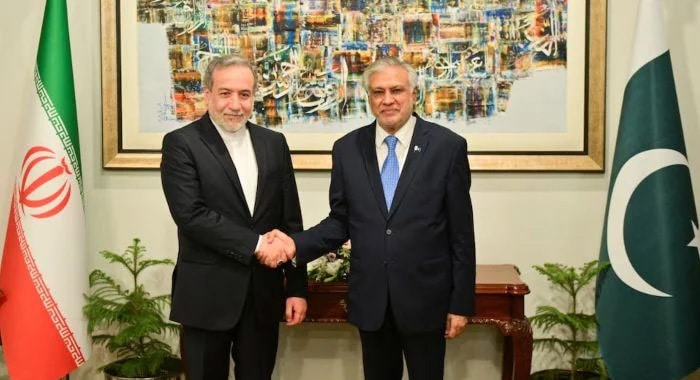
Pakistan expressed optimism regarding ongoing diplomatic engagements between Iran and the United States, voicing hope that the two sides would reach a peaceful and sustainable agreement “sooner rather than later” amid continued regional and international efforts aimed at reducing tensions.
Speaking during the weekly media briefing in Islamabad, Foreign Office Spokesperson Tahir Andrabi said Pakistan welcomed all initiatives that could contribute toward peace, stability, and constructive dialogue in the region and beyond.
“You have asked us how soon we can expect an agreement. We remain optimistic. A simple answer would be that we expect an agreement sooner rather than later. We hope that the parties will come to a peaceful, sustainable solution and bring peace, not just to our region but internationally as well,” the spokesperson stated.
Responding to a question regarding the possibility of Islamabad hosting a final settlement or diplomatic breakthrough between Tehran and Washington, Andrabi said Pakistan would consider it an honor and privilege to facilitate or host such a development.
“We would welcome the settlement wherever it takes place. Of course, if it takes place in Islamabad, it will be an honor and a privilege to host it,” he remarked.
While refraining from discussing Pakistan’s exact diplomatic role in the ongoing engagements, the spokesperson emphasized that Islamabad remained committed to safeguarding the confidentiality and integrity of sensitive diplomatic exchanges.
“We will jealously guard any information that we have, particularly with respect to the specifics,” he added.
The remarks came as Iran continued consultations with regional partners regarding evolving diplomatic efforts. According to officials, Deputy Prime Minister and Foreign Minister Ishaq Dar held a telephone conversation with Iranian Foreign Minister Abbas Araghchi, during which the Iranian side briefed Pakistan on recent regional developments as well as Araghchi’s recent visit to China and the consultations held there.
During the briefing, the Foreign Office also addressed regional relations and reiterated Pakistan’s longstanding position regarding dialogue with India.
Marking the first anniversary of Marka-e-Haq, the spokesperson stated that Pakistan had never shied away from meaningful dialogue on any outstanding issue and maintained that the absence of talks could not be attributed to Islamabad.
“The fact that dialogue has not taken place cannot be blamed on Pakistan. We have, on a number of occasions, expressed our readiness for dialogue. But of course, it takes two to have a dialogue,” Andrabi said.
He further stressed that any future engagement must be constructive and result-oriented. “Even a dialogue has to be meaningful; it has to be a dialogue and not a monologue,” he added. On the Indus Waters Treaty, the spokesperson reaffirmed Pakistan’s commitment to safeguarding its water rights through all available legal and diplomatic avenues under international law.
“Pakistan reserves the right of exploring all legal and political mechanisms, enshrined in the treaty and under international law, to claim its rights on the waters of the Indus Basin system,” he stated, adding that several options were already under consideration.
Addressing relations with Afghanistan, the Foreign Office underscored that terrorism remained the central obstacle affecting bilateral ties between Islamabad and Kabul. “The people of the two countries have no major dispute, no discord. But this one-point issue of terrorism, affecting Pakistan and emanating from Afghan soil, is holding back our relations,” the spokesperson said.
He emphasized that Pakistan expected concrete and verifiable assurances from the Taliban administration in Kabul that Afghan territory would not be used against Pakistan. “Pakistan will only open up its border when Kabul makes unwavering written assurances that their soil will not be used against us,” Andrabi stressed.
Responding to reports concerning expulsions of Pakistani nationals from the United Arab Emirates, the Foreign Office clarified that Pakistani diplomatic missions in Abu Dhabi and Dubai were actively engaged in handling individual consular matters and coordinating with local authorities. According to the spokesperson, Emergency Travel Documents (ETDs) were being issued primarily in cases involving immigration violations and other legal infractions.
“Our embassy is in touch with the UAE authorities and has also ensured that, in the wake of recent hostilities in the Gulf region and serious armed attacks against the UAE, our community fully complies with local laws and instructions,” he stated. Pakistan also reiterated its condemnation of attacks targeting the UAE and reaffirmed support for regional peace and security.
In a related diplomatic development, Prime Minister Shehbaz Sharif received a telephone call from Sheikh Mohammed bin Abdulrahman bin Jassim Al Thani, Prime Minister and Foreign Minister of the State of Qatar. According to an official statement issued by the Prime Minister’s Office, the two leaders held a warm and productive exchange of views on the prevailing regional situation and reaffirmed their commitment to supporting ongoing peace efforts.
Prime Minister Shehbaz recalled his recent visit to Doha on April 16 and described his meetings with the Qatari leadership, including Amir Sheikh Tamim bin Hamad Al Thani, as instrumental in building consensus for peace initiatives. The prime minister also conveyed that the people of Pakistan were looking forward to the Amir of Qatar’s visit to Pakistan at an early date, expressing confidence that the visit would further deepen bilateral relations between the two countries.
The Qatari prime minister appreciated Pakistan’s continued diplomatic efforts aimed at promoting peace and stability in the region and assured Islamabad of Qatar’s support in ensuring security across the Middle East. Both leaders agreed to remain in close contact and continue coordination on matters of mutual interest and regional importance.



