
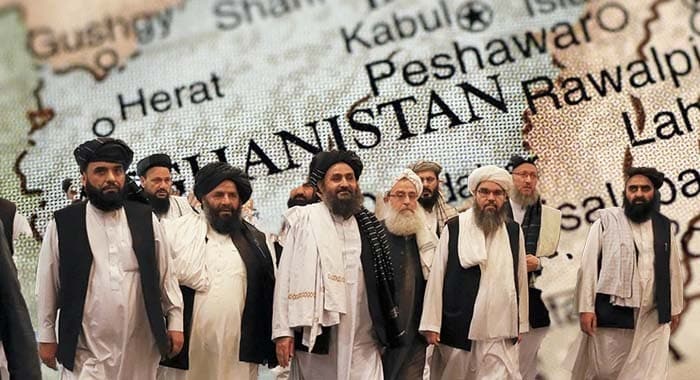
Afghanistan is at the center of a complex and rapidly shifting regional equation involving geopolitics, security competition, and internal political realignments, according to regional political analysis and multiple reported accounts. Across strategic circles, it is widely argued that Afghanistan’s geopolitical position and economic survival are deeply tied to its relationship with Pakistan. Analysts claim that Afghanistan remains heavily dependent on Pakistan for trade routes and logistical connectivity, and that without this access, its economic system could face severe disruption.
At the same time, regional dynamics are increasingly shaped by competing interests. India, according to regional commentary, has been attempting to restore its geopolitical influence while securing its economic footprint in the wider region. Some analysts argue that this strategic effort has historically involved balancing relationships in Afghanistan while pursuing broader regional objectives.
Reports and strategic assessments suggest that India has pursued multiple economic and geopolitical channels in the region, including engagement linked to Iran’s Chabahar port. However, according to the same regional narratives, shifting diplomatic and security alignments have reportedly complicated these efforts.
Some analysts claim that Pakistan has simultaneously expanded its regional engagement, including closer coordination with Iran and other neighboring states. These developments, according to regional commentary, have reportedly influenced India’s strategic positioning in certain infrastructure and trade corridors. It is further claimed in regional analysis that these shifts have contributed to Afghanistan facing reduced alternative trade pathways, increasing its reliance on traditional routes. According to political observers cited in regional discourse, Pakistan has undertaken a series of diplomatic and security engagements with neighboring countries, including intelligence-sharing cooperation.
It is also claimed in these accounts that during periods of heightened regional tension, Pakistan focused on countering perceived security threats and limiting hostile infrastructure or logistical networks linked to rival regional interests. However, most of these operational assertions remain unverified independently and are not confirmed by official cross-border documentation available in the public domain. Inside Afghanistan, reports indicate a tightly controlled governance structure under the current authorities, with decision-making concentrated within a small leadership circle. According to multiple political sources, internal tensions have emerged within the Afghan political system. These reportedly include differing positions on education policy, governance structure, and the role of consultation in decision-making.
It is also reported that certain senior figures, including former Taliban-era officials and political actors, have expressed support for more inclusive governance models. Among them, former senior political figures have allegedly advocated for educational access, constitutional frameworks, and broader political participation. However, these views have reportedly faced internal resistance, and in some cases, disciplinary or restrictive measures have been taken against dissenting voices. Specific cases mentioned in regional reporting include claims of detentions and limitations on movement for certain officials and political figures, although independent verification remains limited.
According to reports circulating in regional media, senior Taliban-linked figures, including Muqeem Agha Jan described as a long-standing political and administrative figure were reportedly detained in Kandahar by internal security elements. Agha Jan is said to have been active in political and religious networks since the early 2000s and was previously based outside Afghanistan before returning under political arrangements involving senior leadership figures.
Separate reports also claim that several other individuals in Badakhshan were detained, including administrative and communication personnel linked to defence and media structures. Some of those individuals were reportedly transferred to Kabul, while others were released following guarantees from local intermediaries. Additionally, reports mention that Abbas Stanikzai, a senior Taliban-linked figure, has faced internal pressure after publicly advocating for girls’ education, constitutional governance, and consultation-based political systems. According to these accounts, he faced restrictions, removal from his position, and eventual departure from Afghanistan after tensions with the leadership.
According to regional reports, on April 15, unauthorized discussions reportedly took place between tribal leaders from eastern Afghanistan and communities near the Pakistan border, without formal approval from the Afghan authorities. These discussions allegedly led to agreements aimed at reopening trade routes between Kamdesh and Barg Matal districts. However, the official status of these agreements remains unclear. At the same time, analysts claim that Pakistan has expanded its regional connectivity options toward Central Asia through Iran, while Afghanistan’s external route diversification remains limited. Some observers further argue that Afghanistan faces internal security constraints, with concerns about whether existing military capabilities are sufficient to manage potential internal unrest or fragmentation pressures.
A report cited in regional discourse, attributed to an international affairs journal referred to as Modern Diplomacy, has alleged that the Afghan governing structure maintains links with prohibited armed groups. According to the report, these groups are allegedly provided safe havens and logistical support within Afghan territory. It further claims that Afghanistan is increasingly functioning as a hub for transnational militant activity. These allegations have not been independently verified by all international stakeholders, but they have intensified concerns among regional actors regarding cross-border security risks.
Afghanistan’s international representation remains uncertain, with the country reportedly facing continued limitations in participation within the United Nations General Assembly. According to Afghan media reporting, the current governing authorities have not been formally recognized for full representation due to unresolved political and procedural conditions. These include concerns related to counterterrorism commitments, financial obligations to international institutions, and broader governance standards. As a result, Afghanistan has reportedly been unable to secure full voting rights in recent UN sessions for multiple consecutive years.
Critics of the current system argue that Afghanistan is governed through a highly centralized authority structure, with major decisions concentrated in Kandahar under a small leadership circle. According to these views, the system lacks parliamentary institutions, independent judiciary mechanisms, and free media structures. Opponents also claim that political dissent is often categorized as rebellion, and that internal criticism is suppressed through legal and security frameworks. Supporters of the system, however, argue that it reflects stability, cultural values, and centralized governance suited to national conditions. According to demographic analysis cited in political discussions, Afghanistan is a multi-ethnic country composed of Pashtun, Tajik, Hazara, Uzbek, Turkmen, and other communities. Critics argue that representation within governing institutions is disproportionately concentrated among one ethnic group, with limited inclusion of others, and minimal representation of women.
Supporters of the system reject these criticisms, arguing that appointments are based on trust, security considerations, and internal consensus. Reports also suggest that updated governance regulations allow for strict measures against dissent, including detention and punitive actions in cases defined as rebellion or corruption. Human rights observers argue that such frameworks raise concerns about freedom of expression, legal transparency, and due process protections.
Former Afghan political figures, including Gulbuddin Hekmatyar, have publicly called for political reforms and the establishment of electoral processes, arguing that current governance structures do not reflect public participation. They have emphasized that long-term stability requires political inclusivity and institutional reform.
Taken together, these developments as reported across regional political discourse — suggest that Afghanistan remains at the center of overlapping internal and external pressures. From shifting regional alliances and contested trade routes to internal governance debates and international diplomatic uncertainty, the country continues to navigate a complex and evolving landscape. Analysts caution that the situation remains fluid, with multiple competing narratives shaping how events are interpreted across the region.



