
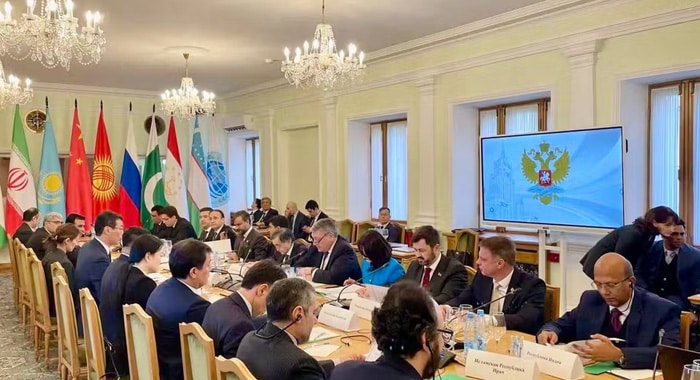
Deputy foreign ministers from member states of the Shanghai Cooperation Organisation (SCO) convened in Moscow for high-level consultations aimed at strengthening multilateral cooperation and addressing pressing regional challenges, with a particular focus on Afghanistan and evolving geopolitical dynamics.
According to a statement issued by the Ministry of Foreign Affairs of Russia, the meeting served as a key consultative platform for SCO member states to exchange views on regional security, economic collaboration, and diplomatic engagement.
Participants underscored the shared objective of fostering an Afghanistan that is free from war, terrorism, and narcotics trafficking. The officials reiterated their collective support for an independent, neutral, and peaceful Afghan state, emphasizing the importance of stability for broader regional security.
Discussions also explored prospects for pragmatic dialogue with the current Afghan authorities, including the potential revival of the SCO-Afghanistan Contact Group, a mechanism that has remained inactive since the Taliban’s return to power. Delegates highlighted the importance of reactivating this platform to facilitate coordinated engagement and support stabilization efforts.
Nurlan Yermekbayev previously noted that Afghanistan continues to be closely monitored by SCO member states due to its strategic significance and shared borders with several countries in the region.
In earlier remarks, Vladimir Putin expressed support for resuming the Contact Group, suggesting it could play a constructive role in advancing peace and security in Afghanistan. Similarly, Ishaq Dar has advocated for the group’s reactivation as part of broader regional coordination efforts.
Beyond Afghanistan, the meeting addressed rising tensions involving Iran. Participants expressed concern over escalating developments, which they attributed to what they described as aggressive actions by the United States and Israel. SCO representatives called for an immediate political and diplomatic resolution to prevent further destabilization.
The delegates also reaffirmed their commitment to promoting a fair and multipolar global order grounded in the principles of the United Nations, respect for cultural diversity, and equitable cooperation among nations.
Founded in 2001, the SCO comprises Russia, China, India, Kazakhstan, Kyrgyzstan, Tajikistan, Pakistan, Iran, and Uzbekistan. Belarus formally joined the organization in July 2024. Afghanistan and Mongolia currently hold observer status, while several countries, including Türkiye and Saudi Arabia, participate as dialogue partners.
The Moscow meeting reflects the SCO’s continued role as a critical platform for regional dialogue, coordination, and efforts to address shared security and development challenges.



