
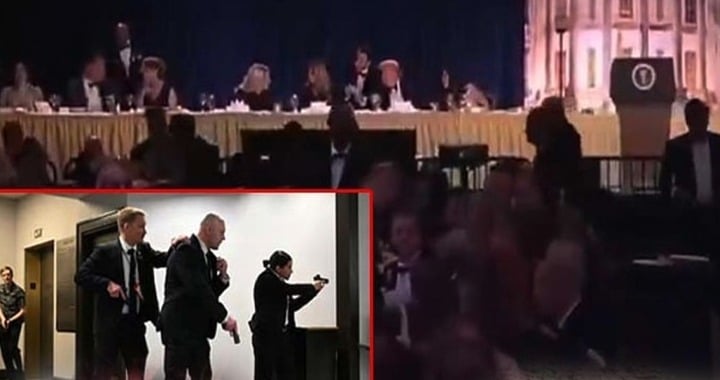
A recent assassination attempt on Donald Trump has once again drawn attention to the long and often tragic history of attacks against sitting U.S. presidents, underscoring persistent security risks even at the highest levels of power.
The latest incident occurred during a formal dinner attended by journalists covering the White House, where President Trump was hosting members of the press. Authorities have since released an image of the alleged attacker, while confirming that the president escaped unharmed.
This marks the second major attempt on President Trump’s life in recent years. A previous attack occurred in July 2024 during an election campaign event, from which he also survived. Research into U.S. history reveals that at least seven American presidents have faced assassination attempts while in office. Of these, four were killed, while three including President Trump survived.
The first U.S. president to be assassinated was Abraham Lincoln, who was fatally shot in 1865 during his presidency. His death marked a turning point in American history. In 1881, James A. Garfield was assassinated following an attack that ultimately proved fatal. Similarly, William McKinley was killed in 1901 after being shot by an assailant.
The most widely remembered modern case is that of John F. Kennedy, who was assassinated in 1963, becoming the youngest elected U.S. president to die in office. Among those who survived such attacks, Theodore Roosevelt was shot in 1912 but lived through the incident. Ronald Reagan was also wounded in an assassination attempt in 1981 but recovered. President Trump now joins this group as one of the few U.S. leaders to have survived multiple assassination attempts once as a former president and now again while in office.
Security experts note that attacks on U.S. presidents, regardless of outcome, carry profound symbolic and political implications. Such incidents highlight vulnerabilities even within the most secure environments and reinforce the challenges faced by protective agencies tasked with ensuring the safety of national leaders.
Analysts also point out historical political patterns, noting that—with the exception of President Kennedy all other U.S. presidents targeted in fatal or non-fatal attacks were affiliated with the Republican Party, though experts caution against drawing simplistic conclusions from this observation.
The latest attempt has once again raised questions about evolving security threats, political polarization, and the resilience of democratic institutions in the United States.



