
For years, Bajaur has stood as one of Pakistan’s most exposed frontier districts, a place where geography and geopolitics collide with brutal force. But what is unfolding now is not merely another wave of violence. It is the emergence of a more layered, more adaptive, and more dangerous security challenge, one that blends cross-border aggression, local sabotage, ideological manipulation, and competing terrorist networks into a single volatile storm.
The latest attack in Bajaur did not target a military convoy or a security installation. Instead, terrorists struck at ordinary livelihoods.
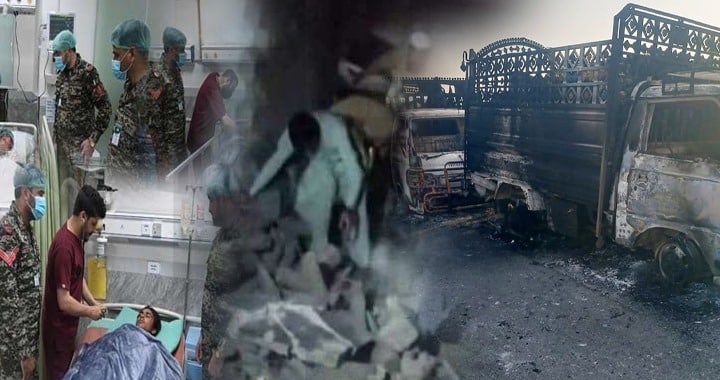
In the Zarmandari area, terrorists opened fire on two civilian vehicles transporting vegetables, fruit and wood, seriously injuring two men, identified as Shahabuddin and Azeemullah, before setting both vehicles ablaze and fleeing.
On the surface, such an attack may appear tactical or isolated. In reality, it sends a deeper message.
By targeting transporters and traders, terrorists are not only attacking individuals, but they are also attacking economic movement, psychological stability and the everyday rhythm of life. In fragile regions like Bajaur, where commerce is survival, burning civilian vehicles is as much an economic weapon as it is an act of terror.
A War Beyond the Battlefield
Bajaur’s current crisis is no longer confined to conventional hit-and-run attacks.
The district is increasingly facing a hybrid threat matrix.
On one front are direct assaults on civilians. On another are attacks on police and security personnel. Beyond that lies cross-border shelling from Afghan territory. Beneath all of it are infiltration attempts, propaganda campaigns and ideological exploitation.
In Salarzai tehsil, police narrowly averted what could have been a mass-casualty event when the Bomb Disposal Squad neutralized explosives allegedly planted by terrorists in Taranano.
This was not simply another bomb disposal operation. It highlighted the evolving tactics of terrorist groups that are increasingly relying on asymmetric warfare, hidden explosives, sabotage operations and civilian-targeted disruption.
Meanwhile, terrorists have intensified attacks on law enforcement.
At Police Post Badam-2, militants opened fire and injured Elite Force Constable Alam Khan. What followed reflected a growing sophistication in terrorist planning: after police rushed to the site, the returning convoy came under a second coordinated ambush.
This “double hit” tactic is designed to inflict maximum casualties by targeting responders rather than initial victims.
The Border Has Become a Live Front
Bajaur’s strategic vulnerability stems largely from its border geography.
The district remains highly exposed to infiltration routes and cross-border attacks emanating from Afghanistan.
In Katkot, cross-border shelling struck civilian homes, martyring three members of one family, including two children, and injuring others.
Security officials linked the shelling to failed infiltration attempts by terrorists associated with Fitna al-Khawarij.
This reveals a disturbing pattern.
When infiltration attempts fail, hostile elements increasingly resort to punitive shelling against civilian areas or attempt to create pressure points along the frontier.
Pakistan’s retaliatory strikes in response underline that the border is no longer merely a line of infiltration. It is becoming an active conflict zone.
And the threat is no longer confined to Bajaur.
Similar patterns have begun appearing in Chitral and other frontier-linked districts, suggesting that the operational map of India-sponsored and Afghan-backed terrorism is widening geographically.
The Rise of Multiple Terrorist Actors
Another dangerous dimension is the growing presence of multiple terrorist groups operating in overlapping spaces.
The so-called Islamic State Khorasan Province has recently claimed responsibility for target killings in Khyber Pakhtunkhwa, particularly Bajaur.
This signals that Bajaur is no longer threatened solely by Fitna al-Khawarij or TTP-linked factions.
Instead, it may be turning into a contested operational theatre where rival groups compete, overlap, or exploit the same instability.
Such environments create more unpredictability.
Rivalries can trigger violence, but tactical coexistence can make operations deadlier and more difficult to counter.
Weaponizing Religion
Perhaps the most disturbing aspect of the evolving threat is the exploitation of religious spaces.
A recently surfaced audio clip allegedly captured TTP-linked operatives discussing the use of mosques as operational shelter.
The objective, according to analysts, is chillingly calculated.
If security forces strike such locations, terrorists hope to provoke public backlash and create anti-state narratives. If they do not strike, terrorists gain sanctuary.
This transforms mosques from places of worship into strategic shields.
It is not just a military tactic. It is psychological warfare aimed at dividing public opinion and weakening operational resolve.
A Battle for the Public Mind
Bajaur is not only witnessing a physical security crisis. It is also facing a narrative war.
Recent protests over civilian casualties during operations contrasted sharply with silence over the martyrdom of a former soldier.
This selective outrage creates dangerous fractures.
Terrorist groups thrive in environments where public consensus weakens, where operations are questioned selectively, and where competing narratives dilute national unity.
The battle in Bajaur is therefore not just being fought with bullets and explosives, but with perception, propaganda and emotional manipulation.
The Foreign Fighter Dimension
The recovery of six more bodies of terrorists from Bajaur’s border belt months after a cross-border operation offers another revealing layer.
Officials say the dead were Afghan nationals linked to the banned TTP.
This reinforces longstanding concerns that foreign-origin fighters remain embedded in operations targeting Pakistan.
The presence of such fighters suggests organized external facilitation rather than purely local militancy.
Fractures Within Terror Ranks
Paradoxically, while the terrorist threat is intensifying, cracks are also appearing within militant ranks.
Reports from Wara Mamund suggest internal divisions between Afghan-origin fighters and locally based terrorists.
Disputes reportedly escalated over operational failures, accusations of abandonment and mistrust between commanders and fighters.
On one hand, such fractures may weaken operational cohesion.
On the other, fractured groups can become more erratic, less disciplined and more prone to indiscriminate violence.
For civilians trapped in the middle, that often means greater danger, not less.
Pakistan’s Frontier Test
Bajaur today represents more than a district under siege.
It has become a microcosm of Pakistan’s broader security challenge: a frontline where cross-border aggression, foreign-backed terrorism, ideological warfare, multiple armed actors and local vulnerabilities intersect.
Yet despite this complexity, the response has remained firm.
Security forces continue intelligence-based operations. Bomb disposal units are neutralizing threats. Border forces are retaliating against hostile fire. Police are absorbing and responding to repeated attacks.
The challenge now is not only military.
It is political, social and psychological.
To secure Bajaur, Pakistan must continue kinetic operations while strengthening public unity, countering propaganda, protecting civilians and exposing the external hands fueling instability.
Because Bajaur is not just fighting for its own peace.
It is holding one of the most critical lines in Pakistan’s wider war against terrorism.



