
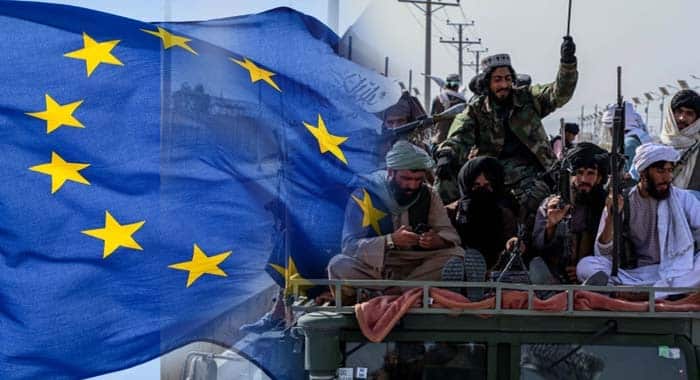
The European Union has expressed continued concern over the presence and activities of armed groups operating within Afghanistan, following a five-day official visit to Kabul by EU Special Envoy Gilles Bertrand.
Speaking after a series of high-level engagements, Bertrand noted that the EU remains deeply concerned by ongoing security challenges linked to such groups. During meetings with officials of the Taliban administration, he raised key issues including regional security risks, human rights conditions, and escalating tensions between Afghanistan and Pakistan. He urged all parties to exercise restraint and pursue constructive dialogue to prevent further harm to civilian populations.
A major focus of the envoy’s discussions was the situation of women and girls in Afghanistan. Bertrand underscored the EU’s concerns regarding restrictions on access to education and employment, stating that such limitations fall short of international norms and risk undermining the country’s long-term socio-economic development.
The envoy reaffirmed the European Union’s commitment to sustained humanitarian assistance in Afghanistan, particularly in critical sectors such as healthcare, education, livelihoods, and support for vulnerable communities. He emphasized that this support remains essential as the country faces a worsening humanitarian crisis.
According to international assessments, Afghanistan continues to grapple with severe economic hardship, widespread poverty, and food insecurity, with millions dependent on humanitarian aid. The United Nations has repeatedly warned that humanitarian needs remain acute, compounded by the large-scale return of Afghan migrants from neighboring countries, placing additional strain on already fragile infrastructure and services.
This marks Bertrand’s third visit to Afghanistan since his appointment. His engagements included consultations with UN representatives, diplomatic missions, and civil society stakeholders, addressing a wide range of issues including security dynamics, regional cooperation, and economic stabilization.
The EU also raised concerns regarding cross-border activities of armed groups and called for de-escalation of tensions between Afghan authorities and Pakistan. In this context, the Union welcomed ongoing mediation efforts by regional actors, including Turkey, Qatar, Saudi Arabia, and China.
Reiterating its support for multilateral diplomacy, the envoy highlighted the importance of UN-led initiatives such as the Doha Process, stressing that coordinated international engagement remains crucial for addressing Afghanistan’s complex challenges.
Nearly five years after the Taliban’s return to power, the European Union continues to reassess its strategic approach to Afghanistan, balancing the imperative of humanitarian assistance with broader concerns related to security, governance, and human rights.



