
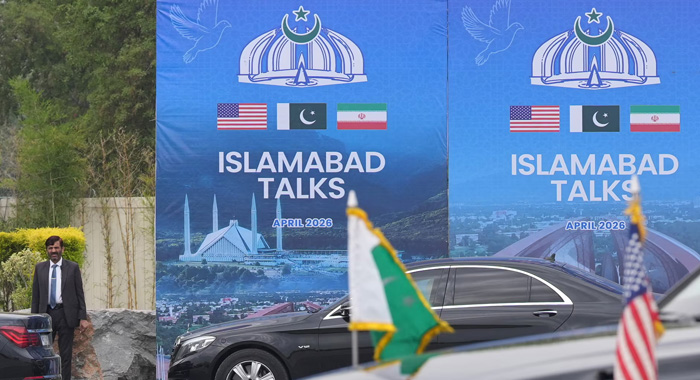
High-level negotiations between the United States and Iran concluded in Islamabad after approximately 21 hours of continuous discussions, ending without a final agreement. Despite the absence of a formal deal, diplomatic engagement was described by observers as extensive, with both sides reportedly engaging in sustained dialogue on regional security and broader geopolitical concerns. The talks, held in Islamabad, have drawn significant international attention due to both their duration and geopolitical sensitivity, marking one of the most prolonged recent diplomatic engagements between the two countries.
According to diplomatic sources, the discussions ended without resolution as key differences between Washington and Tehran remained unresolved. Iranian representatives reportedly expressed concern over a lack of flexibility from the American side, while U.S. officials maintained that complex regional and strategic issues required further engagement. Although no agreement was reached, officials familiar with the process indicated that both sides engaged seriously and are expected to consider continued diplomatic contact in the future.
Pakistan’s role in hosting and facilitating the negotiations has been widely noted across regional and international media. Islamabad’s involvement is being viewed by some analysts as part of its broader diplomatic engagement aimed at supporting dialogue and reducing regional tensions. The development has also sparked contrasting reactions in international media narratives. While some outlets highlighted the lack of a final agreement, others emphasized the significance of sustained dialogue between two long-standing adversaries.
Media coverage in India has reflected sharply divided interpretations of the Islamabad talks. Some television networks reportedly criticized the venue and outcome, while others acknowledged the diplomatic significance of the engagement and Pakistan’s facilitation role. Within Indian journalistic circles, differing viewpoints have also emerged. Senior journalists associated with major publications, including The Wire, The Hindu, and The Indian Express, have been cited in regional commentary discussing the broader implications of the talks.
A notable exchange referenced in regional discourse involved Indian journalists Arfa Khanum Sherwani and Nirupama Subramanian, who discussed the evolving geopolitical dynamics surrounding the negotiations and the perception of Pakistan’s diplomatic positioning. Subramanian’s commentary, as reported in circulated discussions, linked recent regional developments including tensions involving India, Pakistan, and broader Middle Eastern conflicts to shifting diplomatic alignments and external engagement.
Some voices within these discussions acknowledged Pakistan’s facilitation of dialogue between the United States and Iran, with commentary suggesting that diplomatic outcomes in the Middle East may have broader implications for regional stability, including South Asia. The Islamabad negotiations took place amid heightened tensions in the Middle East involving multiple regional and international actors. Analysts note that Pakistan’s role in facilitating dialogue reflects its increasing participation in diplomatic efforts beyond its immediate regional conflicts.
Observers further suggest that while the talks did not produce an immediate agreement, they represent an ongoing effort to maintain communication channels between Washington and Tehran at a critical geopolitical juncture. Despite the absence of a formal agreement, experts emphasize that prolonged negotiations are often a necessary phase in complex international disputes. Historical data in international diplomacy indicates that many agreements require multiple rounds of engagement before reaching finalization.
Some analysts argue that sustained dialogue remains essential, particularly in highly sensitive geopolitical environments where immediate breakthroughs are rare. The continuation of discussions, even without an agreement, is therefore viewed by some as a constructive step. The outcome of the Islamabad talks has been interpreted differently across regional political and media landscapes. While some commentary frames the result as a missed opportunity, others highlight the significance of maintaining dialogue and preventing escalation.
Attention is now expected to shift toward potential future rounds of negotiations, with diplomatic stakeholders assessing conditions for renewed engagement. The 21-hour negotiations in Islamabad underscore both the complexity of U.S.–Iran relations and the broader challenges of conflict resolution in the current geopolitical climate. Although no agreement was reached, the sustained nature of the discussions and continued diplomatic engagement are being closely monitored by regional and international observers.
As diplomatic efforts continue, analysts suggest that maintaining open channels of communication remains critical to reducing tensions and exploring potential pathways toward future agreements.



