
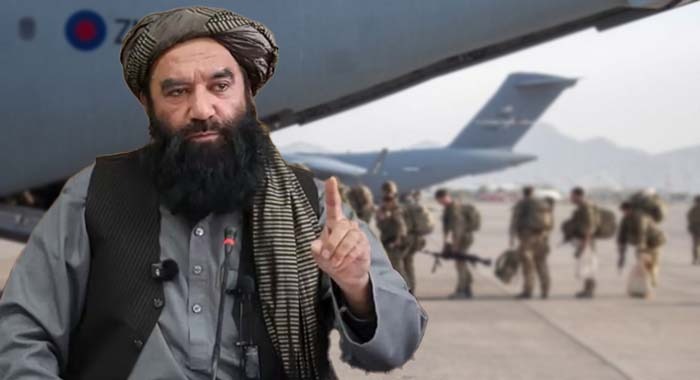
Taliban’s border affairs minister has warned that Pakistan could face the same fate as the Soviet Union and the United States if tensions continue to escalate, as rhetoric from Kabul grows increasingly aggressive.
Speaking at a gathering of individuals aligned with the Taliban, the official described the border fence along the Afghanistan-Pakistan frontier as “a thorn in our chest,” rejecting its legitimacy and accusing Pakistan of pursuing foreign-driven policies.
He claimed that the Taliban had “taught Russia a lesson” and “taught America a lesson,” warning that Pakistan should expect similar treatment. Yet such assertions raise a critical question: were those wars truly decisive military victories, or complex withdrawals shaped by global politics, economic strain, and shifting strategic priorities?
The Soviet exit from Afghanistan followed years of internal decline and mounting international pressure. The US withdrawal, decades later, came after negotiations and a political decision to end a prolonged conflict. Neither resembled a conventional defeat in which a conquering force imposes terms on a vanquished power.
So where does that leave the comparison with Pakistan, a country not occupying foreign territory but confronting cross-border terrorism that has repeatedly targeted its civilians and security forces?
The contradiction deepens further. If the Taliban claim to have defeated global powers, why does their administration continue to seek financial aid, humanitarian assistance, and diplomatic legitimacy from those same international actors? Modern history offers few, if any, examples of a “victor” relying so heavily on the very system it claims to have overcome.
Pakistani officials maintain that their actions are driven by security concerns, pointing to terrorist networks operating from Afghan soil. Cross-border measures, they argue, are aimed at dismantling these networks and preventing further attacks.
At the same time, reports indicate that Taliban authorities have quietly reached out through intermediaries, including friendly regional states, urging Pakistan to exercise restraint. This dual approach, public threats paired with private appeals, raises another question: is this strategy, or a sign of internal pressure?
The Taliban have also rejected the internationally recognized border, despite extensive fencing by Pakistan to curb infiltration. While not impermeable, the barrier has significantly restricted the movement of terrorist elements and their facilitators.
Claims that the current administration represents all Afghans continue to face international scrutiny, with repeated calls for a more inclusive political structure still unmet.
The same official has previously issued warnings of advancing deeper into Pakistani territory if tensions escalate. But such statements invite skepticism. Are these grounded in operational capability, or are they part of a broader pattern of rhetoric, propaganda, and narrative-building?
Narrative vs Ground Reality
The emerging picture suggests a widening gap between rhetoric and reality. While the Taliban frame past conflicts as outright victories, the present tells a different story, one shaped by economic dependence, diplomatic isolation, and persistent allegations of support for terrorism.
If anything, the question is not whether history will repeat itself, but whether it is being selectively rewritten to sustain a narrative that struggles to align with current ground realities.



