
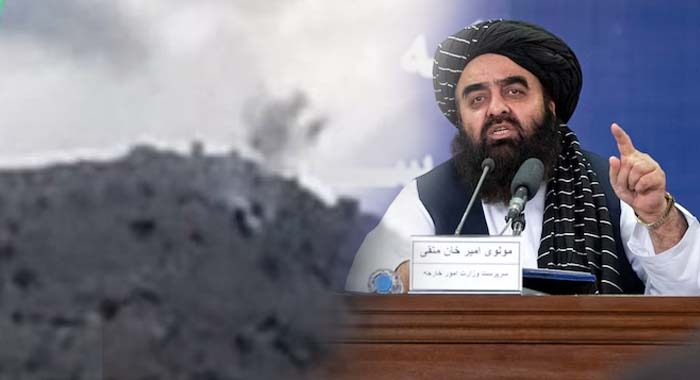
Afghan Taliban’s acting Foreign Minister Amir Khan Muttaqi has claimed that Afghan soil will not be allowed to be used against neighboring countries, reiterating a commitment to regional security, yet recent developments along the Pakistan-Afghanistan border continue to cast doubt on these assurances.
Speaking at the conclusion of a consultative meeting with Central Asian diplomats in Kabul, Muttaqi stated that authorities would act against any groups or networks posing threats to regional stability. Without naming specific outfits, he maintained that the presence of such elements is unacceptable and insisted that the Afghan Taliban remain committed to addressing the issue.
He further expressed willingness to resolve tensions with Pakistan through dialogue, voicing optimism that ongoing engagements could yield positive outcomes.
However, these statements stand in stark contrast to repeated incidents along the border. Security forces recently responded decisively after Afghan Taliban elements opened fire in the Ghulam Khan sector of North Waziristan. The attack, involving both light and heavy weapons, was met with an immediate and effective response, inflicting significant damage on multiple Taliban posts and forcing attackers to abandon their positions.
This was not an isolated episode. In multiple recent engagements, Pakistani forces have repelled cross-border attacks, compelling Afghan Taliban elements to withdraw from positions in Nuristan and Kunar provinces after sustained exchanges.
Such developments raise pressing questions about the credibility of Kabul’s claims. If Afghan soil is indeed being denied to groups threatening neighbors, how do these repeated cross-border attacks originate, sustain, and escalate? The disconnect between official statements and operational realities remains difficult to reconcile.
The situation becomes even more complex in light of Pakistan’s clearly articulated security concerns. Islamabad has consistently called for the designation of the banned Tehreek-e-Taliban Pakistan (TTP) as a terrorist organization, the dismantling of its safe havens, and the handover of its members. These demands form the core of ongoing engagements, reflecting a security-first approach shaped by persistent threats.
At the same time, Pakistan’s military leadership has reiterated that operations against terrorists will continue without pause. Operation Ghazab Lil Haqq stands as a direct response to sustained attacks, underscoring a policy of retaliation rather than escalation, aimed at neutralizing threats emanating from across the border.
In this context, Muttaqi’s statements invite deeper scrutiny. Diplomatic language and assurances of cooperation carry weight only when matched by verifiable action on the ground. Without tangible steps to dismantle terrorist infrastructure and prevent cross-border activity, such declarations risk being perceived as rhetorical rather than real.
While observers suggest that broader regional pressures may create space for temporary de-escalation, lasting stability will depend on whether commitments translate into concrete measures. Until then, the contrast between words spoken in conference rooms and actions witnessed along the border will continue to define the trajectory of Pakistan-Afghanistan relations.



