
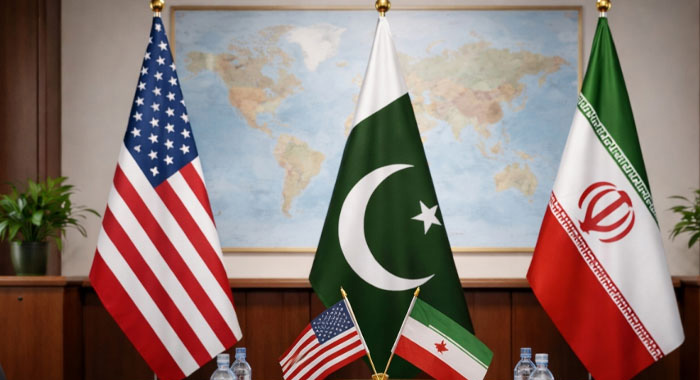
Pakistan has reportedly presented a comprehensive two-phase framework aimed at de-escalating tensions between Iran and the United States, according to international media reports, as diplomatic efforts intensify to prevent further escalation in the region.
As per a report by a British news agency, both Iran and the United States have received the proposed plan and are currently reviewing its provisions. The initiative outlines a structured pathway toward conflict resolution, beginning with an immediate ceasefire followed by negotiations for a long-term settlement.
According to details, the first phase of the framework calls for the immediate cessation of hostilities, alongside the reopening of the strategically critical Strait of Hormuz, a vital global energy transit route. The second phase envisions a comprehensive and permanent peace agreement, to be negotiated during the ceasefire period.
Pakistan is said to be playing a central diplomatic role, acting as a primary communication channel between the two sides. Reports indicate that the country’s military leadership has maintained continuous engagement with key stakeholders, including U.S. Vice President JD Vance and Iranian Foreign Minister Abbas Araghchi, to facilitate dialogue and reduce tensions.
The proposed agreement is reportedly being referred to as the “Islamabad Accord,” with discussions also considering a 45-day temporary ceasefire as part of the initial phase.
Earlier, reporting by the U.S.-based outlet Axios, citing American, Israeli, and regional sources, indicated that mediators are actively discussing a two-stage agreement. Under this arrangement, an initial ceasefire—potentially lasting up to 45 days—would create space for negotiations toward a permanent resolution. The report further noted that the temporary truce could be extended if additional time is required to finalize a comprehensive agreement.
Despite ongoing diplomatic efforts, there has been no immediate official response from the White House or the U.S. State Department. However, sources suggest that while a partial agreement within the next 48 hours appears unlikely, the current diplomatic push may represent a critical window to prevent further escalation.
Separately, The Wall Street Journal reported that Pakistan, alongside Egypt and Türkiye, has been engaged in efforts to encourage Iran to return to the negotiating table. While these diplomatic initiatives are ongoing, the report noted limited progress so far, with Iran reportedly rejecting U.S. demands to reopen the Strait of Hormuz.
The evolving situation underscores the high-stakes geopolitical environment in the region, with global economic and security implications tied closely to developments in the Gulf. The proposed framework, if advanced, could mark a significant step toward de-escalation, though uncertainties remain regarding its acceptance and implementation.



