
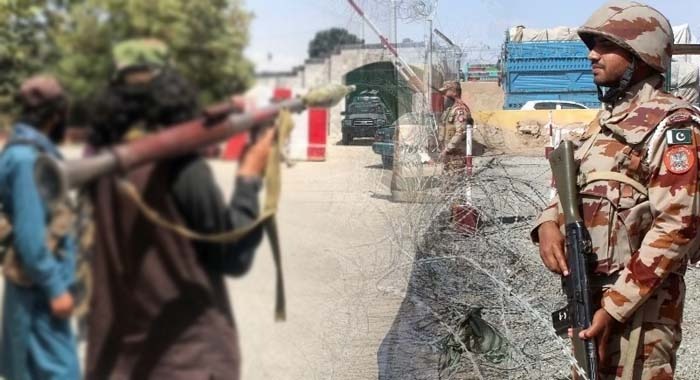
Pakistan’s latest security developments, spanning Balochistan, Karachi, and the Pak-Afghan border, point to a clear and evolving shift in counterterrorism strategy, one that is broader in scope, sharper in execution, and increasingly intelligence-led.
The multi-district operations against the banned Balochistan Liberation Army (BLA), resulting in the elimination of 32 terrorists and the neutralization of key commanders, signal more than a tactical success. They reflect an operational doctrine focused on dismantling entire networks rather than responding to isolated threats. Simultaneous strikes across Panjgur, Kharan, Kalat, Mastung, Turbat, and Quetta indicate a coordinated effort to deny space, disrupt logistics, and fracture command structures.
At the same time, the arrest of a highly wanted BLA-linked terrorist in Karachi underscores the urban dimension of the threat. Terror networks are no longer geographically confined; they operate through distributed nodes, blending logistics, recruitment, and propaganda across cities and remote regions alike. The recovery of explosives and the suspect’s involvement in digital radicalization highlight the hybrid nature of modern terrorist ecosystems.
From Isolated Incidents to an Integrated Threat Landscape
What emerges from today’s developments is a crucial shift in understanding, terrorism confronting Pakistan is no longer episodic or localized. It is networked, adaptive, and increasingly transnational.
This is most evident in intelligence findings linking BLA elements to cross-border infiltration routes via Afghan territory. Combined with earlier reports of the banned Tehreek-e-Taliban Pakistan (TTP) leadership operating from within Afghanistan, a pattern becomes difficult to ignore. Multiple terrorist organizations, including the banned TTP, the banned BLA, Majid Brigade, and Al-Qaeda, are finding operational space across the border.
The implications are significant. A permissive environment across the border not only enables regrouping but also facilitates training, financing, and strategic coordination. This transforms the threat from a domestic security challenge into a regional security equation.
Border Pressures and Strategic Signaling
The temporary closure of the Torkham crossing following cross-border firing, along with the controlled repatriation of Afghan nationals, adds another layer to this evolving picture. Border management is no longer just an administrative function; it has become a frontline security instrument.
Pakistan’s actions indicate a calibrated approach, tightening border controls, regulating population movement, and maintaining readiness against aggressive posturing from across the border. The linkage between security incidents and migration management reflects a broader strategy to minimize vulnerabilities that can be exploited by terrorist networks.
Technology, Intelligence, and Precision
Another defining feature of recent operations is the increasing use of precision capabilities. Drone strikes in Kharan, targeted eliminations of high-value individuals, and intelligence-based raids demonstrate a shift toward proactive disruption rather than reactive engagement.
Equally important is the intelligence yield. Captured terrorists revealing infiltration routes and supply chains, along with the recovery of advanced foreign-origin weapons, point to organized support systems sustaining these groups. This raises concerns about external facilitation and the durability of these networks if left unchallenged.
The Strategic Trajectory
Taken together, these developments suggest that Pakistan is entering a new phase in its counterterrorism campaign, one defined by simultaneity, integration, and strategic depth.
Rather than focusing on singular operations, the emphasis is now on creating cumulative pressure across multiple fronts, geographic, operational, and informational. The objective appears clear: to compress the operational space available to terrorist organizations until their ability to function is fundamentally degraded.
However, sustainability remains the key challenge. Tactical successes must translate into long-term stability, which requires not only continued operations but also regional coordination, border discipline, and disruption of financial and logistical pipelines.
Today’s security landscape reflects both progress and complexity. Pakistan has demonstrated its capacity to strike, disrupt, and dominate across multiple domains. Yet the persistence of cross-border safe havens and networked terrorist ecosystems means that the threat is evolving, not disappearing.
The coming phase will depend on whether this operational momentum can be sustained and converted into a durable security equilibrium, one where terrorist networks are not just weakened, but structurally dismantled.



