
Taimur Khan
Afghanistan’s institutional fragility is emerging as a critical multiplier of security threats for Pakistan. Beyond the immediate concerns of militant activity and refugee flows, the inability of Afghan authorities to govern effectively creates structural conditions that favor extremist resurgence and cross-border instability.
Experts emphasize that weak bureaucratic structures, dysfunctional judicial systems, and inconsistent enforcement of law are producing parallel power centers, where non-state actors, criminal networks, and ideologically rigid factions assert control. These ungoverned spaces serve as incubators for the banned Tehreek-e-Taliban Pakistan (TTP), Balochistan Liberation Army (BLA), and other regional militants, enabling them to regroup, train, and coordinate operations targeting Pakistan.
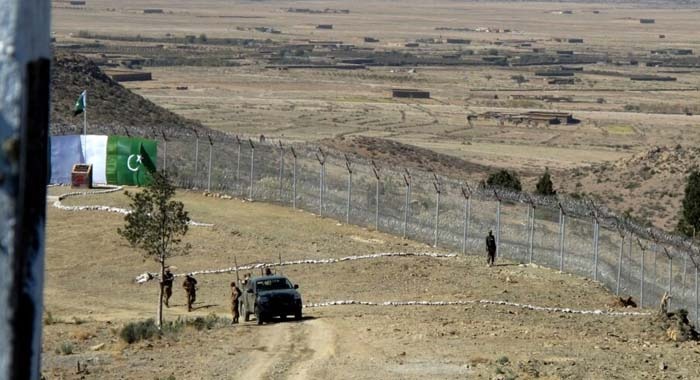
Pakistan’s security apparatus has noted a correlation between areas of Afghan governance collapse and spikes in cross-border incidents. Porous borders and minimal administrative oversight allow arms, narcotics, and recruits to flow with little resistance. Analysts argue that this structural weakness is more dangerous than episodic attacks—it creates a persistent, systemic risk that cannot be addressed solely through military or paramilitary measures.
The erosion of state capacity also amplifies humanitarian and economic pressures. With local governments unable to deliver basic services, populations migrate toward safer regions, often across Pakistan’s western frontier. Such movements compound the challenge, straining border management, health systems, and law enforcement, while offering militants new opportunities for infiltration.
Regional observers highlight that the collapse of Afghan institutions magnifies Pakistan’s strategic dilemma. Islamabad must simultaneously secure its borders, manage migration flows, and anticipate indirect effects of Afghanistan’s administrative vacuum on regional power dynamics. The inability of Afghan authorities to project legitimacy further strengthens extremist narratives, enhancing recruitment and propaganda operations that directly target Pakistan.
Structural Fragility as a Strategic Lens
The deeper concern is systemic: the collapse of governance transforms Afghanistan into a semi-permanent security incubator. Each weak district or unmonitored province functions as a node from which instability radiates. For Pakistan, this means that conventional counterterrorism strategies must be supplemented with long-term structural engagement, including support for local governance initiatives, intelligence coordination, and humanitarian stabilization efforts.
In the absence of international and regional mechanisms to address state fragility, Pakistan is compelled to absorb much of the fallout. Failure to recognize the strategic implications of Afghanistan’s administrative collapse risks not only security shocks but also entrenched influence by hostile actors along Islamabad’s western border.



