
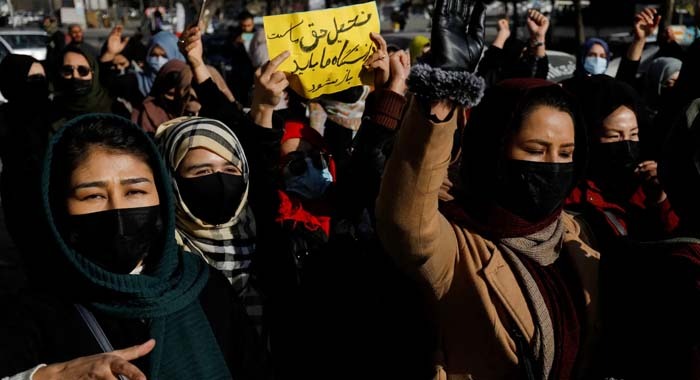
Afghan citizens living abroad have raised their voices in protest against the Taliban’s autocratic rule, highlighting the regime’s use of religion for political control and its systematic violations of human rights. The issue was brought to the forefront during a session of the “Women for Afghanistan Foundation” at the British Parliament, where participants delivered a firm and unified condemnation of the Taliban regime.
During the conference, political and military opponents of the Taliban presented a strong critique of the regime’s extremist policies, emphasizing the severe restrictions imposed on basic human rights, particularly women’s rights, and the devastating impact of these policies on Afghanistan’s social and political structures.
The statement issued by the foundation highlighted that the Taliban’s exploitation of religion for political ends has undermined Afghanistan’s political and social framework, leaving the country in a state of crisis. Attendees stressed that the regime’s excessive use of force, combined with systematic restrictions on fundamental rights, has worsened Afghanistan’s humanitarian and economic situation, driving rising poverty and hardship among ordinary citizens.
Experts at the conference emphasized that the future political system of Afghanistan must be inclusive, reflective of public will, and based on a modern constitutional framework. They pointed out that internal resistance movements and protests by the Afghan diaspora serve as tangible evidence of the Taliban regime’s irresponsible policies and its lack of popular support.
Conference participants called on the international community to recognize and support Afghan voices advocating for democracy, human rights, and social justice, particularly in defense of women and marginalized communities. They underscored that sustainable peace in Afghanistan is achievable only through a government that respects human rights, upholds the rule of law, and ensures political participation for all citizens.



