
Taimur Khan
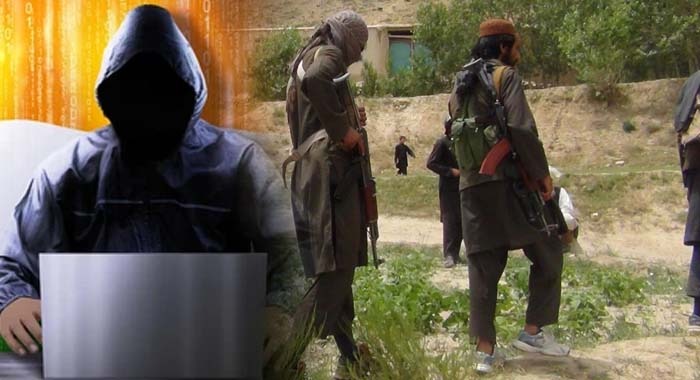
Pakistan today faces a security challenge that is no longer confined to the battlefield, for instance the one in Khyber expanding upwards and have reached to Kabul. It unfolds simultaneously in the physical and digital domains, where cross-border militancy is accompanied by coordinated disinformation campaigns designed to distort reality and weaken Pakistan’s position.
The latest example emerged through claims on social media suggesting that a Pakistani delegation had quietly travelled to Kabul for negotiations with the Afghan Taliban. The government of Pakistan has categorically denied these reports. Yet the speed and coordination with which the narrative spread indicate that the objective was never to report facts. The goal was to construct a perception.
Such disinformation campaigns are not isolated incidents. They form part of a broader information strategy in which hostile networks attempt to portray Pakistan as diplomatically isolated or strategically vulnerable. By circulating unverified claims about secret talks or concessions, these narratives attempt to frame Pakistan as negotiating under pressure rather than defending its legitimate security interests.
The reality is far more straightforward. Pakistan has repeatedly maintained that dialogue with Afghanistan cannot be separated from the issue of terrorism. Islamabad’s position remains clear. Any meaningful engagement requires decisive action against militant groups operating from Afghan soil, particularly organizations such as the Tehreek-e-Taliban Pakistan (TTP) and the Balochistan Liberation Army (BLA).
For years, Pakistan has warned that militant networks exploit sanctuaries across the western border to plan and launch attacks inside Pakistani territory. In response, Pakistan has carried out targeted counterterrorism actions against locations believed to host terrorist infrastructure. These operations are directed at dismantling networks linked to groups such as TTP, Al-Qaeda, ISKP, and ETIM, all of which have posed serious threats to regional security.
However, the information environment surrounding these developments often becomes distorted. Certain media narratives and online propaganda networks attempt to frame Pakistan’s defensive measures as destabilizing actions, while ignoring the presence of internationally recognized terrorist organizations operating from Afghan territory.
At the same time, international monitoring mechanisms increasingly acknowledge the continued existence of extremist groups inside Afghanistan. Reports linked to the United Nations and statements by major global powers have highlighted the persistence of militant networks across different regions of the country. These assessments reinforce Pakistan’s long-standing concerns about cross-border terrorism.
The disinformation campaign is therefore closely linked to the security challenge itself. By amplifying misleading narratives, militant sympathizers and hostile information networks attempt to create confusion about the root cause of the conflict. The objective is to blur the distinction between counterterrorism operations and aggression, thereby weakening Pakistan’s case internationally.
Recent developments in district Khyber illustrate how propaganda and militancy intersect on the ground. A video circulated online showing armed individuals in the Bara area claiming to have established a temporary checkpoint. According to available information, the individuals were believed to be affiliated with the TTP. Yet the footage suggests that the episode was largely staged as a propaganda spectacle. The individuals reportedly remained in the area briefly, filmed the scene, and then disappeared.
The purpose of such acts is psychological rather than operational. By creating the illusion of control or presence, militant groups attempt to generate fear among local populations while simultaneously feeding material into online propaganda channels.
These tactics underscore the complexity of the security environment in Pakistan’s former tribal districts. The terrain remains challenging, and militant elements often attempt to blend into civilian populations before relocating. This dynamic has long complicated counterterrorism efforts and explains why security forces and law-enforcement agencies continue to face persistent challenges despite significant operational successes.
Addressing this challenge requires more than reactive security measures. It demands stronger governance, improved surveillance capabilities, and better coordination between federal and provincial institutions. Technologies such as drone monitoring, integrated camera systems, and digital intelligence tools can significantly improve the ability of authorities to detect and disrupt militant activities.
Equally important is the need to address the social conditions that extremist networks seek to exploit. Lack of economic opportunities, gaps in governance, and limited educational access can create environments where militant propaganda finds an audience. Long-term stability therefore depends on development initiatives alongside security operations.
Pakistan’s counterterrorism strategy has demonstrated that militant networks can be dismantled through sustained effort and coordination. Yet the evolving nature of the threat means that success now depends on confronting both the physical and informational dimensions of the conflict.
Ultimately, the challenge facing Pakistan is not merely one of border security. It is a hybrid threat combining cross-border militancy with information warfare. Pakistan’s response must therefore remain equally comprehensive, defending the country not only against terrorists but also against the narratives that attempt to obscure the reality of that fight.



