
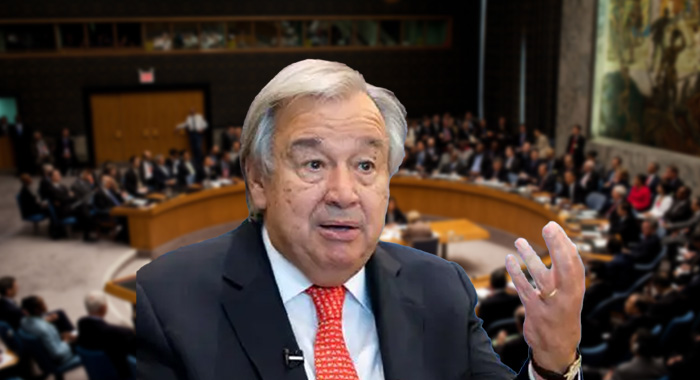
A new report submitted by United Nations Secretary-General António Guterres to the United Nations Security Council has painted a troubling picture of Afghanistan’s security and humanitarian landscape, warning of a significant rise in violent incidents alongside worsening economic and humanitarian conditions across the country.
According to the report, which assesses the situation in Afghanistan and its implications for international peace and security, the number of safety and security incidents recorded in the country rose sharply during the latest reporting period.
The United Nations documented 2,660 security-related incidents between November 1, 2025, and January 31, 2026, representing a 27.8 percent increase compared with the same period a year earlier. The report highlights that although the country has experienced a degree of relative stability under the current authorities, security threats and instability remain persistent.
The Secretary-General also raised concerns about growing tensions along Afghanistan’s borders, particularly with Pakistan and Iran. The report noted that cross-border incidents, including clashes, artillery shelling and air strikes, have occurred in recent months, resulting in civilian casualties and damage to property in affected areas.
Militant activity continues to be a major concern. The report states that extremist groups, including the Islamic State Khorasan Province (ISKP), remain active and capable of carrying out high-profile attacks. Among the incidents cited was a suicide bombing targeting a Chinese restaurant in Kabul in January, which left at least seven people dead and 13 others injured.
Beyond the security situation, the United Nations warned that Afghanistan’s humanitarian crisis is deepening, with millions of people facing severe economic hardship and food insecurity.
The report estimates that 21.9 million people nearly 45 percent of Afghanistan’s population will require humanitarian assistance in 2026. In response, the United Nations and its humanitarian partners have launched a humanitarian response plan seeking $1.71 billion to deliver life-saving assistance to approximately 17.5 million people across the country.
Food insecurity remains widespread. According to the report, 17.4 million Afghans are experiencing acute food insecurity, while 3.7 million children under the age of five are suffering from acute malnutrition, underscoring the scale of the crisis facing vulnerable communities.
The Secretary-General’s report also highlights continuing concerns about human rights conditions in Afghanistan. These include restrictions on women’s and girls’ access to education and employment, reports of public punishments, arbitrary arrests and limitations on media freedom.
Despite what the report describes as a degree of stability since the change of power in 2021, Guterres cautioned that Afghanistan faces mounting pressures. These include declining levels of international assistance, the large-scale return of Afghan migrants from neighboring countries, natural disasters and persistent economic challenges.
In his remarks to the Security Council, the UN chief urged the international community to maintain constructive engagement with Afghanistan while calling on the country’s authorities to cooperate with the United Nations and take steps toward addressing humanitarian needs and improving human rights conditions.
Guterres also reiterated the importance of lifting restrictions on women and girls, emphasizing that their full participation in society is essential for Afghanistan’s long-term stability and recovery.
The report concludes that sustained international support and meaningful engagement with Afghan authorities will remain critical to preventing further deterioration of the country’s humanitarian, economic and security situation.



