
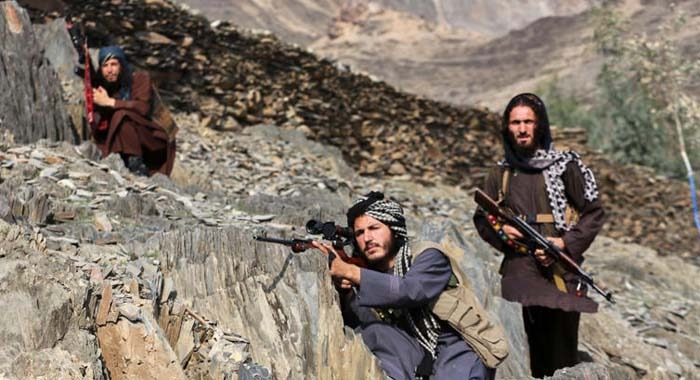
Since the withdrawal of United States forces from Afghanistan in August 2021, the country has increasingly become a central point in international security debates. Analysts and policymakers warn that the evolving political and economic landscape risks turning the country into a sanctuary for transnational militant networks.
Three developments have amplified these concerns. First, the continued presence of numerous extremist organizations operating across different regions of the country. Second, the internal fragmentation of the governing Taliban regime, which faces institutional and administrative limitations in consolidating authority. Third, the deepening humanitarian and economic crisis that is reshaping Afghan society and creating fertile ground for militant recruitment.
These overlapping challenges are now being viewed not only as a regional issue but also as a matter with potential global security implications.
Fragmented Terrorist Networks and the Rise of a Militant Hub
One of the most significant security concerns is the fragmented ecosystem of militant organizations operating inside Afghanistan. Many extremist groups function through semi-autonomous factions and splinter networks locally referred to as “Dalgai”. These networks maintain operational independence while cultivating ties with foreign militant organizations.
This decentralized structure makes it difficult to clearly identify which factions maintain links with international terrorist outfits. At the same time, it allows governing authorities to distance themselves from such connections, creating a grey zone that complicates international monitoring and accountability.
Security assessments suggest that roughly twenty regional and international militant organizations are currently active in Afghanistan. These include groups such as Al-Qaeda, Islamic State – Khorasan Province, Tehreek-e-Taliban Pakistan, Islamic Movement of Uzbekistan and Eastern Turkistan Islamic Movement.
These groups possess the capability to support or inspire terrorist operations beyond Afghanistan’s borders, raising alarms across Central Asia, South Asia, the Middle East and Western capitals.
Recent assessments by the United Nations warn that fighters affiliated with extremist organizations have been absorbed into Taliban security structures. Such developments have raised concerns among international observers about ideological infiltration within state institutions and the possibility of extremist networks gaining indirect access to state resources.
Among the militant outfits operating in the region, ISKP has emerged as one of the most ambitious and internationally focused organizations. Unlike many regionally focused militant groups, ISKP has openly articulated its intention to expand its operational footprint beyond South and Central Asia, including potential attacks in Europe.
The group’s capabilities became evident during the deadly attack on the Crocus City Hall in March 2024. Militants linked to ISKP carried out a mass-casualty assault at the concert venue near Moscow, killing more than 130 civilians. The attack underscored the organization’s ability to inspire or coordinate operations far beyond Afghanistan.
Humanitarian Crisis, Gender Restrictions and the Illicit Economy
Beyond the security dimension, Afghanistan’s humanitarian and economic crises are also feeding into the broader instability.
Since the Taliban’s return to power, the country has faced severe economic contraction. International sanctions, frozen financial assets and the collapse of foreign aid have significantly weakened the national economy. As livelihoods shrink, many Afghans are seeking opportunities abroad, triggering large-scale migration flows across neighboring countries and toward Europe.
This irregular migration has heightened international concerns about cross-border crime, human trafficking networks and border security challenges.
At the same time, Afghanistan’s illicit economy remains a major source of funding for militant groups. Activities such as narcotics trafficking, illegal mining, kidnapping and smuggling generate billions of dollars annually. These shadow economic networks allow extremist groups to maintain financial sustainability even in the absence of formal state support.
Restrictions imposed on women’s education, employment and participation in public life have further worsened the country’s economic trajectory. International organizations argue that excluding women from economic activity not only undermines household incomes but also reduces overall economic productivity.
Militant organizations are increasingly exploiting these socio-economic pressures. Economic desperation, political grievances and limited employment opportunities have created an environment where extremist groups can recruit new members, particularly among younger populations.
The Need for Coordinated International Action
The withdrawal of the United States created a strategic vacuum that extremist organizations have sought to exploit. The continued presence of militant groups with global ambitions now poses potential risks not only for regional stability but also for Western countries including the United States.
Security experts argue that addressing the evolving threat requires stronger international coordination. Enhanced counterterrorism monitoring mechanisms, including intelligence sharing between regional and Western governments, will be essential to track militant networks and disrupt planned operations.
Targeted sanctions and financial monitoring aimed at dismantling funding streams linked to narcotics trafficking and other illicit economic activities are also considered critical steps in weakening militant organizations.
At the diplomatic level, engagement with the Taliban government remains a subject of debate among policymakers. However, many analysts argue that diplomatic interaction should remain conditional on measurable progress in two key areas: meaningful counterterrorism cooperation and improvements in human rights protections, particularly regarding women’s rights and civil liberties.
Without sustained international engagement and coordinated monitoring, analysts warn that Afghanistan risks evolving into a permissive environment where extremist networks can regroup, reorganize and project violence beyond the region.



