
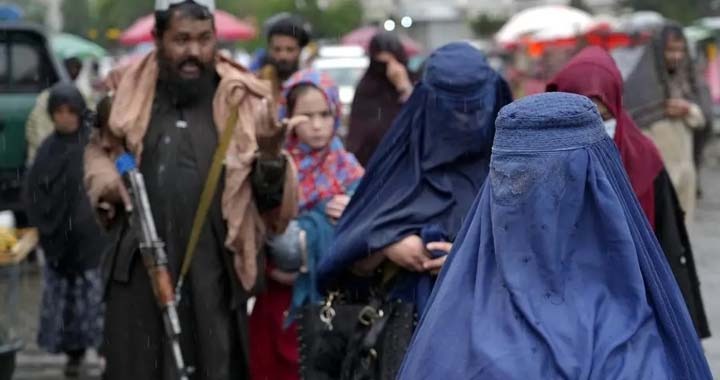
Afghanistan has emerged as the world’s most restrictive environment for women’s rights under the rule of the Taliban, as sweeping bans on education, employment, and freedom of movement continue to isolate millions of Afghan women from public life.
Since returning to power in 2021, the Taliban administration has imposed a series of harsh restrictions under the banner of religious interpretation, effectively barring women and girls from schools, workplaces, and most forms of social participation.
Education for girls beyond primary level remains completely banned, leaving an entire generation without access to formal learning. International rights groups warn that the prolonged closure of schools for girls could have devastating long-term consequences for Afghanistan’s social and economic development.
Critics say the restrictions have created a striking contradiction. While Afghan girls are denied basic educational opportunities, militant groups operating in and around Afghanistan have reportedly exploited young women for various extremist activities. Analysts warn that such practices expose vulnerable youth to manipulation and coercion by radical networks.
Women are also largely excluded from employment across many sectors, pushing thousands of families into deeper poverty. With limited opportunities to earn a livelihood, many Afghan women are now forced to rely on charity or begging simply to survive.
At the same time, strict rules governing women’s movement mean that leaving home without a male guardian can lead to punishment under Taliban directives. Human rights observers say these policies have effectively confined women to their homes and stripped them of their basic civil liberties.
The consequences are particularly severe in the healthcare sector. With girls barred from higher education, Afghanistan faces a growing shortage of female doctors, nurses, and medical professionals. This has made it increasingly difficult for Afghan women to access even basic healthcare services in a country where cultural norms often require female patients to be treated by female staff.
Human rights advocates warn that the systemic exclusion of women from education, employment, and public life is creating a humanitarian and social crisis that could persist for generations.
Critics also argue that the muted response from parts of the international community risks emboldening the Taliban leadership to impose even harsher restrictions on Afghan women.
Calls are growing for stronger action from global institutions such as the United Nations and international human rights organizations to address what activists describe as one of the most severe gender rights crises in the world today.
Without sustained international pressure and meaningful policy changes inside Afghanistan, observers warn that Afghan women will continue to face profound discrimination, isolation, and hardship under the current system.



