
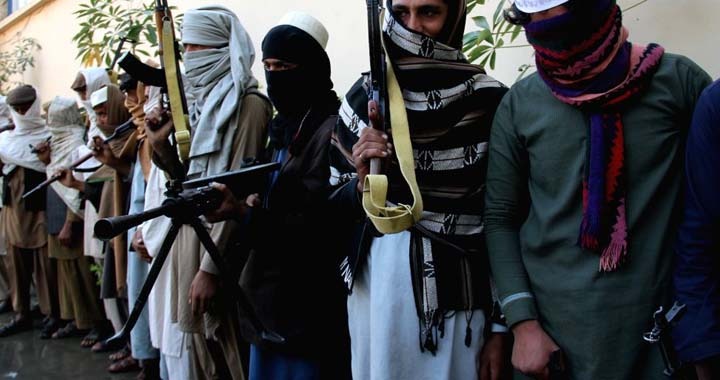
The series of stories we covered recently, ranging from militancy in Pakistan’s tribal regions to geopolitical tensions involving Iran, illustrate how modern conflicts operate on several interconnected levels. These include physical violence on the ground, ideological narratives used to recruit fighters, and strategic calculations at the global level. When viewed together, the stories form a broader picture of how security challenges evolve from local tragedies into regional and international strategic debates.
One of the most striking examples is the story of Zarar Wazir, a young man from North Waziristan whose life ended in a suicide attack near Miranshah. His story highlights a recurring pattern in militant recruitment. Vulnerable youth, often with limited economic opportunities or social protection, become targets for militant organizations such as Tehreek-e-Taliban Pakistan. Recruitment often begins with persuasion framed in religious language or promises of honor and spiritual reward. In some cases, however, coercion and exploitation play a decisive role.
The reported experience of Zarar Wazir reflects how militant groups manipulate young recruits psychologically. Once drawn into the network, individuals may be subjected to intimidation, blackmail, or ideological conditioning designed to eliminate the possibility of withdrawal. The result is a system where the operational planners remain far removed from the violence while vulnerable recruits are pushed toward suicide missions. Such incidents reveal not only the brutality of militant tactics but also the long-term social damage inflicted on communities in conflict zones.
Another related dimension involves the propaganda and narrative-building that accompanies militant activity. Groups often use social media or messaging networks to glorify attacks and portray perpetrators as martyrs. This propaganda serves a dual purpose: it reinforces internal morale among militants and also attempts to attract new recruits. The circulation of images and stories of attackers, including young individuals, demonstrates how militant groups construct narratives designed to legitimize violence and romanticize sacrifice.
At the same time, counterterrorism operations and security responses in Pakistan continue to form another layer of the conflict. Operations carried out in regions such as Balochistan and North Waziristan show how state security institutions attempt to dismantle militant networks and prevent attacks before they occur. These operations are part of a long-running effort to confront insurgent groups operating in difficult terrain and across porous borders. While tactical successes are frequently reported, the persistence of recruitment networks indicates that countering militancy requires not only military action but also long-term social and political solutions.
The broader regional context also influences the security environment. Cross-border militant movement, ideological influence, and logistical support networks often extend beyond national boundaries. As a result, local attacks cannot always be understood in isolation. They are often connected to regional militant ecosystems that operate across multiple countries.
At the global level, the latest story concerning Iran demonstrates a different but related dimension of modern conflict: the limits of military power in achieving political transformation. A classified assessment by the National Intelligence Council, cited by The Washington Post, concluded that even a large-scale military campaign would be unlikely to remove Iran’s entrenched political and military leadership.
According to the intelligence analysis, Iran’s governing structure has built-in mechanisms designed to preserve continuity of power even if senior leaders are killed. Succession processes and institutional resilience mean that external military pressure alone is unlikely to dismantle the existing system.
This assessment is particularly significant because it challenges the assumption that large-scale military force automatically produces political outcomes such as regime change. Intelligence officials have also noted that Iran’s opposition groups currently lack the organizational strength to seize control of the state if the existing leadership collapses.
Together, these developments highlight an important strategic reality. Modern conflicts are rarely resolved solely through battlefield victories. Militant organizations survive through ideological narratives and recruitment networks, while states maintain power through institutional resilience and political control.
Whether examining the tragedy of a manipulated youth in North Waziristan or the geopolitical calculations surrounding Iran, the underlying lesson remains the same: the struggle over security today is not only about weapons and military operations. It is also a contest of narratives, institutions, and long-term societal dynamics.
Understanding these multiple layers is essential for interpreting the complex security environment shaping the region today.



