
Pakistan’s western security environment appears to be entering a new operational phase, where cross-border pressure, militant retaliation, technological adaptation, and public resistance to extremism are unfolding simultaneously.
Developments over the past several days, including Operation Ghazab Lil Haqq, the Miranshah car bomb explosion, cross-border mortar fire in Landi Kotal and Mohmand, the rocket attack in Parachinar, and the establishment of a UAV division by Khyber Pakhtunkhwa Police, together paint a broader picture of a conflict that is evolving in both form and intensity.
Individually, each event may appear to be a routine security incident. Taken together, however, they suggest a deeper strategic shift underway along Pakistan’s western frontier.
Pressure Across the Border
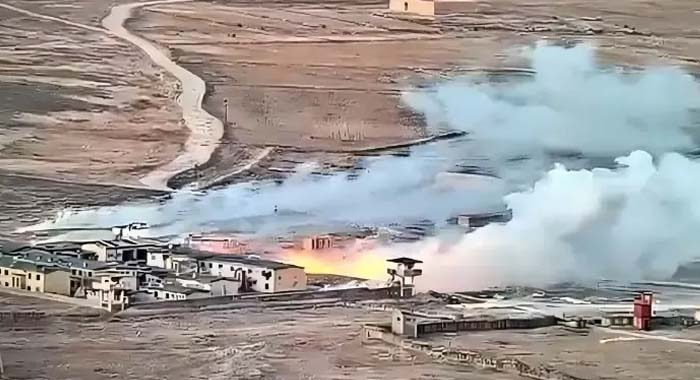
The most consequential development shaping the current security landscape remains Operation Ghazab Lil Haqq, which according to official figures released by Information Minister Atta Tarar has resulted in significant losses for the Afghan Taliban’s operational infrastructure.
More than 500 militants linked to the Afghan Taliban and allied militant networks were reportedly killed, hundreds were injured, and a large number of border posts and military assets were destroyed.
These posts, according to security assessments, were not merely defensive positions. Many were believed to function as staging points where militants linked to Tehreek-e-Taliban Pakistan and other extremist factions could coordinate attacks on Pakistani territory.
Their destruction represents more than a tactical battlefield success. It signals an attempt by Pakistan to reshape the operational geography of militancy along the border by denying militants the sanctuary and launch platforms they have historically used.
Such operations inevitably alter the dynamics of conflict. Militant networks rarely disappear overnight. Instead, they tend to adapt, disperse, and attempt retaliation through asymmetric tactics.
Retaliation Through Asymmetric Violence
Recent incidents appear consistent with this pattern.
The vehicle-borne explosion in Miranshah, which injured multiple civilians including children, highlights the continued willingness of militant networks to target populated areas in order to generate fear and psychological pressure.
Historically, such attacks serve several purposes for militant groups. They demonstrate continued operational capability, undermine public confidence in security institutions, and create an atmosphere of insecurity that militants attempt to exploit.
Similarly, the rocket attack reported in Parachinar and cross-border mortar shelling incidents in Mohmand and Landi Kotal point toward a growing pattern of indirect fire attacks affecting civilian populations living near the frontier.
Even when casualties are limited, such incidents have a profound psychological impact on border communities. Residents of these regions often find themselves living in the shadow of conflict dynamics over which they have little control.
From the perspective of militant groups, the objective is rarely battlefield victory. Instead, it is disruption, intimidation, and the projection of continued relevance.
Technology Enters the Battlefield
Another important dimension of the evolving security environment is the increasing role of technology.
Khyber Pakhtunkhwa Police recently established Pakistan’s first dedicated UAV division, a step aimed at strengthening aerial surveillance and counterterrorism operations.
The introduction of drone-based monitoring represents a significant development in law-enforcement capabilities, particularly in a province where rugged terrain and dispersed settlements often complicate conventional security operations.
Drones allow authorities to monitor infiltration routes, observe suspicious movements, and gather intelligence without exposing personnel to unnecessary risk.
Equally important is the forensic dimension of the initiative. The new division will also analyze drones captured or destroyed during security incidents, helping authorities understand the technology and tactics being used by militant networks.
In modern counterterror operations, such technological adaptation often determines the balance between state forces and non-state actors.
Public Sentiment Against Militancy
Another factor shaping the current moment is the visible public rejection of militant violence.
Recent demonstrations in areas such as Bannu, where residents expressed support for the state and security forces while rejecting militancy, underscore an important but often overlooked dimension of the conflict.
Militant groups depend heavily on fear, silence, and fragmented communities. Public mobilization against extremism disrupts this environment.
When local populations openly align themselves with the state’s counterterror objectives, it becomes more difficult for militant networks to recruit, operate, and conceal their logistical infrastructure.
This social dimension of counterterrorism rarely receives the same attention as military operations, yet it often plays a decisive role in long-term stability.
The Strategic Road Ahead
The emerging security landscape suggests that Pakistan’s counterterror strategy is entering a phase characterized by sustained pressure rather than isolated operations.
Precision strikes, intelligence-based operations inside Pakistan, enhanced border surveillance, and technological integration appear to be forming the backbone of this approach.
At the same time, the persistence of retaliatory attacks indicates that militant networks still retain the capacity to inflict harm, particularly through asymmetric tactics targeting civilians.
This dynamic, pressure on militant infrastructure combined with attempts at retaliatory disruption, is a familiar pattern in counterinsurgency environments around the world.
The outcome often depends not only on battlefield operations but also on political stability, public resilience, and sustained institutional coordination.
For Pakistan, the message emerging from recent developments is clear: the conflict along the western frontier is far from over. But the contours of the battlefield, and the tools being used to shape it, are rapidly changing.



