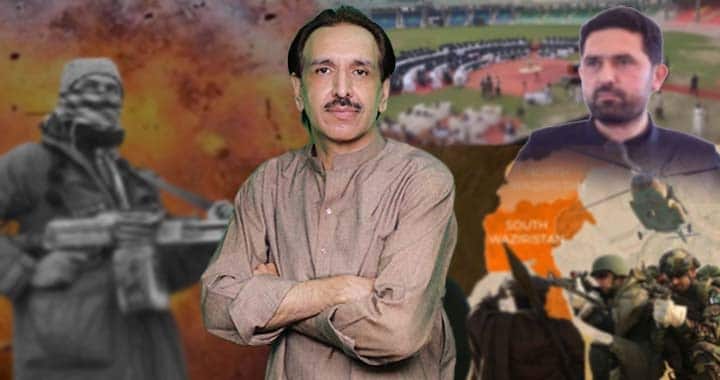
Even they themselves do not know what the purpose of political optics in Peshawar was.
A lot of credit was claimed over the so-called public gathering at Qayyum Stadium in Peshawar Cantt, and the social media brigade tried hard to portray it as a major success, creating the impression that public issues would be highlighted there. But where was the public? Their own videos and footage exposed the reality. The people were not there. Even their own workers and officials did not turn up in the expected numbers.
It appeared to be nothing more than a political drama staged from the chairs of a stadium. Reports suggest that around Rs80 million to Rs120 million were spent on a session that lasted barely five to six hours. The whole city was blocked and ordinary people suffered inconvenience, yet no one seems willing to answer what was achieved through this spectacle.
When there is already an assembly building, a full legislative structure, and hundreds of staff members for parliamentary affairs, what was the need for shifting proceedings to a stadium? The assembly building itself has remained dysfunctional for days, while public money continues to be spent on optics rather than governance.
The most alarming aspect of this entire exercise was that not a single meaningful point emerged regarding the deteriorating security situation in Khyber Pakhtunkhwa. No serious resolution was seen on terrorism, law and order, or the worsening insecurity in vulnerable districts.
What happened in Bannu only adds to these concerns. Public rallies continue to erupt there because people are facing terrorism almost daily. Yet this provincial government appears to have no concern for Bannu, Dera Ismail Khan, Tank, Lakki Marwat, and North and South Waziristan. Once one crosses the Kohat Tunnel, it seems there is no government at all. The entire southern belt and tribal districts appear abandoned to terrorists and instability.
This province is effectively in a state of war, but the seriousness of the threat is not reflected in the conduct of the provincial leadership. Instead of focusing on security and governance, resources are being spent on symbolic political gatherings that offer no practical solutions.
Then there are exaggerated claims surrounding Urumqi and so-called diplomatic breakthroughs. Stories were circulated suggesting that major decisions had been made, that the Afghan Taliban had moved against TTP and even against banned BLA terrorists, and that over a hundred terrorists, linked to the banned TTP, had been arrested. Where are those arrested individuals? Where is the proof? No credible Afghan source has confirmed these claims.
If such major developments had truly taken place, there would be evidence. Instead, what we are seeing on the ground suggests the opposite. Pakistan has intensified Operation Ghazab Lil Haq, and strikes and security actions have reportedly continued across multiple Afghan provinces including Nuristan, Kunar, Nimroz, and Paktika.
That alone raises serious questions over the narrative being promoted about successful negotiations or operational breakthroughs. If understandings had been reached, why would military pressure continue at this scale?
All these references and claims are rejected completely. If anyone has proof, they should come forward and present it.