
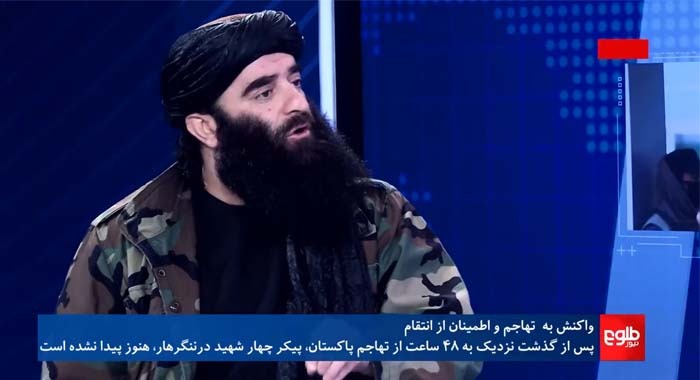
In a chilling and deeply provocative televised appearance, Abdul Hamid Khorasani, a member of the Afghan Taliban, issued sweeping threats that have intensified fears of renewed regional instability. Speaking on Afghanistan’s national broadcaster, TOLOnews, Khorasani openly claimed that the group possesses a dedicated force of suicide bombers capable of confronting what he described as the “entire non-Muslim world.”
The remarks, delivered without restraint on live television, have triggered serious concern among regional observers and security analysts. Publicly boasting about suicide units — a tactic universally condemned for its indiscriminate and devastating impact on civilians — underscores the persistence of extremist ideology within Taliban ranks and raises troubling questions about their commitment to international norms.
During the broadcast, Khorasani went further, asserting that operatives linked to militant networks are present inside Pakistan. He explicitly referred to the Balochistan Liberation Army (BLA) and the Tehreek-e-Taliban Pakistan (TTP), claiming these elements have the capacity to carry out attacks within Pakistani territory. Such statements have amplified long-standing concerns regarding cross-border militant cooperation and the export of violence from Afghan soil.
Security experts warn that rhetoric of this nature is not merely inflammatory it risks emboldening extremist actors, fueling radicalization, and escalating tensions across South and Central Asia. The glorification of suicide operations reflects a dangerous normalization of tactics that have historically inflicted profound suffering on civilian populations, including Afghans themselves.
The televised threats stand in stark contrast to assurances repeatedly made to the international community that Afghan territory would not be used to threaten other nations. Public declarations celebrating transnational militancy call into question the credibility of such commitments and reinforce apprehensions about Afghanistan’s evolving security trajectory.
Observers note that sustainable peace cannot coexist with open incitement to violence. Statements that project hostility toward the broader international community and signal potential cross-border operations undermine diplomatic efforts and erode fragile regional stability.
The international community continues to condemn suicide bombings and cross-border terrorism as violations of fundamental humanitarian principles. Analysts caution that unchecked militant rhetoric, particularly when broadcast on national platforms, risks transforming words into action.
The remarks attributed to Abdul Hamid Khorasani have heightened calls for accountability and concrete measures to prevent Afghanistan from becoming a staging ground for extremist violence. At a time when regional stability hangs in a delicate balance, such threats cast a long and troubling shadow over prospects for peace.



