
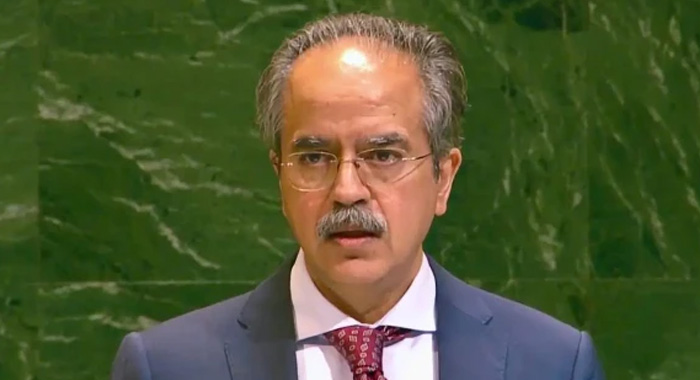
Ambassador Asim Iftikhar Ahmed, Pakistan’s Permanent Representative to the United Nations, addressed the UN Security Council, expressing deep concern over terrorist groups operating from Afghan territory and underscoring that Pakistan will not compromise on its sovereignty or the protection of its citizens.
In his statement, Ambassador Ahmed highlighted that recent terrorist attacks in Pakistan have claimed the lives of over 80 innocent civilians. He emphasized that credible evidence indicates that Afghan soil is being used to plan and execute these attacks, posing a serious threat to regional peace and stability.
“These elements continue to target Pakistan, creating a direct risk to the security of the region,” he said. “It is imperative that the interim Afghan authorities ensure that their territory is not exploited for terrorist activities against Pakistan or any other country.”
Ambassador Ahmed also called on the international community to take this matter seriously and undertake effective measures to dismantle terrorist networks operating across borders.
Beyond security, Pakistan’s representative drew attention to the ongoing humanitarian crisis in Afghanistan, highlighting economic hardship, restrictions on women’s rights, and the urgent need to provide basic services to the Afghan people. He stressed that ensuring the fundamental rights and welfare of Afghan citizens is essential for building a sustainable foundation for peace in the region.
During the Security Council session, Pakistan conveyed a firm message that cross-border terrorism not only undermines bilateral relations but also poses a broader threat to global peace. Ambassador Ahmed emphasized that practical and coordinated steps are essential to prevent the use of Afghan territory for attacks against Pakistan and to promote long-term regional stability.
The Government of Pakistan reaffirmed its unwavering commitment to protecting its citizens and strengthening international cooperation to counter terrorism while advocating for humanitarian support for the Afghan population.



