
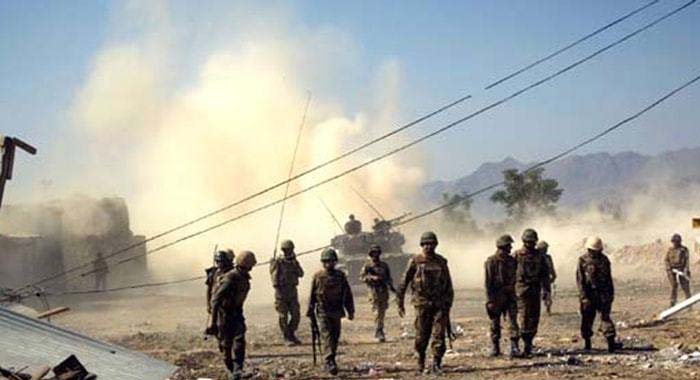
Khyber Pakhtunkhwa faced a sharp escalation in terrorism-related violence during 2025, with the southern districts bearing the brunt of the threat. Official data reveals that the Bannu division emerged as the most affected region, accounting for the overwhelming majority of drone attacks and terrorism incidents reported across the province.
Out of a total of 65 drone attacks targeting police, security forces, and civilians during the year, 54 incidents were recorded in Bannu division alone, which includes the districts of Bannu, Lakki Marwat, and North Waziristan. The figures highlight the increasing reliance of terrorist groups on explosive-laden drones to strike police stations, check posts, and patrolling units.
According to the KP Police, 571 terrorism-related incidents were reported in Bannu division during 2025, out of 1,580 incidents documented province-wide. North Waziristan witnessed the highest number of drone attacks with 31 incidents, followed by 23 in Bannu, while Bajaur, South Waziristan, and Tank reported fewer but notable cases. In response to this evolving threat, police have begun deploying anti-drone weapons in districts experiencing a spike in such attacks.
The broader security landscape across southern KP continued to deteriorate during the year. After Bannu division, districts in Dera Ismail Khan division recorded the next highest number of militant incidents. Meanwhile, areas that had previously remained relatively stable particularly in Kohat division also experienced renewed militant activity, with attacks reported in Kurram, Orakzai, Hangu, and Karak.
Security analysts note that the current instability is part of a wider resurgence of militancy that began in mid-2021. After years of gradual improvement following 2014, the province has once again seen an upward trend in violence, reversing hard-earned gains in law and order.
Several high-profile attacks during recent years underscored the severity of the threat, including major strikes in Peshawar and targeted attacks on religious and public figures across the province. Terrorist groups also attempted multiple high-impact attacks on sensitive installations during the current year, many of which were thwarted by timely action from police and security agencies.
Data from the Bomb Disposal Unit (BDU) further illustrates the scale of the challenge, documenting the use of suicide jackets, improvised explosive devices, rockets, grenades, and landmines in attacks across KP during 2025. At the same time, BDU teams successfully neutralized hundreds of explosive devices, preventing significant loss of life.
Despite continuous attacks on police personnel, posts, and patrols, many potential casualties were averted due to the use of bulletproof vehicles and improved protective measures. However, officials acknowledge that districts facing persistent militancy require additional resources, modern equipment, and enhanced intelligence capabilities to effectively counter terrorist networks.
Police and security forces have continued operations throughout the province, eliminating numerous terrorists and disrupting their infrastructure. Authorities stress that while progress has been made, sustained support and investment are critical to restoring long-term peace and stability in the most volatile regions of Khyber Pakhtunkhwa.



