
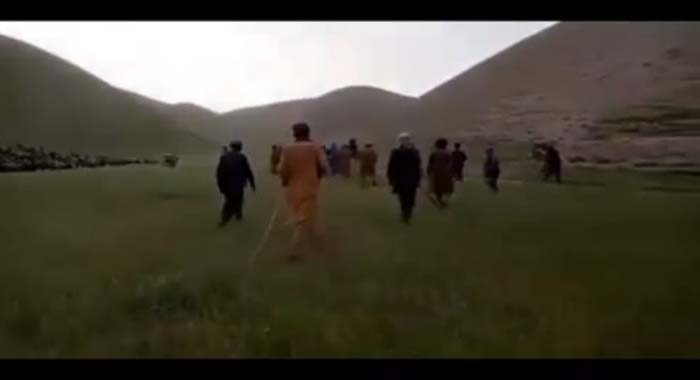
The Afghan Taliban’s recent territorial movements across Afghanistan and beyond are increasingly being viewed by regional observers as a systematic expansion that echoes historical precedents, particularly the policies associated with the late 19th-century Afghan ruler Mir Abdur Rahman Khan, with potential implications for ethnic balance, regional stability and cross-border security.
Analysts note that the Taliban’s advances appear to be radiating outward from their traditional power bases in southern and eastern Afghanistan, including areas historically described as Loya Kandahar, Loya Paktika and Loya Nangarhar, toward the northern regions predominantly inhabited by Tajik, Uzbek and Hazara communities. This movement is being interpreted as more than routine consolidation of control, instead suggesting a broader pattern of demographic and territorial reconfiguration that recalls earlier state-driven expansionist strategies in Afghan history.
According to these assessments, the Taliban’s push into northern Afghanistan has involved the capture and control of lands traditionally associated with non-Pashtun communities, raising fears of long-term displacement, marginalisation and demographic engineering. Observers argue that communities settled or rehabilitated under the current Taliban system could face severe insecurity and backlash in any post-Taliban scenario, leaving them exposed to cycles of retaliation and instability.
At the same time, concerns have been voiced over what is described as a simultaneous southward pressure, with militant spillover and influence extending into Pakistan’s bordering regions, particularly Khyber Pakhtunkhwa and Balochistan. Security analysts warn that this dual-directional movement—northward into Central Asian-facing Afghan provinces and southward across the Durand Line—is without recent precedent in its scope and speed, and risks transforming localised conflicts into a wider regional challenge.
Commentators frame this trend as part of a broader process of rapid “Afghanisation,” arguing that it threatens to erode the historical and cultural fabric of regions once associated with the broader Khorasan space, while also placing strategic pressure on Pakistan’s ancient Gandhara belt, an area of deep civilisational and archaeological significance. The comparison drawn is that indigenous populations may increasingly feel politically and culturally sidelined, intensifying grievances and resistance.
Regional experts caution that if these dynamics continue unchecked, they could ignite long-term instability across South and Central Asia, exacerbating ethnic tensions, cross-border militancy and geopolitical rivalries. They stress that the pace and scale of current developments demand serious regional and international attention, warning that the consequences may extend far beyond Afghanistan’s borders and undermine already fragile security architectures in the wider region.



