
A comprehensive investigative report released by South Asia Times (SAT) has presented a critical assessment of the Taliban’s five years in power, alleging that Afghanistan has experienced persistent political, economic, humanitarian and security challenges since the Taliban returned to power on August 15, 2021.
Titled “Taliban 2.0: The Five-Year Ledger,” the report examines the Taliban’s record since their takeover of Afghanistan and raises concerns over the implementation of commitments associated with the 2020 Doha Agreement, the continued presence of militant organizations on Afghan territory, restrictions on fundamental rights, the deteriorating media environment, economic difficulties, and Afghanistan’s growing diplomatic isolation.
According to the report, the Taliban’s performance during the past five years has failed to address several of the central commitments and challenges that confronted Afghanistan following the withdrawal of international forces.
The SAT report alleges that the Taliban failed to fulfill key obligations associated with the 2020 Doha Agreement. The report states that approximately 5,000 Taliban prisoners released under the agreement subsequently became involved in renewed conflict, while the Taliban ultimately assumed control of Kabul through military means rather than completing a negotiated political transition with the Afghan government.
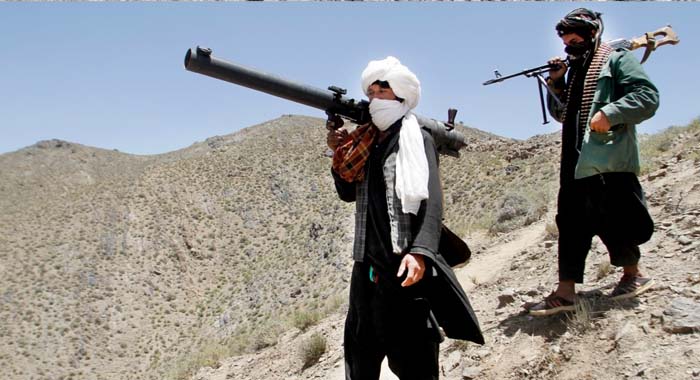
The report further alleges that the Taliban have failed to prevent Afghan territory from being used as a base or sanctuary by militant and terrorist organizations. These developments, according to SAT, have raised continuing questions about Afghanistan’s security environment and the country’s ability to prevent its territory from being exploited for activities threatening neighboring states and the wider international community.
One of the report’s principal areas of concern is the presence and activities of armed groups operating from Afghan territory. According to the SAT investigation, more than 20 militant organizations are currently active in Afghanistan, alongside an estimated 13,000 foreign fighters.
The report estimates that between 6,000 and 6,500 fighters associated with the Tehreek-e-Taliban Pakistan (TTP) are present on Afghan soil. SAT further states that more than 600 TTP attacks were recorded inside Pakistan during 2025, with the report alleging that more than 300 Afghan nationals were directly involved in such incidents.
The report also identifies Islamic State Khorasan Province (ISKP) and Al-Qaeda among international militant organizations that continue to operate or maintain networks in Afghanistan.
According to the report, the continued presence of these organizations has significant implications for regional stability, particularly for Afghanistan’s neighboring countries, which remain directly exposed to cross-border militancy, terrorism and insecurity. The findings underscore the continuing debate over whether Afghanistan can prevent its territory from being used by armed groups whose activities extend beyond the country’s borders.
The report also highlights what it describes as extensive restrictions on fundamental rights under Taliban rule, with particular emphasis on the rights of women and girls.
According to SAT, more than 1.1 million Afghan girls have been deprived of secondary education under the restrictions imposed since the Taliban takeover. The report also states that the proportion of women employed in government positions has fallen significantly, reaching approximately 21 percent, according to figures cited in the investigation. The restrictions on education and employment have generated continuing international concern regarding the status of women and girls in Afghanistan and their ability to participate fully in the country’s social, economic and public life.
SAT argues that these policies have not only affected individual rights and opportunities but have also contributed to Afghanistan’s broader social and economic difficulties.
The report identifies freedom of expression and media independence as another major area of concern. According to the figures presented by South Asia Times, 219 of Afghanistan’s 547 media outlets have closed since the Taliban takeover. The report further estimates that the number of journalists working in the country has fallen from approximately 11,857 to 4,759.
SAT also points to Afghanistan’s position in the World Press Freedom Index, stating that the country has fallen to 175th place among 180 countries. The report argues that restrictions on journalists and media organizations have substantially narrowed the space for independent reporting and public debate.
The decline in media institutions, according to the investigation, represents a broader contraction of civic space in Afghanistan and limits the ability of Afghan society and the international community to obtain independent information about developments inside the country.
Afghanistan’s economic condition constitutes another central component of the SAT assessment. According to the report, the Afghan economy has contracted by approximately 25 percent overall since 2021, contributing to widespread economic hardship and increased vulnerability among the population. The investigation further states that deteriorating economic conditions have contributed to rising levels of food insecurity and malnutrition, particularly among women and children.
SAT estimates that approximately 4.9 million people have been affected by malnutrition-related conditions. The report presents these economic and humanitarian pressures as part of a broader structural crisis facing Afghanistan, where restrictions on economic participation, limited employment opportunities, international isolation and continuing insecurity have complicated efforts toward sustainable recovery.
The SAT investigation also draws attention to alleged internal tensions within the Taliban movement. According to the report, disputes among different Taliban factions over Afghanistan’s mineral resources and customs revenues have intensified, reflecting broader disagreements over economic power, access to resources and the distribution of state revenues.
The report portrays these internal tensions as an indication that the Taliban movement continues to face competing interests within its own political and organizational structures. Such tensions, according to SAT, could further complicate governance and economic management at a time when Afghanistan is already facing significant domestic and international pressures.
Five years after the Taliban’s return to power, the report describes Afghanistan as remaining diplomatically isolated. According to SAT, Russia is the only country to have formally recognized the Taliban government during the five-year period examined by the report.
The limited international recognition, the report argues, reflects continuing disagreement over the Taliban’s governance model, human-rights record, counterterrorism commitments and treatment of women and girls. Despite the Taliban’s prolonged engagement with international actors and the movement’s years of political and media outreach from Qatar, SAT argues that there has been limited evidence of fundamental change in the movement’s governing ideology and approach.
The report concludes that the Taliban’s return to power has not produced the transformation that many expected following years of international engagement. SAT maintains that, despite the passage of five years and extensive international diplomatic engagement, the Taliban’s governing approach continues to reflect core ideological positions associated with its earlier period in power during the 1990s.
The report argues that the consequences extend beyond Afghanistan’s domestic political environment. According to its findings, restrictions on rights and civic freedoms, the presence of armed groups, economic hardship, reduced media freedom, diplomatic isolation and persistent regional security concerns have collectively created a complex challenge for Afghanistan and its neighbors.
The findings presented in “Taliban 2.0: The Five-Year Ledger” place Afghanistan’s post-2021 trajectory within a wider regional and international context. The report suggests that developments inside Afghanistan cannot be viewed solely as an internal Afghan matter. The continued presence of militant organizations, cross-border attacks, humanitarian pressures, restrictions on women and girls, and the shrinking space for independent media all have potential implications for neighboring countries and international institutions.
The report’s findings therefore raise broader questions about the effectiveness of existing international engagement with the Taliban, the mechanisms available to address militant activity originating from Afghan territory, and the prospects for improving human rights, economic conditions and political inclusivity in Afghanistan.
South Asia Times’ “Taliban 2.0: The Five-Year Ledger” offers a critical five-year assessment of Afghanistan under Taliban rule, documenting what it describes as significant challenges across the political, security, economic, humanitarian and human-rights spheres. The report’s central findings point to continued militant activity, the alleged presence of thousands of foreign fighters, serious restrictions on women and girls, a contraction of the media sector, economic difficulties, internal factional tensions and limited diplomatic recognition.
While the Taliban have remained in control of Afghanistan since August 2021, the SAT investigation argues that the fundamental challenges facing the country remain unresolved.
The report consequently calls attention to the need for continued scrutiny of developments in Afghanistan and of the country’s impact on regional security, human rights, economic stability and international counterterrorism efforts.



