(Arif Yousafzai)
The press conference held by DG ISPR Lieutenant General Ahmed Sharif Chaudhry has reverberated across Pakistan’s political and media landscape, sending a clear message that the narrative engineered by certain political factions, particularly the Pakistan Tehreek-e-Insaf (PTI), poses a serious threat not only to political stability but to national security itself. Speaking with uncharacteristic bluntness, the DG ISPR warned that the deliberate dissemination of false narratives undermines the very foundations of the state, emphasizing that Pakistan is not merely a political entity but the identity of its people. Without this state, citizens are stripped of status, identity, and political significance. His words were unambiguous: the state of Pakistan is indivisible, and any attempt to weaken or misrepresent it is a direct challenge to the nation’s integrity.
This press conference was not a routine briefing. It was, in the eyes of many observers, akin to a strategic bombardment, a calibrated effort to address ongoing disinformation campaigns targeting the army and state institutions. It is as a “bomb blast like the F-16,” a figurative yet precise depiction of the impact it had on Pakistan’s political narrative. In recent weeks, the political arena has witnessed relentless attempts to politicize the military leadership, with misleading narratives portraying divisions within the army and speculating on the status of key appointments. These narratives, often fueled by both domestic and international actors, have generated unnecessary confusion and tension within the country.
One prominent episode in this ongoing saga involved the notification and retirement of Army Chief General Asim Munir, an issue that was sensationalized extensively by certain sections of PTI, PTI Abroad, and even Indian media outlets. The narrative suggested rebellion within the army, with insinuations that Nawaz Sharif and other political figures were maneuvering to influence military appointments. These claims, widely circulated across social media and international platforms, created a false perception of instability and internal dissent at the highest levels of Pakistan’s military leadership. The subsequent issuance of official notifications regarding General Munir’s positions the confirmation as Army Chief and as Chief of Defence Forces finally settled this controversy, but not before significant damage was done to public perception.
The DG ISPR’s press conference, therefore, served multiple purposes: it reaffirmed the unity of the army, clarified the official positions of military leadership, and, perhaps most importantly, issued a stark warning against those exploiting misinformation for political gain. The language used was uncharacteristically harsh, particularly directed at Imran Khan, PTI, and other political actors accused of fomenting instability. while Pakistan is a country where bold words are often tolerated in public discourse, the statements made during this press conference crossed conventional thresholds, reflecting both the gravity of the situation and the urgency of the message. In essence, the DG ISPR’s address was designed to “teach a lesson” to those seeking to destabilize the state, signaling that attempts to undermine national institutions will no longer be tolerated.
At the heart of the DG ISPR’s critique lies a deeper question about the relationship between political entities and state institutions. The PTI, according to Yusufzai, has consistently attempted to position itself in opposition to intelligence-based operations (IBOs) against militancy. This stance, particularly concerning operations in Khyber Pakhtunkhwa, reflects a broader political strategy that undermines national security initiatives. While PTI may argue that such operations are politically motivated or disproportionate, the reality on the ground is that intelligence-based operations are crucial to maintaining security and protecting civilians from militant threats. Yusufzai underscores that dismissing or obstructing these operations in the name of political opposition is counterproductive and risks eroding public trust in both governance and the military.
However, it also emphasizes that DG ISPR’s rhetoric, while necessary from a security perspective, raises critical questions about inclusivity in governance and the perception of the state as an institution. When the DG ISPR asserts that Pakistan is the only state we have, that without it citizens have no identity or politics, there is a subtle yet profound implication that the state belongs predominantly to uniformed actors. True national cohesion, however, demands that the state’s ownership be collective, inclusive of both uniformed personnel and civilians. Pakistan can only progress if all voices—regardless of political affiliation or social standing—are given equal weight, and if governance mechanisms allow for legitimate dissent without threatening national security. The challenge lies in balancing assertive defense of the state with the need to preserve democratic plurality and public confidence.
It points to a recurring pattern in Pakistan’s political history, where trust in institutions has been repeatedly eroded. Previous governments, from the PTI to the Pakistan Peoples Party and the Pakistan Muslim League-Nawaz, have both wielded and been subjected to institutional power in ways that create cycles of oppression and political retribution. Political prisoners today were once rulers; past rulers now sit behind bars. This cyclical pattern has fostered widespread cynicism among the public, undermining the perception of law, justice, and governance. In this context, DG ISPR’s warnings assume even greater significance, as they are not merely statements of institutional position but reflections of deeper concerns about national stability and the sustainability of Pakistan’s democratic framework.
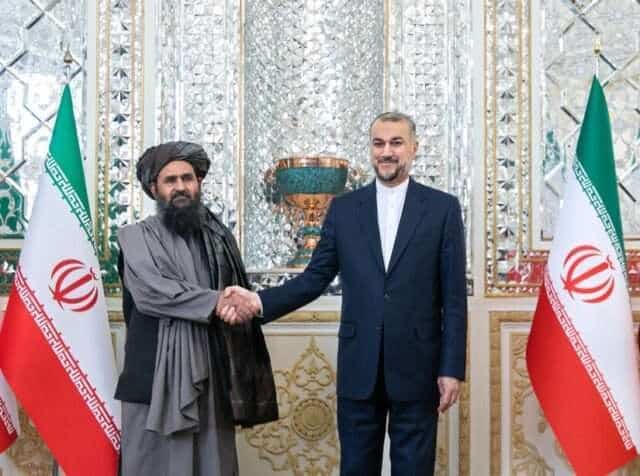
Another critical dimension of the press conference pertains to Pakistan’s foreign policy and its regional relations, particularly with Afghanistan. The recurring practice of outsourcing diplomatic negotiations to third-party countries, including Qatar, Turkey, and Saudi Arabia. Despite multiple attempts, these international interventions have yielded little tangible progress in resolving cross-border issues, such as trade, transit, and security coordination. The solution lies not in distant diplomatic arenas but in local, inclusive mechanisms rooted in the communities most affected. Cross-border cooperation, he insists, should be mediated through regional jirgas, local scholars, journalists, and community leaders who understand the historical, cultural, and socioeconomic realities on both sides of the border. By emphasizing local agency, Pakistan can ensure more sustainable solutions that reflect the interests of the people rather than the strategic calculations of external powers.
The DG ISPR’s statements also underscore the persistent challenges in enforcing the rule of law. Political divisions have resulted in inconsistent application of legal norms, further eroding public confidence. When courts and military institutions are accused of partisanship, it signals a deeper systemic malaise. Pakistan’s democratic institutions, including its parliament referred to sarcastically in public discourse as the “Rabatstampur Jali Assembly” are often seen as rubber-stamped mechanisms rather than genuine platforms for debate and accountability. Addressing these structural deficiencies requires far-reaching reforms that restore faith in both democratic and legal processes. Only when citizens perceive that the law is impartial and institutions are accountable will national cohesion be reinforced.
The importance of managing political rhetoric. The DG ISPR’s language, while necessary to counter misinformation, reflects a broader trend of escalating harshness in public discourse. Speeches have become increasingly strident, with political leaders and media commentators resorting to extreme language that can polarize public opinion and deepen social divides. The sustainable stability cannot be achieved through rhetoric alone; it requires a commitment to the rule of law, transparent governance, and the equitable distribution of state authority. Public trust will only be restored when citizens perceive that the state belongs to all and operates without favoritism or bias.
The PTI’s approach to intelligence-based operations exemplifies this tension. while operations are ongoing across Pakistan, political statements from PTI leaders often contradict the ground reality, creating perceptions of duplicity and inconsistency. This not only undermines security efforts but also contributes to public confusion and mistrust. Political parties must recognize that national security is a collective responsibility that transcends partisan interests. By obstructing or politicizing operational measures, PTI risks compromising both public safety and the credibility of democratic institutions.
Ultimately, the DG ISPR’s press conference serves as a critical reminder that Pakistan is at a crossroads. National cohesion, institutional integrity, and public trust are under pressure from both internal political maneuvers and external influences. The path forward requires a dual strategy: assertive protection of state institutions and inclusive governance that ensures all citizens feel ownership of the state. Harsh rhetoric alone is insufficient; structural reforms, transparent operations, and participatory mechanisms are essential to restore stability.
It also emphasizes that long-term stability cannot be imposed from the top down. Pakistan’s political, economic, and security challenges require solutions that are rooted in local realities and supported by broad-based consensus. Whether it is border management with Afghanistan, intelligence-based operations against militancy, or institutional reforms, the underlying principle must be inclusivity and transparency. Pakistan cannot rely indefinitely on external actors or short-term political maneuvers; its progress depends on strengthening internal mechanisms and fostering a shared sense of national identity that transcends individual political ambitions.
The press conference by DG ISPR Ahmed Sharif Chaudhry has therefore marked a pivotal moment in Pakistan’s ongoing struggle to balance political plurality with national security. It highlights the dangers of misinformation, underscores the importance of cohesive state institutions, and challenges political actors to adopt a responsible and inclusive approach to governance. The future of Pakistan hinges on whether its citizens, institutions, and political leaders can reconcile differences constructively while maintaining the primacy of the state. The nation’s identity, stability, and credibility on the global stage are at stake, and the choices made today will shape Pakistan’s trajectory for decades to come.
Pakistan is at a critical juncture where rhetoric, policy, and action must align to preserve its sovereignty and reinforce public trust. DG ISPR’s message was unambiguous: the state is indivisible, and the security and stability of Pakistan are paramount. Yet, true progress requires more than stern warnings; it demands inclusive governance, respect for the rule of law, and the creation of a political culture that values truth, transparency, and collective ownership. Only then can Pakistan overcome the cycles of mistrust, misinformation, and instability that have long hindered its growth. The onus is now on political actors, institutional leaders, and civil society to heed these warnings and work toward a Pakistan that belongs to all its citizens, equally empowered and equally responsible for the nation’s future.