
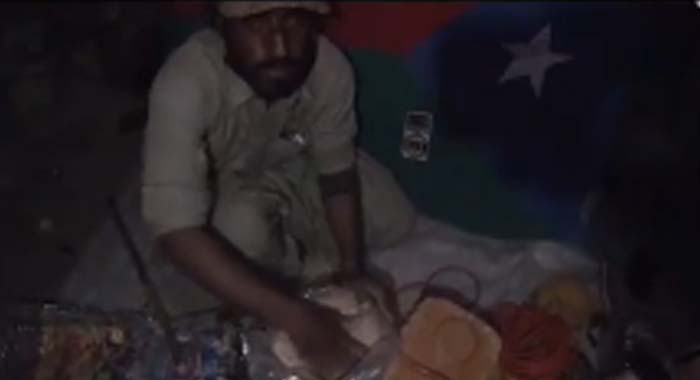
Questions have emerged regarding the circumstances surrounding the recent incident in Surab, following the circulation of a video purportedly released by the Baloch Liberation Army (BLA) that appears to show a vehicle being loaded with explosive material inside a room.
According to the information available, the vehicle shown in the footage is believed to be the same vehicle that was subsequently targeted and destroyed by security forces during the incident in Surab.
The emergence of the footage has added a significant new dimension to the discussion surrounding the incident, particularly amid earlier claims and commentary that attributed responsibility to the state and raised questions over the actions of the security forces.
The reported footage appears to show individuals placing explosive material inside a vehicle in an enclosed location. If verified as authentic and confirmed to depict the same vehicle involved in the Surab incident, the footage could provide important context regarding the nature and intended use of the vehicle prior to it being targeted.
The development has also prompted questions regarding the accuracy of narratives circulated immediately after the incident. While social media commentary and competing claims had generated considerable speculation, the newly surfaced material warrants careful examination and independent verification before definitive conclusions are drawn.
The central question now concerns those who publicly accused the state and security forces in connection with the incident: in light of the newly surfaced footage, will those who promoted allegations against the state acknowledge the emerging evidence and reconsider their earlier claims?
The episode highlights the importance of relying on verified information, credible evidence, and responsible reporting during sensitive security incidents. Premature conclusions and unverified allegations can contribute to misinformation, deepen public confusion, and obscure the facts surrounding an incident.
At the same time, the authenticity, date, location, and context of the circulated video should be independently established through appropriate investigative and forensic procedures. Until such verification is completed, the footage should be treated as an important but unverified piece of evidence rather than conclusive proof on its own.
The development nevertheless underscores the rapidly evolving nature of the information surrounding the Surab incident and raises serious questions about narratives that were presented as established fact before all relevant evidence had emerged.



