
The United States has placed Afghanistan in the lowest tier of its annual human trafficking assessment for 2026, saying the Taliban failed to make meaningful efforts to combat the crime, protect victims or prosecute those responsible.
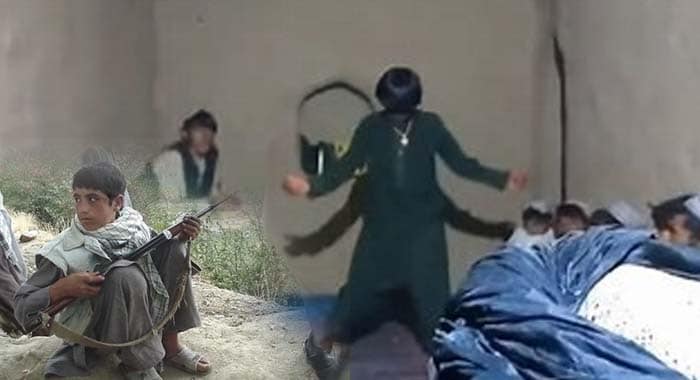
The US State Department’s report said Afghanistan lacked an effective system to identify trafficking victims and refer them to support services. It also found that the unlawful recruitment and use of children in combat and support roles continued during the reporting period, alongside the sexual exploitation of boys through the practice known as bacha bazi.
According to the report, the Taliban provided no information demonstrating that trafficking victims had been identified or assisted and reported no investigations, prosecutions or convictions of human traffickers.
Taliban Decree Falls Short of International Standards
Taliban leader Hibatullah Akhundzada issued a decree approximately two years ago banning human trafficking and directing that such cases be addressed. The decree provides prison sentences of one to three years for first and subsequent offences.
However, the US State Department said the Taliban had failed to meet the minimum standards required to eliminate human trafficking. It found that the decree did not clearly define the crime and prescribed penalties insufficiently severe to deter offenders.
The report also noted that some provisions appeared to implicitly recognize concepts associated with slavery.
Legal experts have raised further concerns about the absence of clear definitions, the conflation of human trafficking with migrant smuggling, the lack of explicit safeguards for defense lawyers and reliance on confessions without adequate protection against coercion.
Child Recruitment and Bacha Bazi Continue
The report said the Taliban and other armed groups continued to unlawfully recruit and use children in combat and support roles.
According to the US State Department, the Taliban uses coercion and deception to recruit children, including some drawn from religious schools in Afghanistan and Pakistan.
Other groups, including Islamic State Khorasan Province (ISKP) and the National Resistance Front (NRF), also use children in direct combat, transporting and planting explosives, carrying weapons, spying and guarding bases, the report said.
Although bacha bazi is formally prohibited, the practice continues, with observers reporting the involvement of Taliban members. The practice involves the sexual exploitation of boys, typically between the ages of 10 and 18, who are also used for entertainment.
The report said the Taliban had made no effective effort to protect victims or end the practice.
Trafficking Victims Left Without Adequate Protection
The report said the Taliban had not reported identifying any human trafficking victims or providing services to them. Afghanistan also lacked regular, effective mechanisms to screen potential victims and refer them to support centers.
Security forces sometimes detain people who may be trafficking victims, including children begging on the streets, without screening them for signs of exploitation. Some child victims are held alongside adults in detention facilities, exposing them to forced labor, physical violence and sexual abuse.
Restrictions imposed by the Taliban on non-governmental organizations, the ban on women working in most sectors and the detention of female employees for traveling without a mahram, or male guardian, have further obstructed the delivery of support services.
The report also identified inadequate funding and a shortage of specialized facilities for adult victims as major obstacles.
It warned that corporal punishments imposed by the Taliban for acts it considers moral offences, including sex outside marriage, could discourage victims of sexual trafficking from reporting abuse. Victims may fear punishment for acts they were forced to commit as a result of trafficking and exploitation.
However, the report noted that 58 children had been released from Taliban ranks with the assistance of an international organization. Following discussions with the Taliban, the organization helped secure their release and supported their return to civilian life.
Women, Children and Migrants Face Growing Exploitation Risks
The US State Department said women, men and children inside and outside Afghanistan were subjected to forced labor, debt bondage and sexual exploitation. Trafficking within Afghanistan was more widespread than cross-border trafficking, according to the report.
Children faced exploitation in carpet weaving, brickmaking, domestic work, agriculture, mining, construction, begging, truck driving and the trafficking of drugs and weapons.
The report added that some impoverished or indebted families sold their children to traffickers or forced underage girls into marriage in exchange for money.
Restrictions on the movement of women and girls and their access to education and employment have increased their vulnerability to exploitation, the State Department said.
Women, girls and families returning to Afghanistan from Iran and Pakistan, internally displaced people and individuals associated with the former Afghan government were also identified as particularly vulnerable.
The report said some Afghans paid intermediaries to secure employment in Iran, Pakistan, Türkiye and European countries, only to be subjected to forced labor or sexual exploitation by some intermediaries and employers.
Afghan men and boys, particularly those working in agriculture and construction in Iran, Pakistan, Greece, Türkiye and Gulf countries, also faced forced labor and debt bondage.
Some Afghan refugees in Iran, Iraq, Pakistan, Türkiye, Europe and Central Asia refrained from reporting exploitation to authorities because they feared deportation to Afghanistan, the report said.
Taliban Fails to Implement Effective Prevention Measures
The US State Department said the Taliban had failed to introduce effective measures to prevent human trafficking. Relevant authorities had neither maintained an inter-agency working group to combat trafficking nor effectively implemented a national action plan.
During the previous reporting period, the Taliban issued a decree declaring human trafficking illegal under its interpretation of Islamic law and directing relevant authorities to coordinate their efforts, investigate cases and conduct public awareness campaigns.
However, the report said the Taliban provided no evidence that these measures had been implemented.
It also found no effective action to prevent the unlawful recruitment of children or reduce demand for commercial sexual exploitation.
The State Department concluded that restrictions on the rights of women and minorities, coupled with limitations on the activities of non-governmental organizations, had created conditions that increased the vulnerability of at-risk groups while obstructing efforts to assist trafficking victims.



