
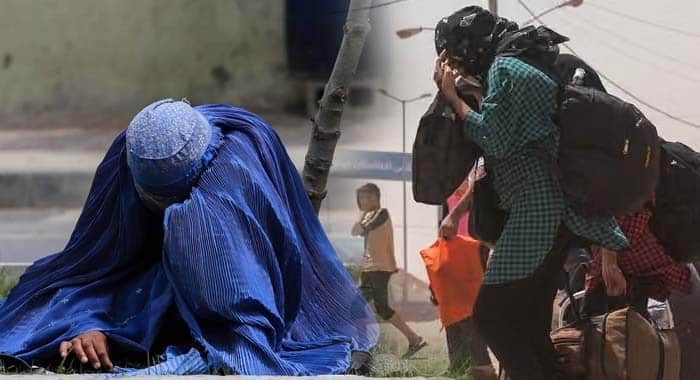
The forced return of Afghan families from Iran and Pakistan has left many women struggling to secure food, shelter, healthcare and employment, with limited opportunities to rebuild their lives under difficult conditions in Afghanistan, according to a United Nations report.
The report documents the experiences of two Afghan women, Homa and Zahra, whose circumstances illustrate the challenges faced by women returning to a country where economic opportunities and access to essential services remain severely constrained.
Homa, a 44-year-old woman deported from Iran after living there for six years, is now the sole breadwinner for her family. She lives with her disabled husband, who is unable to work, in a single room at her brother-in-law’s house.
To meet household expenses, Homa cleans houses and sews clothes whenever she receives orders. She said she had enjoyed a considerably better standard of living in Iran, where she worked as a house cleaner and collected recyclable plastic for sale. The income enabled her family to rent a decent apartment and meet its basic needs.
” I had a better life in Iran. Unfortunately, we were forced to leave,” she said, describing the circumstances of her return.
Her difficulties have continued since arriving in Afghanistan. Homa underwent surgery for appendicitis but continues to experience considerable pain. She borrowed money from her brother-in-law to pay for the procedure and says she still cannot afford adequate medical care.
UN cash assistance helped her purchase a sewing machine, allowing her to earn some money from home. She also used part of the assistance to buy rice and cooking oil. Before receiving the support, she said, her family had been without food two months earlier.
Zahra’s circumstances present a different but equally difficult picture. A 28-year-old trained midwife, she returned to Herat after spending five years in Iran, where she cared for an elderly woman and earned a living. Despite her professional training and experience volunteering at clinics, she has been unable to find employment since returning to Afghanistan.
She lives with her parents and siblings, while her six-year-old son remains with her former husband. She says she can see him only twice a month, adding to the emotional and financial difficulties she faces. Zahra attributed her decision to leave Afghanistan to the Taliban, the country’s poor economic conditions and the limited opportunities available to educated women.
Her father is blind and unable to work, leaving her younger brother as the family’s only regular earner. Despite her qualifications and willingness to work, Zahra says she has found no employment opportunities.
The report highlights the scale of the returnee crisis, citing UN High Commissioner for Refugees figures showing that more than 6.5 million Afghans have returned to the country over the past three years, including nearly three million in 2025 alone. The large-scale returns have added more than 10 percent to Afghanistan’s population, increasing pressure on housing, employment and public services.
Charlie Goodlake of the UNHCR said women and girls account for more than half of the people assisted by the agency, while women and children together represent nearly 82 percent of aid recipients.
He identified immediate shelter, cash assistance, education, livelihood opportunities and protection services as essential needs for returning women and girls, particularly in view of the restrictions and challenges they face in Afghanistan.
The UNHCR is implementing more than 150 vocational training projects across the country to help women develop skills, earn incomes and establish sustainable livelihoods. The agency and its partners are also providing cash assistance and other support to help vulnerable returnees meet their immediate needs.
For Homa, the assistance has provided at least a limited means of survival through the purchase of a sewing machine, enabling her to earn from home while recovering from surgery. Zahra has also been referred to a partner organization for cash assistance, legal support and mental health and psychosocial services.
However, both women’s experiences underline the uncertainty facing many returnees who have lost their livelihoods and support networks. Homa remains deeply worried about the future and says she needs shelter, food, cooking oil and other basic necessities to survive the approaching winter.
The report illustrates how large-scale returns are placing additional pressure on already vulnerable households, with women facing particular difficulties in securing employment, financial independence, healthcare and adequate shelter. For many, returning to Afghanistan has not meant rebuilding a stable life but struggling to meet the most basic needs.



