
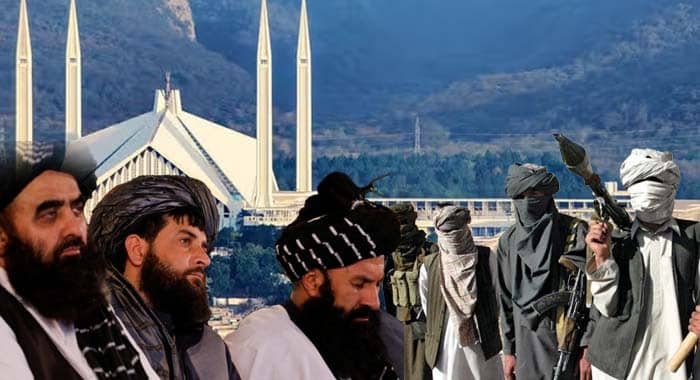
Pakistan’s patience with the Afghan Taliban administration cannot be considered unlimited when the country’s security continues to face challenges linked to cross-border terrorism. While Islamabad has repeatedly emphasized diplomacy and peaceful coexistence, the persistence of the TTP threat raises an important question: what options remain available to Pakistan if Kabul continues to avoid taking decisive action against terrorist networks operating from Afghan territory?
The answer lies in a combination of diplomatic pressure, stronger border management, intelligence-based counterterrorism operations and regional engagement. Pakistan’s challenge is to pursue these options without allowing the security dispute to undermine its broader economic and strategic interests.
Diplomacy Must Produce Results
Pakistan’s preference for a peaceful and stable relationship with Afghanistan has remained central to its regional policy. However, diplomatic engagement cannot become an endless exercise in exchanging assurances without measurable progress.
Islamabad needs concrete commitments from Kabul, particularly regarding the dismantling of TTP infrastructure, restrictions on terrorist movements and the prevention of attacks originating from Afghan territory.
A more effective bilateral monitoring mechanism could provide a way forward. Through such an arrangement, both governments could examine specific security concerns, exchange intelligence and verify action against identified networks.
Such mechanisms would help distinguish genuine progress from diplomatic statements and provide both sides with a framework for addressing incidents before they escalate into wider confrontations.
Their effectiveness, however, would ultimately depend on Kabul’s willingness to cooperate.
Border Security and Counterterrorism Preparedness
Pakistan must also continue strengthening security along its western frontier.
The long and geographically challenging Pakistan-Afghanistan border presents considerable difficulties for surveillance and management. Unauthorised crossings, difficult terrain and established cross-border networks complicate efforts to prevent infiltration.
Modern surveillance systems, improved intelligence coordination and better-equipped border personnel can strengthen Pakistan’s ability to detect and disrupt suspicious movements.
You May Also Read:
Kabul Wants Better Relations With Islamabad, But One Issue Continues to Stand in the Way
Afghan Taliban Face a Difficult Choice, But What It Could Cost Them?
At the same time, counterterrorism operations must remain intelligence-driven and focused on dismantling the networks responsible for violence.
The objective should extend beyond eliminating individual attackers. Identifying facilitators, disrupting financial channels, tracing logistical support and dismantling recruitment structures are equally important.
Strengthening police and counterterrorism institutions in Khyber Pakhtunkhwa is another essential component. Security cannot depend exclusively on military operations; effective policing, prosecution and local intelligence are necessary to prevent terrorist organisations from re-establishing themselves.
Economic Pressure and the Cost of Instability
The deterioration of bilateral relations also carries significant economic consequences.
Afghanistan relies heavily on regional trade and transit routes, while Pakistan remains an important gateway for its commercial links with international markets.
Disruptions at major border crossings affect traders, transporters and communities on both sides. They also undermine confidence in the possibility of developing Afghanistan into a regional transit and connectivity hub.
For Pakistan, prolonged border tensions create economic difficulties for businesses and communities in Khyber Pakhtunkhwa and Balochistan.
Nevertheless, trade cannot be treated as an independent issue divorced from security.
Normal commercial relations require predictable border arrangements and assurances that trade routes will not become vulnerable to terrorist infiltration.
Kabul must recognise that its inability to address Pakistan’s security concerns risks undermining the very economic cooperation it seeks from its neighbour.
The Importance of Regional Cooperation
Pakistan’s concerns about terrorism in Afghanistan also have implications for other regional countries.
No neighbouring state benefits from an Afghanistan in which armed organisations can operate without effective restrictions. Terrorist networks that establish safe havens, recruitment structures and logistical connections can threaten a wider geographical area.
Pakistan should therefore continue engaging regional partners to build a common understanding of the security challenges emanating from Afghanistan.
Cooperation on intelligence sharing, border management and counterterrorism can help prevent the issue from becoming an exclusively bilateral confrontation.
Such engagement would also reinforce the principle that Afghanistan’s stability is a shared regional interest and that its territory must not be used to threaten neighbouring countries.
Kabul Cannot Avoid the Consequences Indefinitely
The Afghan Taliban administration may consider its relationship with the TTP an internal matter, but the consequences of terrorist activity inside Pakistan make that position increasingly difficult to sustain.
A government exercising authority over a country’s territory carries responsibility for preventing armed groups from using it to threaten other states.
Pakistan has legitimate security interests that cannot be subordinated to ideological considerations or political calculations within Afghanistan.
The Taliban leadership must understand that maintaining relations with Pakistan while avoiding action against the TTP is not a sustainable long-term strategy.
For Islamabad, the path forward should remain clear: diplomatic engagement should continue, but it must be accompanied by verifiable security commitments and practical action.
The future of Pakistan-Afghanistan relations will ultimately depend on whether Kabul is prepared to make the difficult decisions required for regional stability.
Pakistan has repeatedly demonstrated its interest in a peaceful and economically connected region. However, peace cannot be built on assurances alone, particularly when the security and lives of Pakistani citizens are at stake.
The choice facing Kabul is therefore much bigger than its relationship with the TTP. It is a choice between allowing ideological considerations to dictate regional policy and accepting the responsibilities that come with governing a country and maintaining peaceful relations with its neighbours.



