
The White House has confirmed that direct communication between the United States and Iran remains ongoing, with both sides engaged in continuous discussions that are reportedly progressing in a constructive and positive direction.
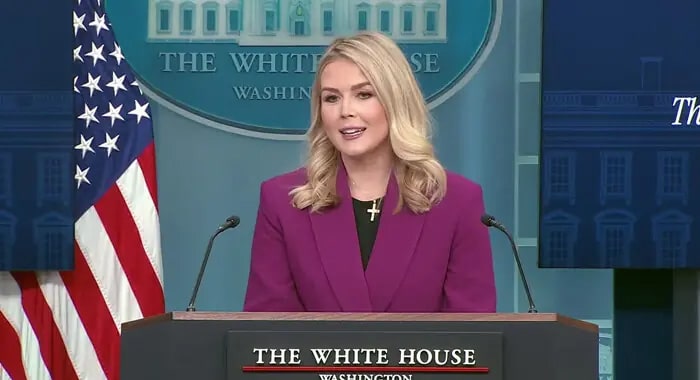
During a Wednesday press briefing, White House Press Secretary Karoline Leavitt stated that the United States remains cautiously optimistic regarding the trajectory of negotiations with Iran. She noted that diplomatic engagement is active and evolving positively, with expectations that the next round of talks may take place in Islamabad. However, she clarified that no final date has been formally announced.
The White House explicitly recognized Pakistan as the sole mediator facilitating dialogue between Washington and Tehran. Press Secretary Leavitt praised Pakistan’s diplomatic engagement, describing its role as “exceptional” and “outstanding,” and commended Islamabad’s sustained and serious efforts in advancing the mediation process and contributing to regional de-escalation.
Addressing recent media speculation, the White House categorically denied reports suggesting that the United States had requested any extension of a ceasefire agreement. Officials clarified that such claims are inaccurate and not reflective of current U.S. policy or ongoing negotiations.
On maritime security, the Press Secretary stated that restrictions in the Strait of Hormuz are being enforced concerning vessels entering and exiting Iranian ports. At the same time, the United States continues to support and ensure the free movement of vessels traveling to and from non-Iranian ports.
Washington reiterated its broader commitment to reducing regional tensions and maintaining stability in critical international waterways, emphasizing that diplomatic solutions remain the preferred path forward.
The White House further stated that diplomatic efforts with Iran are part of a broader strategy aimed at de-escalation and achieving a negotiated settlement. Confidence was expressed that continued engagement could lead to meaningful progress.
Additionally, it was reported that China’s leadership has assured U.S. officials that it is not supplying weapons to Iran, a development noted within the wider context of international diplomatic communication.
Pakistan has further intensified its diplomatic efforts to facilitate dialogue between the United States and Iran. According to available information, preparations are underway for a second round of talks in Islamabad, potentially scheduled for the coming week, underscoring continued momentum in the mediation process.
In parallel with mediation efforts, Pakistan’s Prime Minister Shehbaz Sharif has embarked on a high-level official visit to Saudi Arabia. During the visit, he is expected to meet Saudi Crown Prince Mohammed bin Salman. Following his engagements in Saudi Arabia, the Prime Minister is scheduled to undertake official visits to Qatar and Türkiye, continuing through April 18.
Separately, Pakistan’s Chief of Army Staff, Field Marshal Asim Munir, has arrived in Tehran on an official visit as part of ongoing diplomatic and mediation efforts. According to the Inter-Services Public Relations (ISPR), the visit is directly linked to Pakistan’s broader role in facilitating dialogue between Iran and the United States. He is accompanied by Interior Minister Mohsin Naqvi and other senior members of the delegation.
The latest developments indicate a multi-layered diplomatic initiative involving the United States, Iran, and Pakistan, with Islamabad playing a central mediating role. While discussions remain ongoing, all sides appear engaged in efforts aimed at reducing tensions and advancing toward a negotiated diplomatic outcome.



