
Islam places the highest value on human life, dignity, and respect. The sanctity of life is one of the fundamental principles of Islamic teachings, where the unlawful killing of an innocent person has been equated with the killing of all humanity. The Holy Quran and the teachings of the Prophet Muhammad ﷺ emphasize the protection of life, honor, and property, establishing justice, compassion, and peace as the foundations of a Muslim society.
Despite these clear teachings, history has witnessed the emergence of misguided extremist groups that exploit the sacred name of Islam to justify violence, bloodshed, and acts of terrorism. Among such groups are the Khawarij, whose misguided ideology and violent actions were warned against by the Prophet Muhammad ﷺ centuries ago.
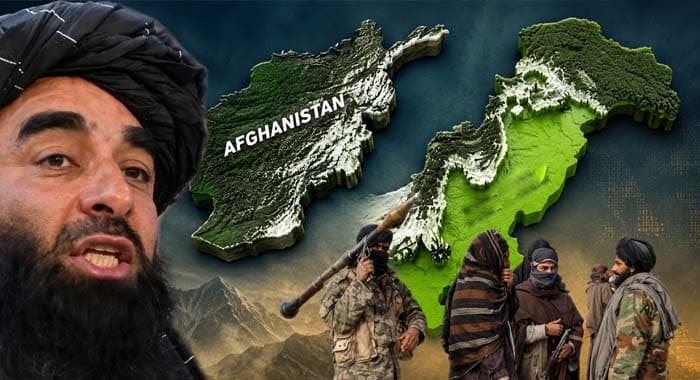
Today, extremist organizations operating under the influence of the banned Tehreek-e-Taliban Pakistan (TTP) and Jamaat-ul-Ahrar continue to spread violence and terror in the region. These elements target security personnel and innocent civilians, carry out brutal acts of violence, desecrate human remains, and attempt to falsely portray their criminal activities as “Jihad.”
The fundamental question remains: Can an act that directly contradicts the teachings of the Quran and Sunnah become Jihad simply by being given that name? Can an individual become a true Mujahid merely by adopting such a title while committing acts forbidden by Islam?
The answer is clear in Islamic teachings. No religion, including Islam, permits the unjust killing of innocent people. When Islam strongly condemns the taking of an innocent life, there can be no justification for entering the territory of another country, attacking security forces, and murdering civilians under the false banner of religion.
The Holy Quran states in Surah An-Nisa (4:93):
“And whoever kills a believer intentionally, his recompense is Hell, wherein he will abide eternally; and Allah has become angry with him and has cursed him and prepared for him a great punishment.”
Similarly, Surah Al-Ma’idah (5:32) states:
“Whoever kills a soul unless for a soul or for corruption [done] in the land it is as if he had slain mankind entirely; and whoever saves one — it is as if he had saved mankind entirely.”
These verses establish the highest standard for the protection of human life. Under these clear principles, attacks on marketplaces, mosques, schools, funeral gatherings, and security installations cannot be considered acts of Jihad; rather, they represent a direct violation of Islamic values.
The teachings of the Prophet Muhammad ﷺ further reinforce the sanctity of Muslim life, property, and honor. The Prophet ﷺ stated that a true Muslim is one from whose hands and tongue other Muslims remain safe. Another teaching emphasizes that the blood, wealth, and honor of a Muslim are sacred and cannot be violated.
If these principles alone are taken as a standard, the false narrative used by extremist groups to justify violence stands exposed.
Islamic teachings also prohibit the mistreatment of human remains. The Prophet Muhammad ﷺ instructed armies not to commit betrayal, not to violate agreements, and not to mutilate bodies:
“Do not commit treachery, do not act deceitfully, and do not mutilate.”
(Sahih Muslim)
The concept of mutilation includes acts such as disfiguring bodies, cutting limbs, desecrating remains, or disrespecting the dead. When Islam prohibits such acts even in relation to the bodies of enemies, there can be no justification whatsoever for such treatment of Muslims.
Groups that behead individuals, desecrate bodies, record such acts, and present them as religious achievements are not following Islamic teachings; rather, they are openly violating the principles of the Quran and Sunnah.
The Prophet Muhammad ﷺ described the characteristics of the Khawarij and warned:
“They will kill the people of Islam and leave the idol worshippers.”
(Sahih Bukhari)
This warning highlights that one of the defining signs of extremist deviation is targeting Muslims while falsely claiming religious legitimacy.
Islam recognizes Jihad as a concept with strict conditions, moral boundaries, and principles of justice. It is never a justification for oppression, revenge, terrorism, or the killing of innocent people. Jihad cannot be associated with cruelty, brutality, or the violation of human dignity.
Security personnel are also members of Muslim societies. Many of them are individuals who pray, fast, recite the Quran, and dedicate their lives to protecting citizens and maintaining peace. Targeting such individuals, killing them, and disrespecting their remains cannot be reconciled with Islamic teachings.
The misuse of religious terminology by extremist organizations must be challenged through the principles of the Quran and Sunnah rather than emotional slogans or propaganda. Any ideology that promotes murder, terror, hatred, and the shedding of innocent blood must be recognized as a distortion of religion.
The people of Pakistan and the wider Muslim community must remain vigilant against such false narratives and understand that groups involved in violence and terrorism do not represent Islam. Their actions are a betrayal of the very values they claim to defend.
The fight against extremism is not only a security challenge but also an ideological responsibility. Rejecting violence, protecting human dignity, and upholding the true teachings of Islam are essential for achieving lasting peace, stability, and harmony.



