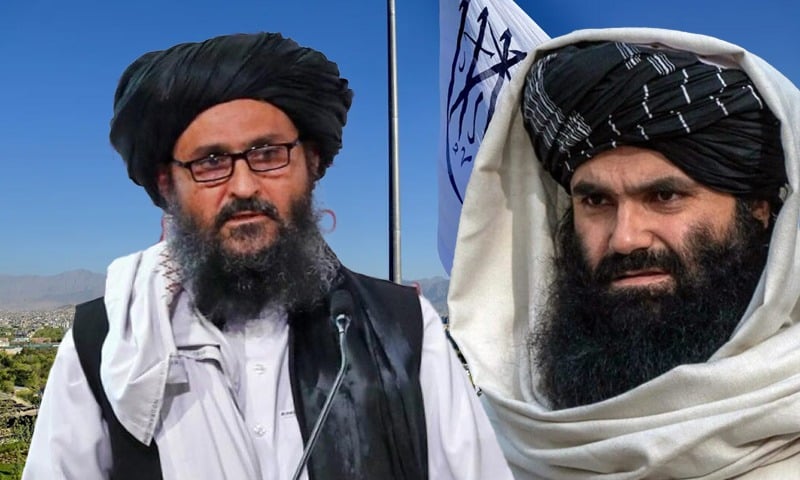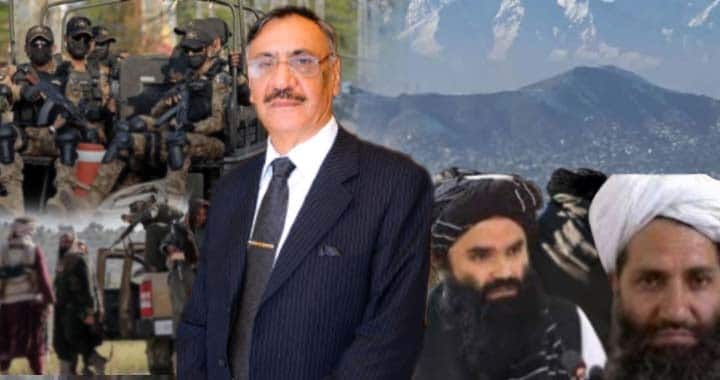
Afghanistan is entering an increasingly uncertain phase as divisions within the Taliban leadership deepen, exposing serious cracks in the movement’s political unity, ideological direction and internal power structure. The growing confrontation between the Kandahari leadership, headed by Supreme Leader Hibatullah Akhundzada, and the influential Haqqani network, led by Sirajuddin Haqqani, is no longer merely an internal disagreement over administrative authority. It represents a deeper struggle over who controls Afghanistan’s political future, security institutions and strategic direction. The reported personal visit of Hibatullah Akhundzada to Kabul to contain these differences underscores the gravity of the situation and raises questions about the Taliban leadership’s ability to preserve its unity.
The roots of this rivalry lie in the historical and geographical foundations of the Taliban movement. Mullah Omar and his close associates belonged predominantly to Kandahar, while the Haqqani network, established by Jalaluddin Haqqani, developed its influence in eastern Afghanistan, particularly Paktia, Paktika and Khost, extending towards Kabul. Over time, these distinct power bases evolved into competing centres of influence. Although the Kandahari leadership maintains supreme political authority, the Haqqani network possesses considerable organisational strength and influence within Afghanistan’s security and administrative structures. This growing imbalance between formal authority and practical influence has intensified tensions.
The situation has become more complicated because the differences are no longer restricted to political appointments and administrative control. Ideological disagreements are also emerging, particularly over militant organisations operating against Pakistan. The Haqqani network and the Kandahari leadership appear to have different approaches towards these groups and their activities. The alleged support for the Baloch Liberation Army (BLA), despite its nationalist rather than religious character, represents a particularly sensitive issue. The contradiction between the Taliban’s religious identity and the reported association of elements within its political and militant networks with a secular nationalist insurgency raises fundamental questions about ideological consistency.
The reported efforts to encourage Tehreek-e-Taliban Pakistan (TTP) to expand its activities into Balochistan have further complicated the situation. The Baloch insurgency has a distinct political, ethnic and nationalist character, making it fundamentally different from the religious militancy associated with the TTP. Differences in language, local understanding, social structures and ideological objectives also create serious obstacles to cooperation between these organisations. The reported involvement of women in militant activities within Baloch nationalist networks presents another ideological complication for religiously motivated groups.
Meanwhile, internal weaknesses within the BLA, including leadership disputes, organisational difficulties and declining public acceptance because of violence against local people, have added another dimension to the situation. The reported leadership changes, including the emergence of Gul Rehman following uncertainty surrounding Bashir Zeb, illustrate the challenges facing the organisation. Any attempt to strengthen cooperation between these different militant networks could further complicate regional security.
The consequences of the Taliban’s internal divisions could be far-reaching. If the Haqqani network consolidates its influence, the Kandahari leadership may face increasing pressure to accommodate its positions. Alternatively, an escalation of disagreements could create a serious institutional crisis within the Taliban government. Hibatullah Akhundzada’s intervention in Kabul reflects the importance of preventing this confrontation from developing into an open struggle for power. However, temporary political arrangements cannot necessarily resolve fundamental disagreements over ideology, authority and strategic priorities.
Afghanistan’s international isolation adds another layer of vulnerability. The Taliban administration continues to face serious challenges in gaining broader international recognition, while its internal divisions undermine confidence in its political stability. Russia’s growing interest in Afghanistan, particularly its mineral resources and commercial opportunities, introduces additional strategic considerations. Competition over Afghanistan’s natural resources and geographical importance could influence the country’s future political landscape. Persistent divisions between northern and southern regions also raise concerns about the possibility of renewed fragmentation if the central government fails to establish an inclusive political system.
For Pakistan, these developments are particularly consequential. Khyber Pakhtunkhwa continues to face serious security challenges, while militant activities in North Waziristan, Bannu, Kohat and other areas require sustained attention. Recent security operations, including the destruction of ammunition and explosives in Kurram and the killing of two militants in North Waziristan, demonstrate the continuing efforts of Pakistani security forces to disrupt militant networks.
The changing security strategy in Khyber Pakhtunkhwa reflects the importance of sustained operational pressure, intelligence coordination and action against militant facilitators. Successful counterterrorism efforts require more than military operations alone. They also demand the dismantling of financial, logistical and local support networks that enable militant organisations to maintain their presence and operational capabilities.
Equally important is the political dimension of the security challenge. The relationship between political interests, local economic activities and security conditions requires serious examination. Allegations of political connections with controversial mining interests, particularly in areas of Khyber Pakhtunkhwa, highlight the need for transparency and accountability. Natural resources must benefit local communities rather than become instruments of political influence or private enrichment. Security operations and economic governance cannot be treated as separate challenges when local grievances and vested interests can undermine stability.
Pakistan’s response must therefore combine effective security measures with institutional accountability, political consensus and meaningful economic development. The removal of militant facilitators, the disruption of cross-border support networks and the protection of vulnerable communities are essential components of a sustainable security framework.
Ultimately, the Taliban’s internal confrontation and Pakistan’s continuing battle against militancy are closely connected dimensions of a wider regional security crisis. Afghanistan cannot achieve lasting stability through an exclusive political structure dominated by competing power centres, while Pakistan cannot secure its border regions without addressing the networks that sustain violence. The future of the region will depend on whether political leadership can overcome factional interests, abandon the use of militant proxies and establish a genuine commitment to regional peace.
The greatest danger is not simply that the Taliban leadership may divide; it is that the consequences of that division could spill across borders, deepen militant instability and turn Afghanistan’s unresolved political crisis into an even greater security challenge for the entire region.