
The Taliban’s prolonged ban on girls’ education has failed to extinguish their desire to learn. Instead, Afghan girls are displaying an even stronger determination to pursue education, with restrictions, intimidation and repression reinforcing their resistance rather than securing their compliance, the United Nations special rapporteur on human rights in Afghanistan, Richard Bennett, has observed.
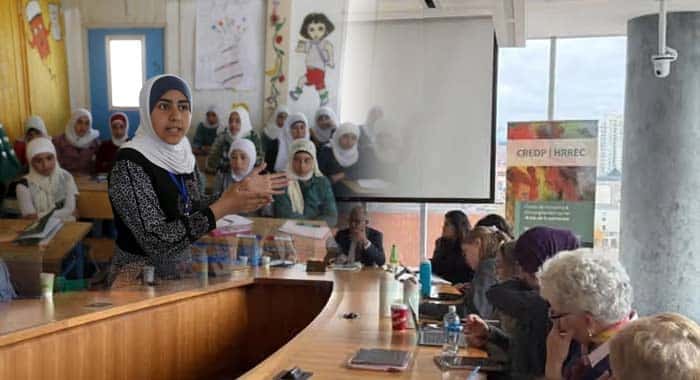
Speaking at a meeting at the University of Ottawa in Canada on November 9, Bennett said the Taliban’s education restrictions had produced an unexpected response: girls’ enthusiasm for learning had increased, reportedly exceeding even the levels witnessed under Afghanistan’s former republican government.
He described this growing determination as evidence that coercion, threats, fear and violence could suppress people only to a certain extent, as human beings would continue to resist oppressive conditions.
Bennett’s remarks highlight an important contradiction in the Taliban’s approach to education. Despite years of restrictions and efforts to keep girls away from classrooms, their aspirations for learning have not disappeared. Instead, the denial of an educational future appears to have strengthened their determination to reclaim that right.
The UN rapporteur also cautioned that repression alone would not guarantee the Taliban’s continued hold on power. Rather, such policies were likely to generate deeper public resentment and opposition.
The special rapporteur further urged Canada to pursue legal avenues under the Convention on the Elimination of All Forms of Discrimination against Women and support efforts to secure international recognition of what has been described as “gender apartheid” in Afghanistan.
In this regard, Bennett recalled that Australia, Canada, Germany and the Netherlands had jointly warned two years earlier that they could refer the Taliban’s treatment of women and girls to the International Court of Justice over Afghanistan’s failure to meet its obligations under the convention.
He emphasized that recognizing gender apartheid on the international agenda was significant, describing the terminology as both a means of mobilizing international support and an instrument for holding those responsible accountable.
Bennett also pointed to the Taliban’s efforts to shape Afghan society beyond the enforcement of restrictions. He said the authorities were attempting to influence people’s thinking through ideological instruction in public schools and religious seminaries, alongside efforts to exercise greater control over the media.
Welcoming the International Criminal Court’s actions against Taliban officials, Bennett described the arrest warrants issued against four Taliban leaders as a fundamental development. He stressed that the international legal proceedings underscored the seriousness of depriving women and girls of their basic rights, including access to education, and the recognition of gender-based persecution as a crime against humanity.
Beyond women’s rights, Bennett identified several other areas requiring greater international attention and research in Afghanistan. These include climate change, water management, environmental damage caused by toxic substances left behind by decades of conflict, and the shrinking space for civil society, particularly independent media.
He also announced that his next thematic report would examine the situation of religious and linguistic minorities in Afghanistan.
The growing determination of Afghan girls to pursue education, despite the Taliban’s restrictions, remains a powerful reminder that policies designed to suppress aspirations do not necessarily eliminate them. While classrooms remain inaccessible to many, the desire to learn continues to challenge the very restrictions imposed to contain it.



