
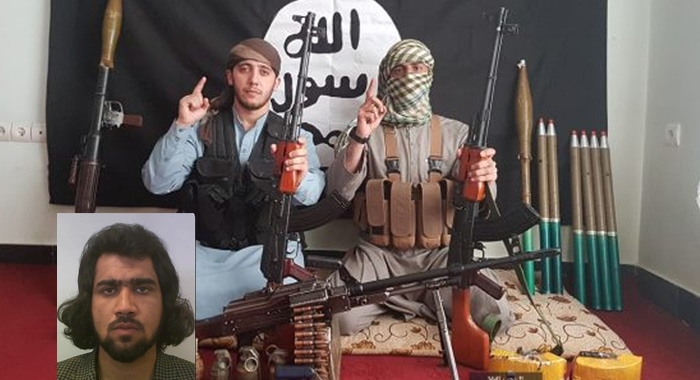
The Taliban regime’s repeated claims that Afghanistan has been cleared of ISIS and its Khorasan branch (ISKP) are increasingly difficult to reconcile with international security assessments documenting the group’s continued presence, recruitment activities and operational networks inside the country. More troubling are allegations of connections between elements of the Taliban’s intelligence establishment, senior Haqqani Network figures and ISKP, raising serious questions about the transparency and credibility of the regime’s counterterrorism narrative.
While Taliban spokesperson Zabihullah Mujahid has repeatedly portrayed ISIS as defeated and denied the existence of an organised ISIS presence in Afghanistan, international assessments continue to identify ISKP as an active security threat. The European Union Agency for Asylum’s February 2026 country report, drawing on United Nations monitoring assessments, estimated ISKP’s strength at approximately 2,000 individuals in 2025 and documented its continued activity through decentralised networks and cells across Afghanistan. The United Nations has also recorded continued ISKP attacks and counterterrorism operations against its members.
The central question is no longer simply whether ISIS-K exists in Afghanistan, but how much the Taliban regime knows about its networks, movements and alleged connections within the country’s power structures.
Particularly concerning are reports alleging communication between the Taliban’s General Directorate of Intelligence (GDI) and ISKP through Telegram, alongside claims of recurring in-person meetings. Other allegations point to possible arrangements involving the movement and protection of ISKP members, the provision of Afghan documentation and safe havens for individuals and their families, and the alleged use of ISKP networks to conceal the elimination of political and militant rivals.
These allegations, if substantiated, would represent an extraordinary contradiction in the Taliban’s proclaimed counterterrorism policy. A regime that publicly claims to have dismantled ISIS cannot reasonably expect the international community to ignore credible allegations of contacts, facilitation or cooperation involving individuals within its own security structures. Such claims demand independent investigation, transparency and clear answers.
The reported connections involving Sirajuddin Haqqani, the Taliban’s interior minister and a prominent figure associated with the Haqqani Network, warrant particular scrutiny. Allegations concerning contacts with senior ISIS figures, including Walid bin Saleh al-Sinani, deputy head of the Islamic State’s Shura Council, raise serious questions that should be addressed through independently verifiable evidence rather than political denials.
The case of Sanaullah Ghafari, also known as Shahab al-Muhajir, further illustrates the complexity of Afghanistan’s militant networks. The United Nations Security Council identifies Ghafari as the leader of ISKP since June 2020, following his appointment by ISIS’s central leadership. Separate reports have alleged that he previously had connections with the Haqqani Network before joining ISKP. Those reported historical connections require careful examination and should not be confused with independently established proof of institutional cooperation.
Equally disturbing are allegations that ISKP personnel could have been accommodated within broader militant operations in northern Afghanistan or provided protection and logistical assistance. If verified, such developments would raise profound concerns about the possible manipulation of extremist networks for political, intelligence or strategic purposes.
The Taliban regime must therefore answer fundamental questions: How can it claim to have eliminated ISIS while international monitoring bodies continue to document ISKP networks and activities? What is the nature of the alleged contacts between elements of its intelligence establishment and ISIS-linked figures? Have individuals associated with extremist networks received protection, documentation or logistical assistance? And what measures have been taken to ensure that state institutions are not being used to facilitate or conceal militant activities?
The international community, particularly the United Nations, regional governments and international counterterrorism institutions, must closely examine these allegations. Independent scrutiny, transparent investigations and credible intelligence-sharing are essential to establishing the facts and preventing extremist organisations from exploiting political and institutional arrangements.
Afghanistan must not become a sanctuary for competing extremist networks or a theatre in which militant organisations are selectively confronted, tolerated or allegedly manipulated for strategic purposes. The presence of ISIS-K, regardless of its size or operational limitations, remains a serious regional security concern.
A regime’s credibility is measured not by its declarations but by verifiable action. The Taliban cannot claim complete victory over ISIS while leaving serious questions about the group’s continued presence and alleged connections unanswered.
The people of Afghanistan and neighbouring countries deserve transparency, accountability and genuine security. The international community must look beyond official statements and demand credible answers about the networks operating within Afghanistan.



