
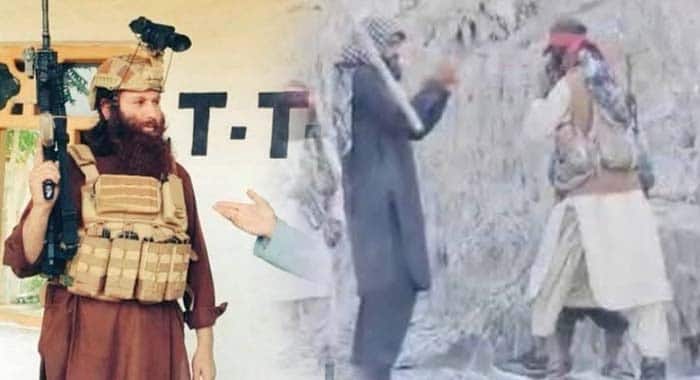
The most revealing part of the Muhammad Fateh case may not be his Iranian nationality.
It may be his reported journey.
According to security sources, Fateh had previously been associated with al-Qaeda and participated in armed activity in Syria. He was reportedly known there as Jafar.
More than eight months ago, according to the sources, he joined the TTP.
He was ultimately eliminated while attempting to enter Pakistan through the Pak-Afghan border in Datta Khel.
Three theatres appear in this account: Syria, Afghanistan and Pakistan.
That geographical progression deserves scrutiny.
Syria Created a Generation of Foreign Fighters
The Syrian conflict created one of the largest concentrations of foreign jihadist fighters in the modern era.
Individuals travelled to Syria from countries across the Middle East, Asia, Europe and elsewhere.
Some died there.
Some returned home.
Some moved into other conflict zones.
And some disappeared into underground networks.
That history matters because terrorist organizations are not conventional armies whose personnel simply leave when a battlefield closes.
Their members carry relationships, ideological commitments, technical skills and combat experience with them.
The reported history of Muhammad Fateh therefore raises an obvious question: what happened between Syria and North Waziristan?
The answer could reveal considerably more than the story of one terrorist.
Afghanistan as the Connecting Space
The Afghanistan-Pakistan region has historically been one of the most important environments for transnational jihadist organizations.
The Taliban’s return to power did not erase the region’s militant networks.
Rather, it created a new political and security environment in which different organizations and individuals operate alongside, against or independently of one another.
Pakistan has repeatedly accused the TTP of operating from Afghanistan and of launching attacks across the border. Kabul has rejected such accusations.
But the movement of a foreign fighter into the TTP network adds another dimension.
It raises the possibility that Afghanistan is not simply a geographical rear area for one Pakistani terrorist organization.
It may also function as a meeting point where individuals with histories in different conflict theatres can enter new networks.
From Al-Qaeda to TTP
The alleged transition from an al-Qaeda-linked background to the TTP is particularly noteworthy.
It does not establish that the two organizations are institutionally merged.
Nor does it mean that every member of one organization automatically becomes part of another.
But it demonstrates why organizational labels alone can sometimes conceal the mobility of individual fighters.
The same person can move between organizations.
An alias can change.
A local affiliation can change.
A battlefield can change.
The underlying ideological and operational experience may remain.
That is precisely why counterterrorism agencies increasingly focus not merely on organizations, but on individuals, facilitators, travel routes and personal networks.
Pakistan’s Border Becomes the End Point
In the Fateh case, the journey appears to have ended at Pakistan’s western frontier.
That is significant because the border is where the international dimension of the case becomes a direct Pakistani security problem.
The person who may once have been part of a conflict thousands of kilometers away was allegedly eventually carrying that experience into a network targeting Pakistan.
This is the real strategic concern.
Terrorism does not need to export an entire organization from one country to another.
Sometimes it only needs to export people.
The Bangladeshi Case Strengthens the Pattern
The earlier Bangladeshi case adds another dimension.
Faisal Hossain was reportedly a young Bangladeshi who told his family he was travelling to Dubai, but was later reported to have travelled to Afghanistan before joining the TTP and entering the Pakistani theatre. Contemporary Bangladeshi reporting also documented the family’s account and the reported TTP affiliation.
The two cases should not be artificially merged.
But they demonstrate two different pathways into the same organization.
One reportedly began in Bangladesh and passed through Afghanistan.
The other reportedly began in an Iranian national’s involvement in Syria and later entered the TTP network.
That is precisely what makes the issue strategically significant.
The Question Islamabad Should Be Asking
The key intelligence question is no longer merely:
Who is the TTP recruiting?
It is:
Where are these recruits coming from, how are they connected, and what routes bring them into the organization?
If the answer reveals recurring transit points, facilitators or recruitment channels, Pakistan could be looking at something considerably larger than individual foreign recruits.
It could be looking at a network capable of moving human resources between conflict theatres.
And if that network exists, the Iranian national killed at Datta Khel may have been not the beginning of the story, but merely the latest person to appear at its Pakistani end.



