(Zahir Shah Sherazi)
Afghanistan is once again becoming the centre of a powerful political storm. The country that has witnessed decades of war, foreign interventions and internal conflicts is now facing a different but equally complex battle a struggle over governance, rights, international legitimacy and regional influence.
The latest controversy surrounding former Afghan President Hamid Karzai’s statement on girls’ education has reopened a fundamental question: Can Afghanistan achieve progress while restricting educational opportunities for half of its population?
Karzai recently emphasized that both Afghan boys and girls have the right to education and that no nation can move forward without investing in the education of its entire population. Although his statement did not directly criticize the Taliban government, it immediately triggered a reaction from the Taliban’s Ministry of Higher Education.
Taliban spokesperson Ziaullah responded that external figures had no right to interfere in Afghanistan’s internal affairs. However, the reaction has further intensified an international debate about Afghanistan’s future direction and the policies of the Taliban administration.
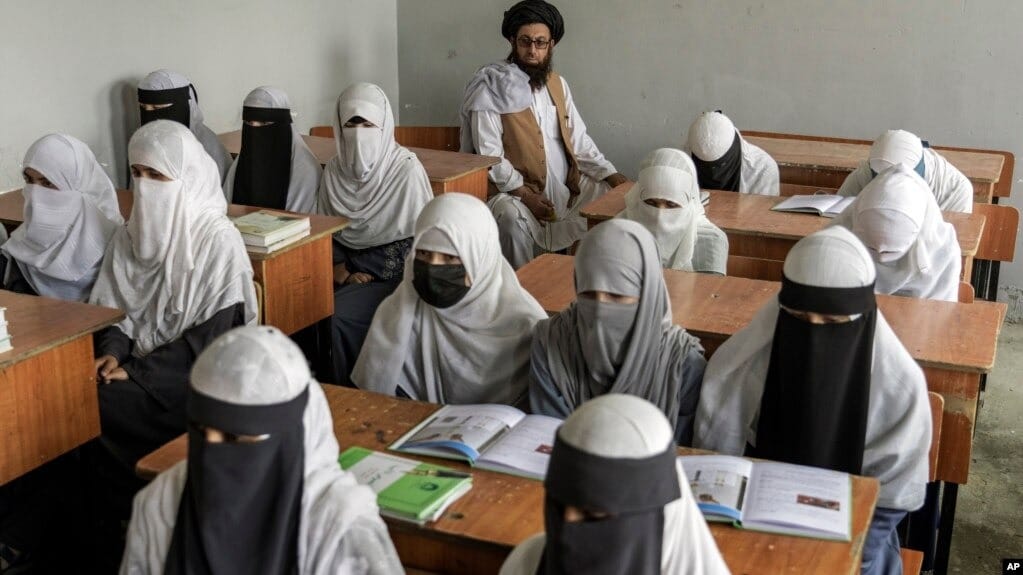
Today, the Afghan Taliban government finds itself under pressure from multiple directions: international criticism, economic difficulties, humanitarian challenges, internal disagreements and growing concerns about regional security. The issue of women’s education has become the defining challenge for the Taliban government. Millions of Afghan women and girls have been affected by restrictions on education and employment. Critics argue that preventing women from studying and working has weakened Afghanistan’s social and economic structure.
A country cannot build hospitals without doctors, schools without teachers or an economy without skilled workers. Excluding women from education means excluding a major part of Afghanistan’s future workforce. Supporters of women’s education inside Afghanistan and abroad argue that education is not a foreign idea imposed from outside. They maintain that knowledge and learning have always held an important place in Islamic history.
The debate has also reached the wider Muslim world. At the Organization of Islamic Cooperation (OIC) conference in Islamabad, discussions focused on women’s rights and education in Afghanistan and other Islamic countries. This created a difficult challenge for the Taliban’s narrative, because many Muslim-majority countries continue to support women’s access to education while maintaining their religious and cultural identities.
The pressure on the Taliban is no longer limited to political criticism. Reports indicate that international legal efforts have been initiated against Taliban policies, including actions linked to human rights concerns. Organizations such as the Open Society Foundation have pursued legal avenues, while discussions about international judicial forums have increased. The Taliban leadership argues that Afghanistan’s internal matters should be decided by Afghans themselves. However, the international community argues that issues involving human rights and fundamental freedoms have global consequences.
The coming period will test whether the Taliban chooses greater engagement with the international community or continues on a path of isolation.
Behind the political debate lies a severe humanitarian reality. Millions of Afghans continue to struggle with poverty, unemployment and limited access to basic services. International humanitarian assistance, which once played a major role in supporting Afghanistan’s health and development sectors, has declined significantly. The Taliban claims that it is restoring stability and rebuilding the country through diplomatic engagement and economic agreements. However, critics argue that stability cannot be measured only by the absence of war. True stability requires education, employment, healthcare and economic opportunities for ordinary citizens.
The biggest question remains: Can Afghanistan achieve economic recovery while remaining politically isolated?
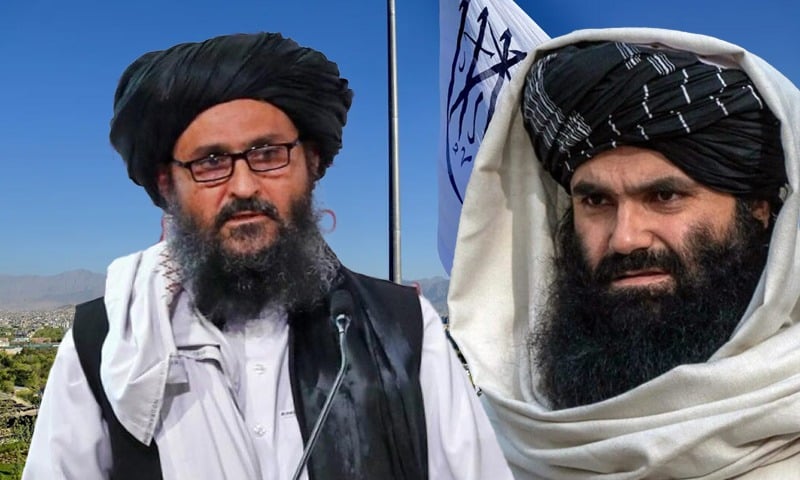
Another major challenge facing the Taliban government is the question of internal unity. Political observers have repeatedly pointed towards disagreements among senior Taliban figures regarding governance, authority and Afghanistan’s future direction. Figures including Mullah Yaqoob and Sirajuddin Haqqani are considered influential leaders within the movement, but analysts believe differences exist regarding decision-making and policy priorities. The Taliban movement that once operated as an insurgency is now responsible for governing a diverse country of millions of people. Managing internal factions while addressing public expectations is a far more difficult challenge than fighting an opposition.
Afghanistan is not a single-identity state. Tajiks, Uzbeks, Hazaras, Pashtuns and other communities have deep historical roots. Any government that fails to provide representation and inclusion risks increasing dissatisfaction. Signs of renewed opposition activity have created fresh concerns. Different resistance groups have emerged in Afghanistan, particularly in northern areas. Some analysts believe dissatisfaction among various communities could increase if political space remains restricted. Strategic provinces such as Badakhshan and Herat hold special importance because of their geography, resources and links with neighbouring regions.
Badakhshan, located near Tajikistan, China and Central Asia, is especially significant because of its mineral resources and strategic location. Any instability there could affect regional security calculations. The Taliban leadership now faces a critical choice: whether to maintain strict centralized control or move towards broader political inclusion.
Afghanistan has historically been caught between competing global powers. From the rivalry between Britain and Russia in the past to the Cold War and the post-9/11 conflict, Afghanistan has repeatedly become the arena of international competition. Today, many analysts believe another strategic contest is emerging. Russia, China, the United States and regional powers all have interests in Afghanistan. The concern is that Afghan territory could once again become a place where global rivalries are played out. The consequences would not remain inside Afghanistan. Pakistan’s Khyber Pakhtunkhwa, Balochistan, Iran and Central Asian countries could all face the impact of increased instability.
Pakistan’s relationship with Afghanistan has entered a difficult phase. Despite shared history, cultural connections and geographical links, security concerns have created serious tensions between Islamabad and Kabul. The situation in Khyber Pakhtunkhwa, particularly areas such as Bannu, has highlighted the seriousness of the security challenge. Analysts argue that Pakistan cannot rely only on military operations. A successful strategy requires a combination of security measures, political engagement, economic development and stronger governance. The state’s presence must not only be visible through security forces but also through schools, hospitals, employment opportunities and effective administration.
Balochistan remains another major challenge. Militant violence, attacks on security forces and threats to development projects have created serious concerns. The United States has designated groups including the Baloch Liberation Army (BLA) and Majeed Brigade as terrorist organizations, bringing greater international attention to the issue. However, experts argue that eliminating militancy requires more than military action. A sustainable solution requires:
- stronger policing;
- better intelligence coordination;
- improved governance;
- economic opportunities;
- youth engagement;
- development of neglected areas.
Security without development creates temporary control, not lasting peace.
Modern conflicts are changing rapidly. Drones, surveillance systems, advanced communication tools and intelligence technology have transformed warfare. Security forces today require not only traditional weapons but also advanced technology and modern strategies. The fight against terrorism in difficult terrain requires:
- improved air surveillance;
- modern intelligence systems;
- stronger border monitoring;
- specialized counterterrorism units;
- rapid response capabilities.
The future belongs to countries that can combine military strength with technological superiority. Afghanistan is once again standing at a historic crossroads. The Taliban government faces a choice between isolation and engagement, confrontation and cooperation, control and inclusion.
The international community wants answers on women’s education, human rights and political openness. Afghan citizens want stability, jobs and a future for their children. Pakistan faces its own challenge: protecting national security while preventing Afghanistan from becoming a battleground for international rivalries. The region cannot survive another cycle of endless conflict.
Afghanistan’s future will not only define the destiny of Afghans. It will influence the security and stability of an entire region stretching from South Asia to Central Asia. The coming years will reveal whether Afghanistan becomes a symbol of reconciliation and rebuilding or once again becomes the battlefield of another great power competition.