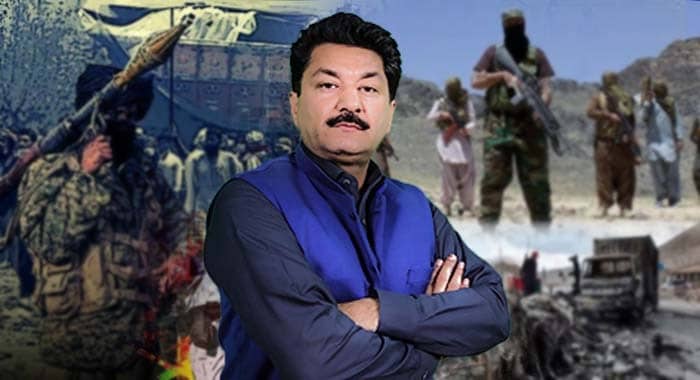
The debate around the activities of the banned TTP and BLA often begins with a question: how can two organizations with different backgrounds, different narratives and different operating areas appear to be moving in the same direction?
The answer lies in understanding their actions rather than their slogans.
Their methods may vary, their propaganda may use different language, and their claimed justifications may be different, but the consequences of their actions reveal a common objective: creating instability inside Pakistan, weakening public confidence and damaging the country’s journey towards peace and development.
No genuine movement for the rights of people begins by destroying schools, attacking hospitals, looting banks, damaging bridges, kidnapping citizens or targeting those responsible for protecting communities.
A group that claims to speak for a population but destroys the very infrastructure that serves that population cannot represent the interests of ordinary people.
The reality on the ground tells a different story.
In Khyber Pakhtunkhwa, Afghan-based, and Afghan-backed terrorist organizations have repeatedly targeted security personnel, police officials, tribal elders and innocent citizens. In Balochistan, terrorist attacks have attempted to create fear among communities, disrupt development and damage the image of a province that holds enormous importance for Pakistan’s future.
Balochistan is not just a geographical region. It is central to Pakistan’s economic future, connectivity plans and national progress. This is precisely why attempts to create instability there have consequences far beyond individual attacks.
The targeting of areas around Quetta, Ziarat, Kharan, Khuzdar and other parts of Balochistan reflects an attempt to challenge the writ of the state and create an atmosphere of fear.
However, terrorism cannot establish control merely through attacks and propaganda.
A terrorist group may carry out an attack and disappear into hiding, but controlling territory, winning public support and providing governance are entirely different matters.
The state of Pakistan, with its institutions, security forces and resilient citizens, remains present across the country.
The terrorists’ biggest misconception is that temporary disruption can translate into strategic success. History has repeatedly shown that Pakistan’s people and institutions have the ability to stand together during difficult periods.
The recent resistance by local communities and security personnel against terrorist attempts demonstrates an important reality: ordinary Pakistanis reject violence and do not want their areas to become battlegrounds for externally supported agendas.
The nature of warfare has also changed.
Today, conflicts are not fought only with traditional weapons. Information warfare, propaganda campaigns, social media manipulation and proxy networks have become important tools.
Terrorist organizations understand that they cannot defeat Pakistan through conventional means. Therefore, they attempt to exploit divisions, spread fear and create perceptions of weakness.
This is where national unity becomes essential.
Security challenges cannot be addressed through isolated efforts. Political leadership, state institutions, law enforcement agencies and citizens all have a role to play.
The experience of Pakistan shows that whenever institutions work together with a shared objective, terrorism suffers setbacks.
The security environment of Khyber Pakhtunkhwa and Balochistan may have different characteristics, but the challenge is fundamentally the same: protecting citizens and preserving Pakistan’s stability.
Police officers standing on the front lines, soldiers defending remote areas, intelligence personnel working behind the scenes and citizens refusing to surrender to fear are all part of the same national effort.
The terrorist networks operating against Pakistan also depend on support structures. No armed group can sustain itself without resources, financing, recruitment networks and logistical assistance.
Breaking these support systems is as important as targeting those who carry out attacks.
Pakistan has repeatedly made it clear that its struggle is not against any community, ethnicity or region. The fight is against those who choose violence and attempt to impose their agenda through terror.
The people of Balochistan and Khyber Pakhtunkhwa are Pakistan’s strength. Their future is linked with peace, stability and development, not with the destruction promoted by terrorist groups.
Those who attack schools, markets, security personnel and innocent citizens cannot claim to be defenders of the people.
Pakistan has faced difficult challenges before and has overcome them through resilience, sacrifice and unity.
The current security challenge also requires the same national resolve.
Terror groups may operate under different names, but their actions reveal the same reality: they seek instability, while Pakistan seeks peace, progress and prosperity.
The path ahead demands patience, coordination and determination.
With the support of its people and the commitment of its institutions, Pakistan will continue confronting terrorism and protecting the future of its citizens.
The coming period will test Pakistan’s ability to respond to a security environment that is becoming increasingly complex. The challenge is not only to respond after an attack, but to stay ahead of those who seek to create instability.
This requires strengthening intelligence coordination, improving law enforcement capabilities, protecting vulnerable areas and ensuring that terrorist networks do not find space to regroup.
The sacrifices of Pakistan’s security personnel and civilians remind us that the price of peace is not paid in statements, but through courage, commitment and action.
Every police officer standing guard, every soldier deployed in difficult terrain and every citizen who refuses to be intimidated contributes to the country’s security.
The terrorists want to create the impression that fear can defeat determination. Pakistan’s experience proves the opposite. Every time the country has faced a difficult moment, its people have demonstrated resilience and unity.
The enemy’s biggest weakness is that it underestimates Pakistan’s national resolve.
The terrorists may attempt to exploit political differences, regional sensitivities or social divisions, but the answer lies in strengthening the unity that has always helped Pakistan overcome challenges.
Security is not the responsibility of one institution alone. It is a national responsibility. Political leadership, security institutions, media, civil society and citizens must understand the seriousness of the threat and work with a shared vision.
The fight against terrorism also requires clarity of thought. There can be no confusion between legitimate political expression and violence. Dialogue and democratic processes have their place, but terrorism, attacks on civilians and armed rebellion cannot be justified under any slogan.
Pakistan’s message should remain clear: the state will protect its citizens, defend its sovereignty and ensure that no terrorist organization is allowed to dictate the future of any region.
Balochistan and Khyber Pakhtunkhwa have suffered because of terrorism, but these regions are also examples of resilience. Their people have repeatedly rejected violence and stood with Pakistan’s efforts for peace and development.
The future of these regions lies in education, investment, connectivity and opportunities for their youth, not in the destruction promoted by terrorist groups.
Those who attack development projects, schools, health facilities and public institutions are not fighting for the people. They are fighting against the future of the people.
Pakistan’s journey towards stability may have challenges, but the direction is clear. The country has the capacity, experience and determination to defeat those who seek to weaken it.
Terror networks can create temporary disturbances, but they cannot defeat a nation that stands united.
The lesson from history is simple: Pakistan has defeated terrorism before, and with national unity, institutional strength and public support, it will defeat every attempt to threaten its peace and prosperity in the future.