
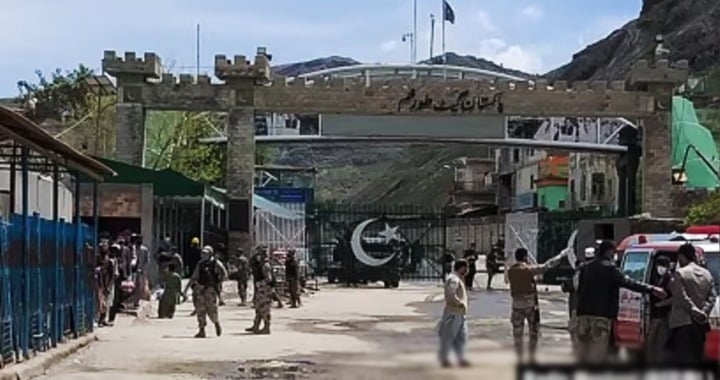
The collapse in Pakistan-Afghanistan trade is not simply a story of closed border crossings, redirected imports or farmers unable to sell their crops. It is the economic fallout of a security dispute that Pakistan says it tried to resolve for years through diplomatic engagement, repeated protests and the presentation of evidence concerning terrorist activity originating from Afghan territory.
The Afghan Taliban now face a difficult reality: the trade routes that helped sustain Afghanistan’s economy have become entangled in the consequences of their failure to address Pakistan’s security concerns.
The figures illustrate the scale of the damage. Direct bilateral trade previously averaged approximately $6.45 million a day, or nearly $2.35 billion annually. Meanwhile, the number of Afghan transit containers recorded through Pakistan fell from 102,886 in fiscal year 2023 to just 11,592 in fiscal year 2026. Afghan exports transported through Pakistan to third-country markets reportedly declined from $454 million to $7 million over the same comparison.
These are not merely statistics about customs activity. They represent lost commercial opportunities, disrupted supply chains, reduced earnings and a shrinking range of options for Afghan producers.
A security warning repeatedly ignored
Pakistan’s central complaint has been consistent: Afghan territory must not be allowed to serve as a base for terrorist attacks against Pakistan.
Islamabad maintains that it raised the issue repeatedly with the Taliban authorities, supplied evidence and sought corrective action through diplomatic channels. According to Pakistan, these efforts failed to stop the threat, which continued to grow.
That history matters because it distinguishes the dispute from a routine disagreement over tariffs, customs procedures or border management.
A country confronting cross-border terrorism cannot be expected to regard the matter as separate from its wider relationship with the authorities controlling the territory from which the threat originates. Security concerns affect border policy, diplomatic engagement and the conditions under which commercial relations can operate.
Pakistan’s position is that the Taliban authorities were repeatedly given opportunities to address the problem but failed to take effective action. Islamabad subsequently resorted to military operations against terrorist sanctuaries inside Afghanistan under Operation Ghazb Lil Haq, launched on the night of February 26–27, 2026.
The economic consequences have followed a clear pattern: a prolonged security dispute has undermined confidence, border crossings have been disrupted, and businesses have been forced to reconsider their trading arrangements.
The responsibility for restoring sustainable relations therefore cannot rest on reopening crossings alone. It requires credible action on the security issue that has repeatedly obstructed normalization.
Afghanistan’s geography cannot be replaced cheaply
The Taliban administration has sought to redirect Afghanistan’s trade through Iran and Central Asia. World Bank figures indicate that Iran accounted for 56.6 percent of Afghanistan’s import flows in August 2026, while Central Asian countries accounted for 38.9 percent.
This shift demonstrates that alternative routes can sustain a substantial proportion of imports. It does not establish that they can reproduce all the commercial advantages of the Pakistani route.
Afghanistan is landlocked. Its exporters and importers depend on neighboring countries for access to international markets, seaports and major trading networks. Changes in route length, freight costs, handling capacity and border procedures can have significant effects on the competitiveness of goods.
For exporters of agricultural products, these costs are especially consequential. Pomegranates, apples and other perishable goods require reliable transport and timely delivery. Delays can reduce quality, eliminate profit margins and leave producers unable to recover their costs.
The Afghan gardener who reports being unable to find buyers for his pomegranates represents this problem in its simplest form. A crop can be successfully grown and harvested, yet still fail to generate income if access to its market disappears.
The Taliban administration may diversify trading partners, but it cannot remove the geographical disadvantages Afghanistan faces as a landlocked country. Nor can alternative routes automatically replace established commercial relationships.
The economic burden falls on ordinary Afghans
The costs of the crisis are not confined to governments or major traders.
Farmers face unsold produce. Transporters lose contracts. Laborers lose work. Importers pay more to move goods, while consumers may face higher prices. Small businesses, which often lack the financial reserves of larger companies, are particularly vulnerable to prolonged disruptions.
Afghanistan’s reported 18 percent year-on-year decline in exports in August 2026 reinforces the scale of the challenge. Food exports fell by 36 percent, while coal exports reportedly dropped to zero during the month.
These declines cannot be attributed exclusively to the Pakistan border closures. Transportation costs, other regional disruptions, market access and domestic economic weaknesses also matter. But the sharp contraction in transit activity through Pakistan shows how heavily the trade network has been affected.
The Taliban authorities must therefore confront a question that extends beyond their relationship with Islamabad: what is the economic cost of leaving the security dispute unresolved?
Accountability is the route back to normal trade
Pakistan’s security demands and Afghanistan’s economic interests are not inherently incompatible. Effective action against terrorist networks would create a stronger basis for rebuilding confidence, reopening commercial channels and restoring regional connectivity.
But such a recovery requires more than declarations. It requires verifiable action to prevent Afghan territory from being used to attack Pakistan, cooperation against terrorist networks and an end to any facilitation of such activities.
The Taliban authorities cannot demand the benefits of normal economic relations while dismissing the security concerns that have undermined them.
Pakistan, meanwhile, has a clear interest in restoring lawful commerce and regional transit where security conditions permit. Disrupted trade also carries costs for Pakistani exporters, transporters and businesses, while weakening the wider economic connections that could benefit the region.
The distinction is one of responsibility. The economic damage affects both countries, but Pakistan’s stated reason for escalating its response is that repeated efforts to secure action against terrorism failed.
The way forward is therefore not to treat the crisis as an inexplicable breakdown in regional cooperation. It is to address the underlying security dispute, establish credible safeguards and create conditions in which trade can resume without exposing Pakistan to continued cross-border attacks.
The Afghan Taliban cannot undo the economic damage simply by finding new routes. They must address the security failure that helped produce it.
Until that happens, Afghan farmers, traders and transporters will remain exposed to the cost of a crisis that the Taliban authorities had repeated opportunities to prevent.



