
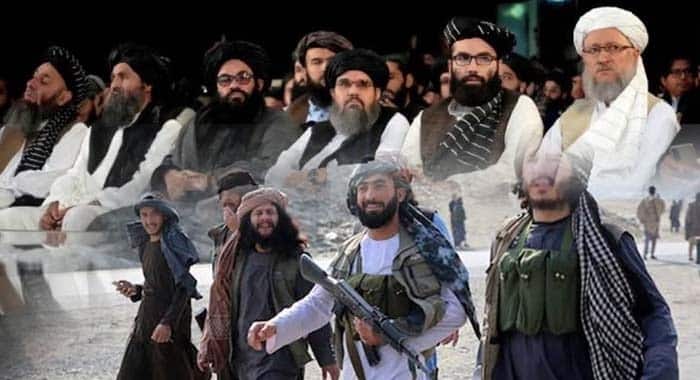
The Afghan Taliban regime’s assertion that it lacks the capability to fuel insecurity in other countries sits uneasily with international assessments of the terrorist threat emanating from Afghanistan. As tensions with Pakistan persist, the gap between Kabul’s public denials and the documented presence of terrorist organizations on Afghan soil has become increasingly difficult to ignore.
The Taliban’s position is particularly contentious because the banned Tehreek-e-Taliban Pakistan (TTP), Islamic State Khorasan Province (IS-K) and Al-Qaeda remain central to regional security concerns. Pakistan has repeatedly accused the Afghan Taliban of allowing terrorist groups to operate from Afghanistan, with the TTP blamed for a surge in attacks inside Pakistan.
Taliban spokesperson Zabihullah Mujahid has dismissed Pakistan’s accusations, portraying Islamabad’s references to terrorist activity as an attempt at “domestic distraction.” He has also argued that it is not in Afghanistan’s interest to create insecurity in Pakistan or support destabilizing activities there.
But stating that instability serves no national interest does not, by itself, establish that the threat is being contained. The central question is whether the authorities in Kabul are taking effective action against groups whose activities threaten neighboring countries.
International Assessments Complicate Kabul’s Position
Pakistan has cited assessments by the United Nations Security Council’s monitoring mechanisms and US government reporting to support its concerns. These documents provide important context for examining the relationship between the Taliban authorities and terrorist organizations operating in Afghanistan.
The UN Security Council’s Analytical Support and Sanctions Monitoring Team has repeatedly highlighted the threat posed by terrorist groups in Afghanistan. Its 2025 report on the Taliban and associated individuals described a permissive environment for terrorist organizations, while the UN’s February 2026 assessment of the broader Al-Qaeda and Islamic State threat also noted that Afghanistan’s de facto authorities continued to provide a permissive environment for a range of terrorist groups, notably the TTP.
A separate US Lead Inspector General report on Operation Enduring Sentinel, covering January to March 2026, examined the status of terrorist organizations in Afghanistan, including the TTP, IS-K and Al-Qaeda. The report forms part of the US government’s formal oversight of security developments in the country and its counterterrorism efforts.
These assessments do not make every accusation against Kabul automatically proven. They do, however, demonstrate why the question of terrorist sanctuaries cannot be dismissed simply as a political dispute between Pakistan and the Afghan Taliban.
The TTP’s presence is especially consequential for Islamabad. The group has carried out attacks against Pakistani security personnel and civilians, while Pakistan maintains that its leadership, fighters and support networks have benefited from operating across the border. Kabul’s refusal to acknowledge Pakistan’s security concerns has consequently become a major obstacle to rebuilding trust between the two sides.
Pakistan’s Security Concerns and the Cost of Inaction
Pakistan has argued that it exhausted diplomatic avenues and repeatedly sought cooperation from Kabul before resorting to military action against terrorist hideouts inside Afghanistan. Pakistani officials have presented cross-border strikes as a response to the failure to eliminate the threat through engagement and cooperation.
Such operations carry serious risks, including further escalation between the two neighbors and consequences for communities living near the border. But the underlying security dispute cannot be resolved through competing statements alone. It requires verifiable action against terrorist groups, effective border management and sustained cooperation to prevent attacks.
For Kabul, dismissing Pakistan’s concerns as domestic political maneuvering offers no durable solution. If the Taliban authorities maintain that Afghan territory is not being used to threaten neighboring states, they need to demonstrate that position through measurable action against the organizations identified in international assessments.
The same standard applies to IS-K and Al-Qaeda. Their presence and activities have implications beyond Pakistan, making the security situation in Afghanistan a regional and international concern rather than a bilateral issue alone.
Afghanistan’s Internal Crisis Cannot be Separated From Regional Security
The consequences of the Taliban’s priorities extend beyond its relations with Pakistan. Afghanistan continues to face severe humanitarian and economic challenges, with millions of people experiencing food insecurity and limited access to livelihoods, education and opportunities for social advancement.
Restrictions, economic hardship and the absence of meaningful opportunities have compounded the difficulties facing ordinary Afghans. Against this backdrop, the protection or tolerance of armed groups would carry a heavy cost, diverting attention from the needs of the population and exposing the country to further isolation and instability.
Armed groups can also threaten the authorities that tolerate their presence. IS-K has demonstrated its willingness to attack the Taliban themselves, while other terrorist organizations pursue agendas that extend beyond Afghanistan’s borders. A permissive environment for such groups therefore risks undermining both regional security and the Taliban regime’s own long-term stability.
The choice facing Kabul is not between accepting Pakistan’s every accusation and rejecting it outright. It is between verifiable counterterrorism action and continued confrontation over a threat that international monitoring bodies have repeatedly identified.
The Afghan Taliban cannot expect declarations of peaceful intent to settle the matter while concerns about terrorist sanctuaries remain unresolved. Credibility will depend on whether the regime acts against terrorist organizations, prevents them from using Afghan territory to launch attacks abroad and cooperates meaningfully with its neighbors.
Ignoring the problem will not make it disappear. For Afghanistan, Pakistan and the wider region, the consequences of continued inaction could prove far more costly than an honest acknowledgment of the threat.



