
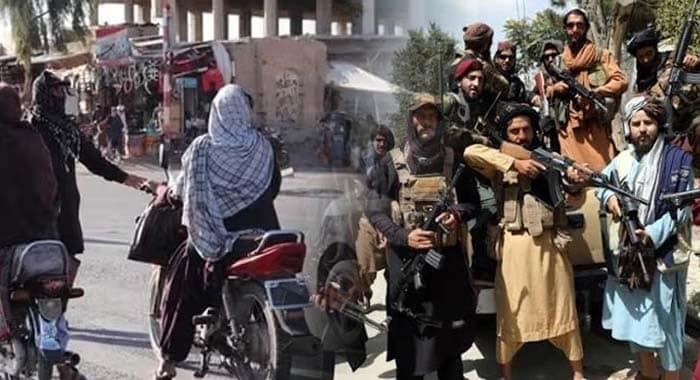
Afghan Taliban are facing rising public pushback in several provinces, including Herat and others where reports of demonstrations have surfaced, as sections of society increasingly question what critics describe as an authoritarian interim system that restricts political expression and civil liberties. While these reports point toward growing unease in parts of the country, accounts from within Afghanistan suggest that the authorities are simultaneously tightening internal enforcement measures aimed at controlling individual behaviour and public appearance.
In this broader atmosphere of tension, local sources from Kandahar report a renewed and intensified campaign by Taliban “virtue” authorities targeting men’s grooming standards, particularly beard length, clothing, and general appearance in public spaces. Residents describe an expanding surveillance presence in markets, roads, and residential areas, where individuals are being stopped, questioned, and in some cases detained over personal appearance-related issues.
According to local accounts, Taliban enforcement personnel have been stopping dozens of young men daily, inspecting beards, clothing, and personal conduct. Those found in violation of prescribed standards are reportedly taken for interrogation, with some later transferred to detention centres. Witnesses say the approach has increasingly involved pressure, humiliation, and prolonged questioning.
Residents further report that enforcement personnel are now routinely stopping vehicles, including cars and motorcycles, even when families are travelling together, and subjecting passengers to questioning over appearance and personal compliance with regulations. Several individuals claim that such encounters often involve verbal intimidation and coercive treatment.
A shopkeeper from Kandahar described the situation as one of growing discomfort for civilians, saying enforcement actions are being carried out in a manner that undermines dignity and social respect. Other residents argue that if compliance issues exist, they should be addressed through advisory measures rather than detention and punitive action.
Local sources also indicate that similar patterns of enforcement have been reported previously in Kandahar, Helmand, and other provinces, where individuals have been detained over grooming and appearance-related violations. The latest reports suggest that such practices have now expanded in scope and frequency.
Between Enforcement and Public Backlash
The developments in Kandahar are unfolding at a time when broader questions are being raised about governance, public participation, and the limits of state authority in Afghanistan. While the Taliban maintain that their policies are aimed at enforcing moral and social order, critics argue that the increasing use of surveillance and detention reflects a shift toward coercive governance rather than reform-based regulation.
In parallel, reports of protests in other provinces, including Herat, highlight a widening gap between state directives and segments of the population. Although the scale and coordination of such demonstrations remain difficult to independently verify, they indicate that localized expressions of dissent are continuing to emerge despite tight control over public space.
The situation in Kandahar reflects a broader tension that has defined Afghanistan’s political landscape since the Taliban’s return to power. On one hand, the authorities seek to project control and uniformity in public behaviour through regulatory institutions tasked with enforcing their interpretation of social norms. On the other, growing reports of public discomfort suggest that these measures are increasingly perceived as intrusive and punitive rather than corrective.
As enforcement expands into personal aspects of daily life, including appearance, movement, and social interaction, questions are likely to persist about the balance between governance and individual rights. At the same time, reports of protests in other provinces indicate that Afghanistan’s internal dynamics remain fluid, with pockets of resistance and dissatisfaction continuing to surface.
Whether these developments represent temporary friction or a deeper structural challenge to authority remains uncertain. However, the growing visibility of both public dissent and intensified enforcement suggests that the relationship between state authority and civilian life in Afghanistan is entering a more contested phase.



