
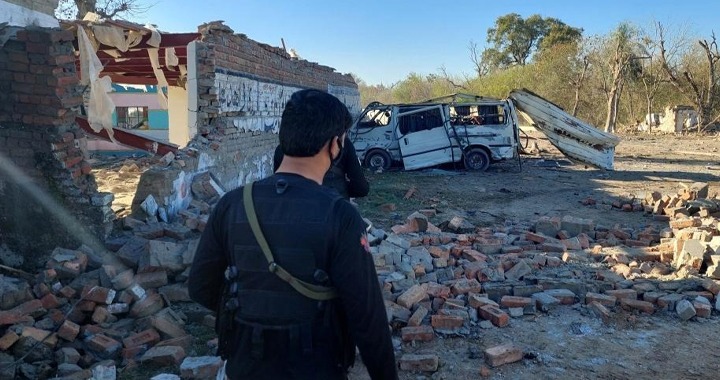
For years, discussions about terrorism in Pakistan have largely centered on Khyber Pakhtunkhwa and the threat posed by Fitna al-Khwarij. Balochistan, meanwhile, has often been treated as a secondary theater, mentioned primarily after major attacks and then quickly overshadowed by developments elsewhere.
Recent events suggest that approach may no longer be sustainable.
The security environment in Balochistan has evolved considerably over the past several years. Terrorist violence in the province increasingly displays characteristics that distinguish it from the challenges facing Khyber Pakhtunkhwa. While both provinces confront armed groups seeking to undermine state authority, the nature of the threats, the targets selected, and the broader implications differ significantly.
Recent operations in Pishin and Kalat provide a useful illustration.
In Pishin, security forces neutralized two terrorists belonging to Fitna al-Hindustan while foiling an attempted terrorist attack. In a separate operation in Kalat, two more terrorists were neutralized after security forces thwarted an ambush.
Viewed individually, such incidents may appear routine. Viewed collectively, however, they highlight a continuing effort by terrorist groups to maintain operational relevance despite sustained pressure from security forces.
This is where Balochistan’s security picture becomes particularly important.
Unlike many terrorist incidents elsewhere in the country, violence in Balochistan often intersects with broader questions involving regional connectivity, strategic infrastructure, and foreign investment. Attacks in the province rarely remain local matters for long. They frequently carry economic, diplomatic, and geopolitical consequences.
The province occupies a strategic location linking Pakistan with regional trade corridors and critical infrastructure projects. As a result, instability in Balochistan affects not only local communities but also broader national objectives.
Security forces have achieved notable operational successes in recent years. Numerous terrorist networks have been disrupted, facilitators arrested, and attacks prevented before execution. Yet the persistence of attempted attacks demonstrates that terrorist organizations continue to adapt.
The Challenge Is No Longer Survival, It Is Regeneration
The principal challenge facing terrorist organizations in Balochistan today is not merely surviving security operations but regenerating operational capacity after repeated setbacks.
Every foiled ambush, every disrupted plot, and every neutralized terrorist forces these groups to rebuild networks, recruit replacements, and re-establish logistical channels.
The fact that attacks continue despite years of pressure reflects both the effectiveness of counterterrorism efforts and the determination of terrorist groups to remain active.
The lesson for policymakers is clear. Tactical victories remain essential, but long-term stability requires addressing the broader ecosystem in which violence persists.
Balochistan’s security challenge cannot be viewed solely through the lens of individual attacks. It must also be understood as part of a larger contest involving governance, economic development, regional stability, and national resilience.
The province has become one of Pakistan’s most strategically significant security theaters. Developments there increasingly shape not only local security conditions but also the country’s broader regional ambitions.



