
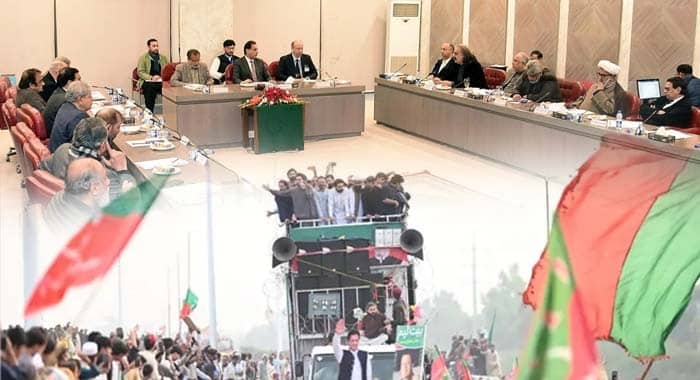
A chief minister is not merely a party representative occupying a government office. He is the elected head of a provincial administration, responsible for public safety, economic management, institutional performance and the welfare of millions of citizens. When political negotiations collapse amid accusations of obstruction, the question is not simply which party has won the latest round of confrontation. It is whether those entrusted with public office are fulfilling their responsibilities.
The recent breakdown of talks between the federal government and Pakistan Tehreek-e-Insaf has placed Khyber Pakhtunkhwa Chief Minister Sohail Afridi under renewed scrutiny. Government representatives accused Afridi of undermining the negotiations, while PTI has its own political position on the dispute. The allegations must be assessed against the actual sequence of discussions and the evidence available. Nevertheless, the episode raises a broader question about the priorities of a provincial chief executive whose province continues to face a grave security challenge.
Khyber Pakhtunkhwa cannot afford an endless cycle in which negotiations begin, political expectations rise, differences remain unresolved and confrontation resumes. The consequences extend beyond Islamabad’s political calculations. They affect the provincial administration’s attention, the government’s ability to coordinate with federal institutions and the public’s confidence that its elected representatives are working to solve practical problems.
The province has endured years of terrorist violence. Police officers and other security personnel continue to face lethal threats, while residents of vulnerable districts live with uncertainty about their safety. In such circumstances, the chief minister’s time and political influence are public assets. Their use should be judged by what they achieve for the province, not simply by their value to a party’s national campaign.
Afridi and PTI have every right to demand political concessions through constitutional means. Negotiating for the release of a party founder, challenging government decisions and mobilizing supporters are legitimate elements of democratic politics when pursued within the law. But the right to make demands does not create an obligation on the other side to accept them, and political disagreement does not excuse the abandonment of governance.
Nor should the chief minister’s office become an extension of a campaign whose overriding objective is determined by the circumstances of one political leader. The people of KP elected a provincial government to administer their affairs. They did not surrender their right to demand functioning schools, reliable public services, stronger policing and transparent spending whenever the national political temperature rises.
The same principle applies to negotiations. If PTI believes the federal government is acting in bad faith, it should present evidence, explain its position and make a case for resuming dialogue. If the government believes Afridi obstructed the process, it should substantiate that allegation rather than rely on political denunciations. Public accountability requires more than competing accusations.
A chief minister should be judged by his willingness to keep channels open, protect institutional cooperation and prevent political disputes from paralyzing administration. That does not mean accepting every federal demand. It means recognizing that disagreement and responsibility can coexist.
For Sohail Afridi, the real challenge is not demonstrating loyalty to PTI’s founder. It is demonstrating that loyalty to a political leader does not take precedence over the obligations attached to his constitutional office.
Khyber Pakhtunkhwa needs leadership capable of pursuing political rights while delivering public services, confronting terrorism and engaging opponents without turning every dispute into another confrontation.
The decisive question is therefore straightforward: when the negotiations fail and the political spectacle moves on, what tangible benefit remains for the people of KP?



