
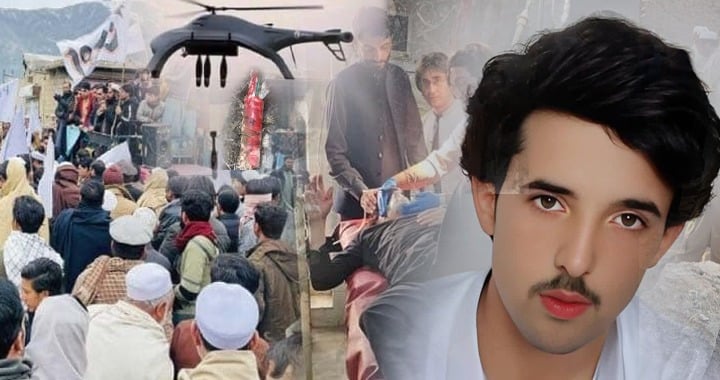
A series of quadcopter and drone-based attacks across Khyber Pakhtunkhwa, including Bajaur, Hangu, and North Waziristan, is pointing toward an expanding operational shift in terrorist tactics, where aerial improvised devices are increasingly being used against both civilian and security targets.
The latest incident in Bajaur’s Mamund area, where three children were injured in a quadcopter strike while playing outside, adds to a growing list of similar attacks reported in the province over recent months.
Security-linked accounts indicate that these incidents are not isolated but part of a broader pattern of adaptation, where terrorist groups are increasingly relying on low-cost aerial platforms to bypass ground-based security measures and strike at softer targets.
In Hangu, a recent quadcopter attack on a police checkpoint in Anar China injured two personnel, highlighting continued targeting of law enforcement positions. The injured were shifted for medical treatment, while security forces-initiated follow-up monitoring operations in the area.
In North Waziristan’s Darpakhel region, tensions escalated after local tribal structures moved against terrorist presence following a jirga decision to expel them. Subsequent clashes and confrontations in the area reflected continued friction between local communities and armed elements operating in the region.
Security sources suggest that these incidents collectively indicate an evolving conflict environment where aerial devices are being integrated into a wider pattern of asymmetric warfare, alongside traditional attacks, infiltration attempts, and targeted violence.
Earlier documented incidents across Bannu, Lakki Marwat, and border-linked zones also reflect similar usage of quadcopter-based explosives, often resulting in civilian casualties, including children.
In yet another tragic, a promising young member of the North Waziristan Student Society embraced martyrdom after being targeted in a terrorist quadcopter strike, in yet another disturbing use of aerial tactics by extremist elements.
According to available details, the victim, identified as Sughad Haiderkhel, was regarded as a bright and aspiring youth with a promising future ahead. His tragic martyrdom has sent shockwaves through the local community, particularly among fellow students who described him as a rising star.
Sources indicate that the terrorist quadcopter strike was a deliberate act, targeting the young student in what appears to be a continuation of tactics aimed at spreading fear and destabilizing civilian life in the region. The use of quadcopters by terrorists has increasingly become a cause of concern for both security forces and residents.
Officials have not issued a consolidated statement linking the incidents, but operational monitoring has reportedly been increased across sensitive districts.



