Zahir Shah Sherazi
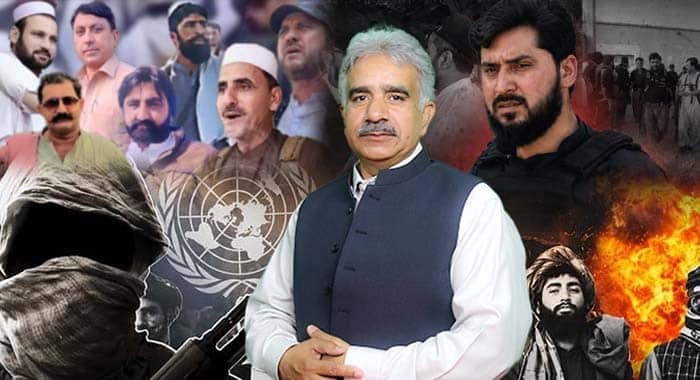
Khyber Pakhtunkhwa is facing a complex and increasingly serious security challenge in which militancy, weak governance, institutional friction and the emergence of parallel power structures are becoming closely interconnected. The situation is particularly concerning in the southern districts of Bannu and Lakki Marwat, where armed groups operating under the banner of “peace committees” are reportedly assuming responsibilities that extend far beyond the conventional role of community-based assistance to law-enforcement agencies.
The issue is not simply whether local communities should participate in efforts to combat terrorism. In areas affected by militancy, local communities can play an important role because residents often possess valuable knowledge about their surroundings, local networks and suspicious activities. The more serious question is what happens when groups formed in the name of peace begin operating outside a clearly defined legal, administrative and police chain of command.
The allegations and concerns surrounding these groups raise a fundamental question about the future of governance in southern Khyber Pakhtunkhwa: can the state maintain its authority if informal armed structures begin performing functions traditionally reserved for the police and civilian administration?
According to the analysis presented in the discussion, some of these so-called peace committees are increasingly being described as “police committees” or parallel policing structures. Their reported activities raise questions about their authority, weapons, personnel, vehicles, checkpoints, policing decisions, influence over administrative matters and alleged links with criminal and smuggling networks.
If this situation continues unchecked, its consequences could extend far beyond Bannu and Lakki Marwat. It could weaken the formal police structure, undermine civilian administration, complicate counterterrorism operations, create confusion over the chain of command and ultimately contribute to the fragmentation of state authority.
One of the most important observations in the discussion is that these groups may no longer be accurately described as traditional peace committees. They are instead portrayed as groups attempting to establish a parallel system alongside the formal police. Under a functioning administrative and policing structure, every officer and unit has a defined chain of command. Police stations operate under station house officers, district police operate under district police leadership, and senior officers remain responsible for supervising operations. The Counter Terrorism Department, intelligence agencies, civil administration and other law-enforcement institutions each have defined responsibilities.
The concern arises when an armed group begins operating independently of these established structures. The discussion refers to allegations that some of these groups have access to approximately 10 to 15 guards, vehicles and even police personnel. The question therefore becomes whether such individuals are properly registered, whether their weapons are legally authorized, who supervises them and to whom they are ultimately accountable.
There is a fundamental difference between citizens assisting the police and citizens effectively creating their own police force. A community-based security initiative can potentially strengthen the state when it operates under state supervision. However, an armed group operating independently can undermine the very institutions responsible for maintaining law and order. This distinction is particularly important in a conflict-affected region such as southern Khyber Pakhtunkhwa, where the state is already dealing with militant organizations and criminal networks.
The issue becomes even more serious when the influence of these groups reportedly extends beyond security operations and into civilian administration. According to the discussion, local residents have expressed concerns that the authority normally exercised by assistant commissioners and deputy commissioners is allegedly being influenced or used by members of these peace committees and their senior associates. There are also allegations that the groups exert influence over postings and transfers and can pressure officials regarding appointments involving their relatives or associates.
If substantiated, such practices would represent a major governance problem. A functioning state depends not only on armed security forces but also on predictable administrative institutions. Citizens must know who is responsible for making decisions, where they can lodge complaints, which authority can transfer an official and which institution has jurisdiction over a particular matter.
When informal armed groups begin exercising influence over administrative decisions, the boundary between formal government and informal power becomes blurred. That can create an environment in which ordinary citizens feel compelled to approach powerful individuals rather than lawful institutions. It can also weaken the authority of civil servants and police officers who are supposed to operate according to established rules. The result can be a gradual erosion of institutional authority.
The discussion also highlights allegations involving smuggling and criminal elements. Local residents are reportedly concerned that some members associated with these structures may have links with smugglers and criminal networks. The allegations include involvement in matters concerning non-custom-paid vehicles, smuggling and the operation of checkpoints. There are also references to a special branch inquiry that reportedly examined alleged connections between certain individuals and smugglers or criminal elements. These claims must be investigated through evidence and due process. Allegations should never automatically be treated as established facts. However, the existence of such allegations is itself sufficient reason for the authorities to conduct a transparent and credible investigation.
An armed organization that has authority over checkpoints, local movement and security operations can potentially exercise significant economic power. If that authority is not properly regulated, there is a risk that security responsibilities could become intertwined with illegal economic activity. The discussion also mentions allegations involving drug smuggling, corruption, revenue generation and possible understandings with extremist groups regarding movement through certain areas. Again, these claims require verification by competent authorities. Nevertheless, the broader institutional principle remains clear: no armed group should be allowed to exercise coercive power without legal authorization, documented membership, clearly defined responsibilities and an accountable chain of command.
Pakistan already has a constitutional and administrative framework for maintaining public order. Police forces, counterterrorism institutions, civil administration, paramilitary organizations and the armed forces all have specific roles. The problem, therefore, is not simply the absence of institutions. It is the effectiveness, coordination and authority of existing institutions. A parallel system may appear attractive during an emergency. Local armed groups may possess better knowledge of the area and may believe that they can respond to militant threats more quickly than formal institutions. But allowing such groups to operate independently creates serious long-term risks.
The most important question is command. If these groups possess weapons, who authorizes them? If they conduct operations, who investigates their conduct? If they arrest someone, who guarantees due process? If an individual disappears, which institution is responsible? If they establish checkpoints, who supervises them? If a police officer is pressured by such a group, which authority protects the officer? These questions demonstrate why an informal security structure cannot be allowed to operate without clear legal boundaries.
The discussion makes an important comparison with militant organizations themselves. Terrorist groups often establish their own systems of authority, courts, taxation, enforcement and territorial control. If the state responds by allowing multiple unofficial armed authorities to develop, it risks creating a fragmented security environment in which different groups claim the right to exercise force. The answer cannot be to allow everyone to take up arms simply because terrorism exists.
This does not mean that local communities should be excluded from counterterrorism efforts. On the contrary, community participation can be useful if it is properly organized. If private peace committees genuinely want to assist law-enforcement agencies, the government could establish a formal mechanism through which their members are registered and verified. Their weapons should be legally documented, their personnel should be identified, and their responsibilities should be clearly defined. Most importantly, such groups must operate under a central command structure.
The police operate under district police leadership, while police stations work under their respective station house officers and the wider law-enforcement structure follows established lines of authority. Any community-based security mechanism should similarly be integrated into the official security framework rather than functioning independently. During earlier phases of militancy, various community-based defense arrangements existed alongside law-enforcement agencies, including local peace committees. Their value came partly from the fact that the state could identify, coordinate and work with them.
The problem begins when individuals who are already part of or connected to the police system claim that they can perform policing more effectively outside the formal system. This raises an obvious institutional question: if they were operating within the police system, why could the same capabilities not be used through the official chain of command?
The discussion also refers to allegations surrounding the disappearance or killing of individuals, including a case involving a person identified as Kari Rashid. It is reportedly alleged that he was taken from terrorists, while his family claimed that he was killed. Cases of this nature demonstrate why accountability is essential. If a person is detained during a counterterrorism operation, there must be a record of who detained that person, under what authority, where the person was taken and what happened afterward. This applies whether the operation is conducted by the police, another law-enforcement agency or a community-based security group.
Without accountability, the state can lose control over the distinction between lawful security operations and extrajudicial actions. No community group should be allowed to establish its own version of justice simply because it claims to be fighting terrorism. Pakistan has a Constitution, courts, police institutions and a governance structure. Every security initiative must ultimately operate within that framework.
The developments in Bannu and Lakki Marwat must also be understood within the wider security situation of Khyber Pakhtunkhwa. Intelligence-based operations are taking place in different parts of the province, while kinetic operations against militant networks continue in areas affected by terrorism. Intelligence information is being used to identify militant activity and conduct targeted operations. Such operations can be effective, but their success depends heavily on coordination. The police, Counter Terrorism Department, intelligence agencies, local administration and other law-enforcement institutions must operate as parts of a coordinated security architecture. If they work in isolation, gaps can emerge, and militant organizations can exploit those gaps.
The penetration of militancy from rural southern districts toward urban areas is particularly concerning. When militant networks move from remote areas into towns and cities, the psychological and economic impact becomes greater. Even sporadic attacks can create widespread fear. People may stop travelling, businesses may hesitate to invest, families may avoid public gatherings, and government officials may become reluctant to work in high-risk districts. Over time, insecurity becomes an obstacle not only to public safety but also to economic and social development.
One of the strongest arguments in the discussion is that kinetic operations cannot produce lasting results if governance remains weak. The unfinished agenda of the National Action Plan needs renewed attention. Counterterrorism should not be understood only in terms of military and police operations. It must also involve stronger institutions, better intelligence coordination, effective prosecution, financial controls, improved governance and measures designed to prevent extremist networks from exploiting social and administrative weaknesses. Local government can play an especially important role.
If people can resolve everyday problems involving municipal services, health, education, documentation and other public needs through legitimate institutions, their dependence on informal power brokers decreases. Good governance therefore becomes a security mechanism. When citizens receive services and solutions through the state, their confidence in state institutions grows. When those institutions fail to respond, informal actors often step into the vacuum. This is why security and governance cannot be separated.
The people of conflict-affected districts face a particularly difficult psychological environment. They may fear militants and the TTP. They may fear criminal groups. They may worry about police action. They may fear clashes between security forces and militants. They may also be uncertain about the intentions and authority of local armed groups. When citizens fear several competing actors, the state loses psychological authority. The government must therefore work systematically to remove these competing sources of fear. Citizens should be able to identify one lawful security structure, one administrative system and one judicial process. Restoring public confidence requires more than announcing operations. It requires demonstrating that the state is capable of protecting people while respecting the law. The security situation in Khyber Pakhtunkhwa cannot be separated from developments across the border in Afghanistan.
Pakistan has repeatedly raised concerns about militant groups operating from Afghan territory. The discussion examines claims that the Afghan Taliban may be moving away from the TTP or taking action against its leadership. However, the analysis presented questions whether the relationship between the Afghan Taliban and the Pakistani Taliban can be easily severed because of their deep historical, ideological and organizational connections.
The concern is that if TTP leadership remains secure and capable of issuing instructions and planning attacks, Pakistan will continue to face serious law-and-order challenges. The Afghan Taliban may reject responsibility for attacks in Pakistan, but Islamabad’s position is that Afghanistan must ensure that its territory is not used against Pakistan. This disagreement remains one of the central obstacles to improved bilateral relations.
The discussion also refers to the changing nature of militant attacks, including the reported use of suicide drones in addition to conventional suicide bombings. There are allegations and speculation about the origin or manufacture of some drones, including claims involving Iranian or Indian manufacturing. Such claims should be independently verified before being treated as established facts, particularly because militant actors can deliberately create misleading evidence about the origin of weapons in order to shift blame or create international tensions.
Nevertheless, the emergence of drone-based attacks illustrates how militant organizations can adapt to changing technology. The broader point is that without lasting peace, neither Pakistan nor Afghanistan can fully realize their economic and social potential. Security instability affects economic growth, social infrastructure, investment, education and healthcare.
The return of Afghan refugees is another major challenge in Pakistan-Afghanistan relations. Pakistan faces legitimate concerns regarding individuals who lack legal status, and authorities have pursued policies aimed at returning undocumented Afghans. However, returning populations face serious difficulties inside Afghanistan. Education opportunities, healthcare facilities, employment and business mechanisms remain limited in many areas.
This creates a complicated humanitarian and political problem. A sustainable repatriation process requires orderly implementation, attention to humanitarian needs and cooperation between the relevant authorities. Security concerns and humanitarian responsibilities must be addressed simultaneously. Improving relations between Pakistan and Afghanistan will require progress on the security question.
Pakistan’s fundamental demand is that militant activity directed against Pakistan should stop and that Afghan territory should not be used as a base for attacks. Economic and border issues are important, but security remains the foundation. Once security improves, there is enormous potential for bilateral trade, regional connectivity and economic cooperation. Afghanistan could serve as an important gateway between Pakistan and Central Asia, while Pakistan’s ports and markets could provide Afghanistan with access to wider international trade routes.
Cross-border commerce has historically been an important source of income for communities on both sides. However, prolonged border closures and insecurity have severely affected traders and ordinary residents. The economic consequences extend beyond Afghanistan. Without stability, projects connected to CPEC, the Belt and Road Initiative and Central Asian connectivity also face obstacles. A peaceful regional environment is therefore in the interest of Pakistan, Afghanistan, China, Central Asian states and the wider international community.
The possibility of increased international diplomatic engagement with Afghanistan also raises important questions. Major powers may have strategic reasons for engaging with Afghanistan, particularly because of competition involving China, Russia and the wider Central Asian region. The United States and other countries may see Afghanistan as strategically significant. However, international engagement should not come at the cost of fundamental rights.
Questions surrounding women’s education, human rights and the rights of ethnic and regional communities remain important. Any international effort to normalize relations should consider these issues. The international community possesses diplomatic and economic tools through multilateral institutions and international agreements. Financial assistance and diplomatic engagement can be used to encourage the Afghan authorities to address terrorism, human rights and inclusive governance. The central challenge is to prevent Afghanistan from once again becoming a battlefield for competing international interests or militant organizations.
For Khyber Pakhtunkhwa, the immediate priority must be restoring institutional clarity. The provincial government, police leadership, Counter Terrorism Department, local administration and other security institutions should jointly examine the functioning of all armed peace committees operating in sensitive districts. Any group that is legally authorized and genuinely assisting the state should be brought under a clearly documented regulatory mechanism. Its personnel should be registered, weapons should be accounted for, responsibilities should be defined and command relationships should be transparent.
Any group operating outside the law should not be allowed to establish an independent security structure simply because it claims to be fighting terrorism. At the same time, allegations of corruption, smuggling, kidnapping, criminal links or cooperation with extremist groups must be investigated impartially. Those found responsible should face the law, regardless of their political or local influence. The government should also strengthen the police so that communities do not feel compelled to rely on informal armed actors. Effective policing, accessible administration, functional local government and responsive public services are essential components of the security strategy.
The situation unfolding in Bannu and Lakki Marwat represents a much larger question about the future of governance in Khyber Pakhtunkhwa. Communities affected by terrorism have every right to demand protection, and citizens who voluntarily assist law-enforcement agencies can provide valuable support. But community participation must operate within the law. The state cannot allow multiple armed structures to exercise overlapping or competing authority. If parallel security systems continue to develop, the consequences could be severe. Police authority could weaken, civilian administration could lose influence, criminal networks could exploit institutional gaps, citizens could become increasingly fearful, and militant organizations could benefit from the resulting fragmentation.
The solution is not to abandon community participation. It is to regulate and institutionalize it. The police must remain accountable to their command structure. Civil administration must retain its legal authority. Community defense mechanisms must operate under clear rules. Law-enforcement agencies must coordinate. Courts must remain accessible. And every armed actor must ultimately answer to the law. The same principle applies to Pakistan’s relationship with Afghanistan. There can be no durable economic connectivity without security, no sustainable trade without stability and no meaningful diplomatic normalization without addressing militant activity. Khyber Pakhtunkhwa therefore needs a strategy that combines intelligence-based and kinetic operations with governance reform, institutional coordination, local government, economic development and public confidence.
The ultimate test of success will not simply be the number of operations conducted or militants eliminated. It will be whether ordinary citizens in Bannu, Lakki Marwat and other affected districts once again feel that they live under a predictable system in which the law is stronger than any individual or armed group. The state must remain the state. Community security can support it, law-enforcement agencies can strengthen it, and military operations can defend it—but no parallel armed structure should be allowed to replace it.