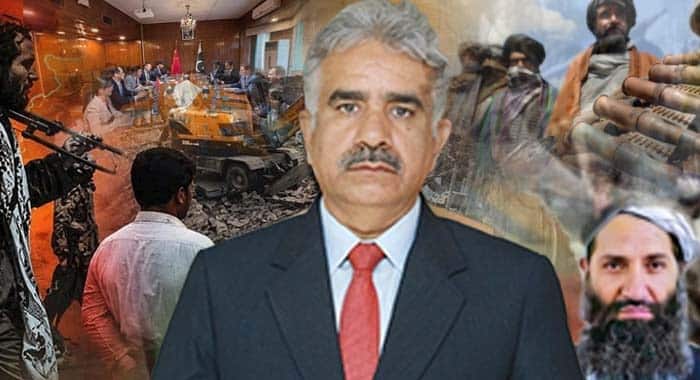
For years, Pakistan’s warnings about terrorist sanctuaries operating from Afghan soil were often dismissed as routine diplomatic complaints or bilateral grievances. Today, however, I believe the situation has evolved to a point where much of the international community is beginning to recognize what Pakistan has been saying all along: terrorism in Afghanistan is no longer Pakistan’s problem alone. It is a regional security challenge with implications extending from South Asia to Central Asia and beyond.
Recent reports suggesting that the Afghan Taliban leadership has warned Tehreek-e-Taliban Pakistan (TTP) against carrying out attacks inside Pakistan have generated considerable discussion. While some observers have portrayed this as a positive development, I remain unconvinced that statements alone can alter realities on the ground.
Pakistan’s position has always been straightforward. The issue is not whether warnings have been issued. The issue is whether terrorist organizations are being dismantled, whether their infrastructure is being destroyed, whether their weapons are being seized, and whether their leaders are being prevented from using Afghan territory to launch attacks against neighboring countries.
This is precisely why the recent diplomatic engagements involving Pakistan, China, and Afghan Taliban representatives deserve closer attention.
During the talks held in Urumqi, Pakistan reportedly emphasized three fundamental expectations. First, terrorist sanctuaries operating inside Afghanistan should be dismantled. Second, practical action should be taken against terrorist organizations. Third, evidence demonstrating those actions should be shared with Pakistan.
To date, there is little indication that these expectations have been fully met.
What makes the situation particularly important is that Pakistan is no longer the only country expressing concern. China has increasingly voiced worries regarding extremist organizations that threaten its interests, particularly groups linked to the East Turkistan Islamic Movement, now commonly referred to as the Turkistan Islamic Party.
This concern is not theoretical. Chinese interests in Pakistan, including strategic investments and infrastructure projects, have repeatedly faced threats from terrorist organizations operating in the region. Security assessments increasingly point toward overlapping networks involving TTP, BLA, extremist factions, and transnational terrorist actors whose objectives extend beyond Pakistan alone.
This is why the recent engagement between Pakistan’s Special Representative for Afghanistan, Mohammad Sadiq, and his Chinese counterpart is significant. Their discussions reportedly focused on threats posed by TTP and ETIM/TIP, reflecting a growing convergence between Pakistani and Chinese security concerns.
Russia is expressing similar concerns.
Russian officials have repeatedly warned about the growing presence of terrorist organizations inside Afghanistan. Concerns regarding Daesh Khorasan’s recruitment activities in Central Asia, particularly among citizens of Uzbekistan, Tajikistan, and Turkmenistan, demonstrate that the threat landscape is expanding beyond traditional geographical boundaries.
From my perspective, these developments validate Pakistan’s longstanding position that instability in Afghanistan cannot remain confined within Afghanistan’s borders.
The challenge becomes even more alarming when viewed through the lens of terrorist cooperation.
Reports emerging from various security circles increasingly suggest that organizations such as TTP, BLA, ETIM/TIP, Al-Qaeda, Daesh Khorasan, and other extremist groups are benefiting from overlapping facilitation networks. Whether through shared training facilities, logistical support systems, financial channels, or operational expertise, the distinction between various terrorist entities appears increasingly blurred.
If these reports are accurate, then the threat facing the region is no longer that of isolated organizations pursuing separate agendas. Instead, what is emerging is an interconnected ecosystem capable of sharing resources, expertise, and operational support.
This evolution demands a corresponding shift in how regional states approach counterterrorism.
One of the most troubling aspects of the current situation is the apparent gap between commitments and implementation.
The Afghan Taliban repeatedly assured the international community, including through commitments associated with the Doha process, that Afghan territory would not be used against other countries. Yet years later, concerns regarding terrorist sanctuaries remain unresolved.
The issue is not merely what Taliban officials say. The issue is what happens on the ground.
When reports emerge claiming that TTP has been warned against attacking Pakistan, I believe the obvious question is whether such warnings are accompanied by meaningful enforcement mechanisms.
Will training facilities be dismantled?
Will terrorist commanders be arrested?
Will weapons stockpiles be confiscated?
Will wanted individuals be handed over?
Will recruitment networks be disrupted?
Without answers to these questions, statements risk becoming little more than diplomatic messaging.
The broader geopolitical environment further complicates the picture.
Afghanistan today sits at the center of overlapping strategic interests involving China, Russia, the United States, Iran, Gulf states, and Central Asian countries.
Every major power is attempting to secure its interests while preventing Afghanistan from becoming a source of instability.
This reality has created a situation in which Afghanistan’s rulers possess strategic leverage, but it has also increased Pakistan’s importance.
In fact, one of the most overlooked developments in recent years is Pakistan’s growing geopolitical relevance.
China requires Pakistan for regional connectivity and economic integration.
Russia increasingly views Pakistan as an important regional stakeholder.
Central Asian states recognize Pakistan’s role in regional security architecture.
Iran understands the importance of stable relations with Pakistan for border security and economic cooperation.
Even the United States, despite periods of disagreement, continues to recognize Pakistan’s significance in any serious discussion regarding Afghanistan’s future.
For this reason, I reject narratives suggesting that Pakistan is strategically isolated.
The opposite is closer to reality.
As competition among major powers intensifies, Pakistan’s importance is increasing rather than diminishing.
This is particularly evident when discussions emerge regarding Afghanistan’s future, regional counterterrorism efforts, trade corridors, and strategic infrastructure.
Another aspect of the debate concerns governance within Afghanistan itself.
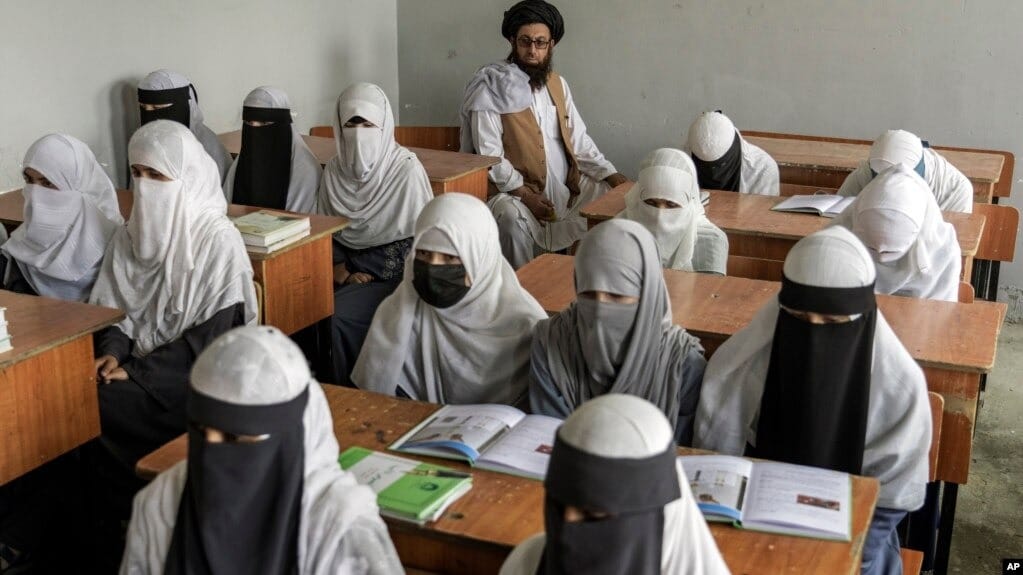
The Taliban continue to face criticism regarding women’s rights, political inclusion, education, and governance.
The exclusion of large segments of Afghan society from meaningful participation remains a significant concern.
Questions surrounding girls’ education, minority rights, and political representation continue to affect the Taliban’s international standing.
These issues are not separate from security concerns.
In many cases, weak governance and exclusionary policies create environments that extremist organizations can exploit.
A stable Afghanistan requires more than security operations. It requires political legitimacy, institutional development, economic opportunity, and social inclusion.
Without these elements, long-term stability remains difficult to achieve.
At the same time, I believe Pakistan must continue focusing on its own internal resilience.
One of the most important lessons learned from decades of counterterrorism is that security challenges cannot be addressed solely through military operations.
Terrorist organizations rely not only on fighters but also on facilitators, financiers, propagandists, recruiters, and logistical support networks.
This is where the National Action Plan remains critically important.
Pakistan has already demonstrated its ability to defeat major terrorist campaigns through coordinated national efforts involving intelligence agencies, law enforcement institutions, and security forces.
However, implementation must remain continuous.
Support networks, financial channels, recruitment pipelines, and extremist propaganda mechanisms require constant attention.
Counterterrorism today is as much about disrupting ecosystems as it is about neutralizing individual terrorists.
I also believe that information warfare has become an increasingly important dimension of the challenge.
Modern terrorist organizations do not rely solely on violence. They seek to shape perceptions, manipulate narratives, exploit social media, and amplify divisions within societies.
Propaganda has become a force multiplier.
For this reason, countering extremist narratives must remain an important component of national security strategy.
The objective should not be to suppress legitimate debate or criticism. Strong societies thrive on open discussion.
However, there is a clear distinction between constructive criticism and narratives that directly or indirectly assist terrorist objectives by legitimizing violence, glorifying extremism, or undermining national cohesion.
Pakistan’s adversaries understand the value of information operations. Consequently, Pakistan must approach the information domain with the same seriousness that it applies to conventional security threats.
What gives me confidence is that Pakistan today possesses far greater institutional experience than it did during previous waves of terrorism.
The country’s intelligence capabilities have improved.
Its counterterrorism institutions have matured.
Its security forces possess extensive operational experience.
Its diplomatic engagement with regional and global stakeholders is stronger than before.
This does not mean the challenges are small.
They remain serious and complex.
But complexity should not be confused with weakness.
In fact, one of the most important realities often overlooked in public discussions is that Pakistan has repeatedly demonstrated its capacity to absorb pressure, adapt, and respond.
The current challenge should therefore be viewed through a broader lens.
This is not simply a dispute between Pakistan and the Afghan Taliban.
Nor is it solely about TTP.
It is about the future security architecture of the region.
It is about whether Afghanistan becomes a source of stability or a sanctuary for interconnected terrorist networks.
It is about whether regional connectivity projects flourish or remain vulnerable to extremist violence.
It is about whether major powers can cooperate against common threats despite broader geopolitical competition.
Most importantly, it is about whether commitments are translated into action.
For Pakistan, the path forward should remain clear.
Diplomatic engagement should continue.
Regional cooperation should expand.
Counterterrorism coordination should deepen.
Internal resilience should be strengthened.
At the same time, Pakistan should judge developments not by rhetoric but by measurable outcomes.
The world is gradually recognizing that terrorist safe havens in Afghanistan pose risks extending far beyond Pakistan’s borders.
As that realization grows, so too does recognition of Pakistan’s central role in addressing the challenge.
That is why I believe the region needs Pakistan more than ever.
Not because Pakistan seeks confrontation.
Not because Pakistan seeks influence for its own sake.
But because regional stability, counterterrorism cooperation, economic connectivity, and long-term peace increasingly require the very role Pakistan has been advocating for all along: a responsible, stable, and indispensable partner in securing the future of the region.