
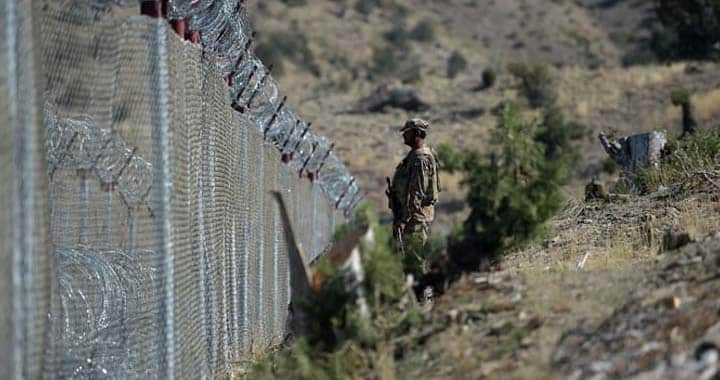
A sharp escalation along the Pakistan-Afghanistan border has triggered one of the most intense military confrontations in recent years, following what Pakistani officials describe as a series of provocations linked to armed groups operating from Afghan territory.
The confrontation, which included heavy artillery exchanges and reported airstrikes across the Durand Line and into multiple Afghan regions, comes amid growing tensions over the continued presence of the Tehreek-i-Taliban Pakistan (TTP) in Afghanistan a matter Islamabad has repeatedly raised at regional and international forums.
According to Pakistani officials, the latest developments unfolded after the Afghan Taliban publicly announced what it termed “large-scale offensive operations” near several border sectors. Security analysts describe the move as an unusually overt escalation that transformed long-standing tensions into a direct interstate military confrontation.
Only hours before the crisis intensified, Foreign Office spokesperson Tahir Andrabi reiterated Pakistan’s longstanding position that Islamabad’s concerns are directed not toward the Afghan people, but toward terrorist sanctuaries allegedly operating from Afghan soil and threatening Pakistani civilians and security personnel.
Government sources stated that Pakistan’s response was guided by what it considers an urgent national security imperative following a sustained increase in terrorist incidents since the Taliban takeover of Afghanistan in August 2021. Officials argue that militant networks linked to the TTP have continued to exploit Afghan territory as operational safe havens, resulting in repeated cross-border threats and attacks inside Pakistan.
In response to the latest escalation, Pakistan reportedly launched a coordinated military operation titled “Ghazab lil-Haq”, targeting what officials described as militant infrastructure and hostile positions across multiple locations. Security sources indicated that operations extended toward strategic areas including Kabul, Kandahar, Paktia, and Nangarhar, marking one of the broadest retaliatory responses in recent years.
Senior Pakistani officials adopted an unusually firm tone following the confrontation. Defence Minister Khawaja Asif stated that Pakistan’s patience had reached its limit and warned that any continued aggression or facilitation of anti-Pakistan militant activity would draw an uncompromising response.
Military observers note that the escalation reflects a dangerous strategic shift. While the Afghan Taliban historically relied on irregular and guerrilla warfare tactics, Pakistan possesses overwhelming advantages in conventional military capability, air power, and deterrence infrastructure. Analysts caution that prolonged direct confrontation could significantly destabilize the broader region while exposing Afghanistan’s fragile security and economic structure to severe pressure.
Despite the intensity of the confrontation, diplomatic channels remain active behind the scenes. Regional actors including Qatar, Saudi Arabia, Turkey, China, Russia, and Iran are reportedly encouraging restraint and attempting to facilitate de-escalation efforts between Islamabad and Kabul.
Security experts warn that unless structural issues surrounding militant sanctuaries are addressed credibly and transparently, temporary ceasefires may only delay future confrontations rather than resolve them permanently.
International monitoring reports, including assessments presented before the United Nations Security Council, have repeatedly referenced the continued presence and operational capability of the TTP inside Afghanistan, alongside allegations of linkages between militant factions and elements within the Taliban administration.
Pakistani authorities maintain that the country’s core objective is not territorial confrontation but the elimination of cross-border terrorist threats that undermine national security and regional stability. Officials insist that durable peace can only emerge through verifiable action against militant sanctuaries and coordinated regional counterterrorism cooperation.
Diplomatic observers further stress that inflammatory public rhetoric risks narrowing the space for negotiations at a time when discreet engagement and strategic dialogue are urgently needed. Analysts caution that prolonged escalation would primarily harm border populations, strain regional economies, and create opportunities for extremist groups to exploit instability.
As tensions remain high, the unfolding crisis is increasingly being viewed as a defining test for regional diplomacy, counterterrorism cooperation, and the future trajectory of Pakistan-Afghanistan relations.



